Children who always knew when the mood in the room shifted before anyone said a word - who could feel when a parent was about to cry, when a conversation was about to turn into an argument, when the energy in the kitchen went from warm to cold in the span of a single sentence - often become adults who can walk into any room and immediately know who is angry, who is about to leave, and who is pretending everything is fine, and most of them have never realized that what they call intuition is actually a surveillance system that was installed when they were too young to know the difference between reading a room and scanning it for threats
I was nine years old the first time I realized I could feel a room change before anything actually happened.
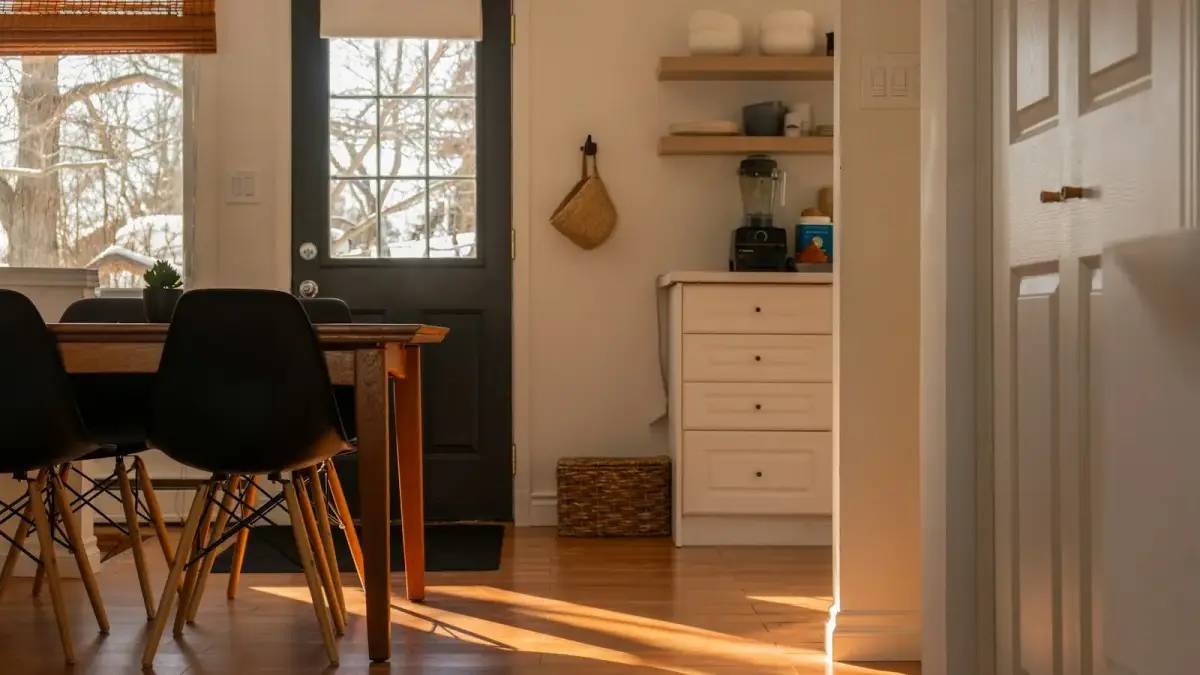
My mother was standing at the kitchen counter slicing tomatoes. My father was reading the paper at the table. Nobody was fighting. Nobody was even talking. But something in the air shifted - a tightness in my mother’s shoulders, a particular way my father turned the page just slightly too hard - and I knew. I knew the next ten minutes were going to be bad. I quietly picked up my plate and went to my room.
I did not learn this in school. Nobody taught me to read micro-expressions or study body language. I learned it the way animals learn to sense a storm - because not sensing it had consequences.
For most of my adult life, people have told me I’m “so intuitive” or “incredibly emotionally intelligent.” They say it like it’s a compliment. Like it’s a gift I was born with, something to be grateful for. And I’d smile and accept it, because I didn’t have the language yet for what it actually was.
It wasn’t a gift. It was a security system. And it was installed during a time when I had no say in the matter.
1. You learned to read faces before you learned to read books
Children in emotionally unpredictable homes develop what researchers call “affective vigilance” - a heightened sensitivity to emotional cues in the people around them. A 2015 study published in the Journal of Child Psychology and Psychiatry found that children exposed to family conflict showed faster and more accurate recognition of angry facial expressions than children from stable homes.
This sounds impressive until you understand why. These children weren’t developing a talent. They were building an early warning system. The ability to detect a flash of irritation on a parent’s face in a fraction of a second wasn’t emotional intelligence - it was threat detection. It was a child’s nervous system learning that the difference between a calm evening and a terrifying one could be read in the space between someone’s eyebrows.
If you were that child, you probably don’t remember a time when you weren’t watching. Watching was just breathing. It was just what you did.
2. You became the emotional weather station for your entire family
At some point, you stopped just reading the room and started reporting on it. You became the person who could tell your sibling, “Don’t ask Mom about the car right now.” You became the one who knew when Dad needed space without being told. You became the translator between two adults who couldn’t communicate with each other.
This is a staggering amount of emotional labor for a child. You were doing work that most adults can barely manage, and you were doing it before you lost your baby teeth.
The cruelest part is that it probably made you feel important. Useful. Like you had a role that justified your existence in the family. And that feeling - that your value was tied to your ability to manage other people’s emotions - followed you right into adulthood.
3. Dinner parties feel like fieldwork
You walk into a social gathering and within ninety seconds you’ve mapped the emotional terrain of the entire room. You know the couple in the corner had a fight in the car on the way over. You know the host is performing calm but is actually falling apart. You know your friend’s laugh is pitched half a note too high, which means she’s anxious about something she hasn’t mentioned yet.
Everyone else is having appetizers. You’re conducting reconnaissance.
This is what hypervigilance looks like when it’s dressed up and taken to a party. It looks like charm. It looks like emotional depth. It looks like being the friend everyone calls “the perceptive one.” What it actually is, underneath all of that, is a nervous system that cannot stop scanning for danger - even when there is no danger to find.
4. You know what everyone in the room is feeling, except yourself
This is the part that catches people off guard. You can detect a shift in someone’s mood from across the room, but if someone asks you how you’re feeling, you go blank. Not because you don’t feel things - you feel everything, constantly, overwhelmingly - but because your entire emotional processing system was built to face outward.
Dr. Gabor Mate has written extensively about how children in unstable environments learn to suppress their own emotional needs in service of monitoring their caregivers. The internal world gets put on hold because the external world requires constant attention. You become fluent in everyone else’s feelings and functionally illiterate in your own.
This is why so many people who are praised for their empathy secretly feel hollow. They can hold space for everyone. They can sense what you need before you say it. But when they’re alone, they don’t quite know what to do with themselves, because no one ever taught them that their own emotional weather mattered too.
5. Silence is never just silence to you
For most people, a quiet room is a neutral thing. Maybe even peaceful. For you, silence is data. Silence is a question that demands an answer: Is this the good kind of quiet, or the kind that comes before something breaks?
A 2020 study in Frontiers in Psychology found that adults who grew up in high-conflict homes showed elevated cortisol responses to ambiguous social cues - meaning their stress response activated not just during conflict, but during uncertainty. The absence of information was itself a threat, because in their childhood homes, silence often preceded the worst moments.
If you’ve ever found yourself filling silences compulsively - making jokes, asking questions, keeping conversation going just to avoid the unbearable weight of a quiet room - this is why. You’re not awkward. You’re not anxious in some random, sourceless way. Your body learned that silence is the sound right before something goes wrong.
6. You chose your career, your friendships, and possibly your partner based on this wiring
Look at the pattern. You’re drawn to people who need you. You ended up in a profession where reading people is an asset - teaching, nursing, therapy, management, social work, hospitality. Your closest friends are the ones who are a little chaotic, a little unpredictable, because that’s the emotional frequency your system was calibrated to receive.
This isn’t a moral failing. It’s a homing signal. Your nervous system built itself around volatility, and so you unconsciously seek out environments that match that original blueprint. Not because you enjoy chaos, but because calm feels suspicious. Stability feels like the eerie silence before the kitchen goes cold.
The relationships that confuse you most are probably the healthy ones. The ones where nobody is upset, nobody needs managing, nobody is about to leave. Those feel wrong somehow. Like you’re waiting for the other shoe to drop, because in your original home, there was always another shoe.
7. You can’t turn it off, and that’s the part no one talks about
People who develop this kind of perceptual sensitivity in childhood don’t just use it when it’s useful. They use it all the time, involuntarily, whether they want to or not. A trip to the grocery store means absorbing the cashier’s frustration. A phone call with a friend means tracking every pause, every hesitation, every barely-there change in vocal tone.
A 2017 study published in Psychological Science found that individuals with heightened emotional sensitivity showed increased activity in the anterior insula - a brain region associated with interoception and empathy - even during mundane social interactions. Their brains were not choosing to pay extra attention. Their brains were wired to pay extra attention, always.
This is why you’re tired. Not regular tired - the kind of tired that sleep doesn’t fix. You’re running a background program that never shuts down, processing thousands of emotional data points every single day, most of which have nothing to do with your actual safety. Your surveillance system doesn’t know the war is over.
8. The reframe is not that you’re broken - it’s that you built something extraordinary under impossible conditions
Here is what I want you to hear, because I don’t think anyone has said it to you clearly enough: what you built as a child was a work of engineering. Under conditions no child should have to navigate, you constructed a system so precise and so sophisticated that it has carried you through decades of complex social environments. You became the person people trust. The one who notices. The one who cares.
That is not nothing. That is, in fact, remarkable.
But here’s the part that matters now: you are no longer that child in the kitchen, reading the distance between your mother’s shoulder blades to determine whether the evening is going to be safe. You are an adult with choices that child never had. And the most important choice available to you is this - you get to decide when to turn the system on.
Not dismantle it. Not be ashamed of it. Just learn, slowly and with great patience for yourself, the difference between using your perceptiveness as a tool and being used by it as a reflex.
9. You deserve to walk into a room and just be in it
Imagine walking into a dinner party and not immediately scanning for who’s upset. Imagine sitting in a meeting and letting the tension between two coworkers exist without feeling personally responsible for defusing it. Imagine lying in bed next to someone you love and not monitoring their breathing pattern for signs of withdrawal.
That might sound impossible right now. It might even sound irresponsible, like letting your guard down is the same as letting something bad happen. But that belief is the voice of the child who had to keep watch. And that child deserves to finally rest.
You were never supposed to be everyone’s emotional smoke detector. You were supposed to be a kid. And the fact that you became something else instead - something vigilant, something perceptive, something that kept the whole household running on nothing but attention and fear - says everything about what you survived and nothing about what you’re worth.
Your intuition is real. Your sensitivity is genuine. But you are allowed to use it selectively now. You are allowed to walk into a room and not work.
You are allowed to just be a person in it.