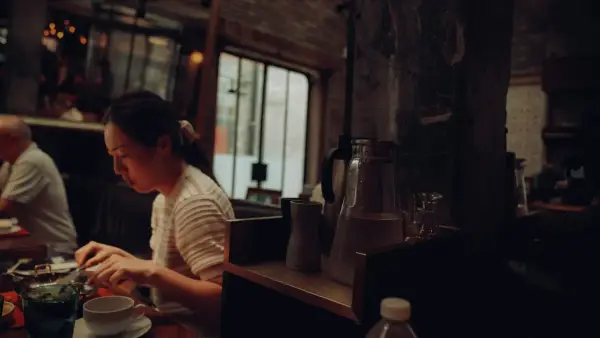
Children who learned to make themselves invisible in crowded homes often become adults who feel most genuinely at peace when they are completely alone, and the solitude that worries everyone around them is not loneliness but the first honest experience of safety they have ever known
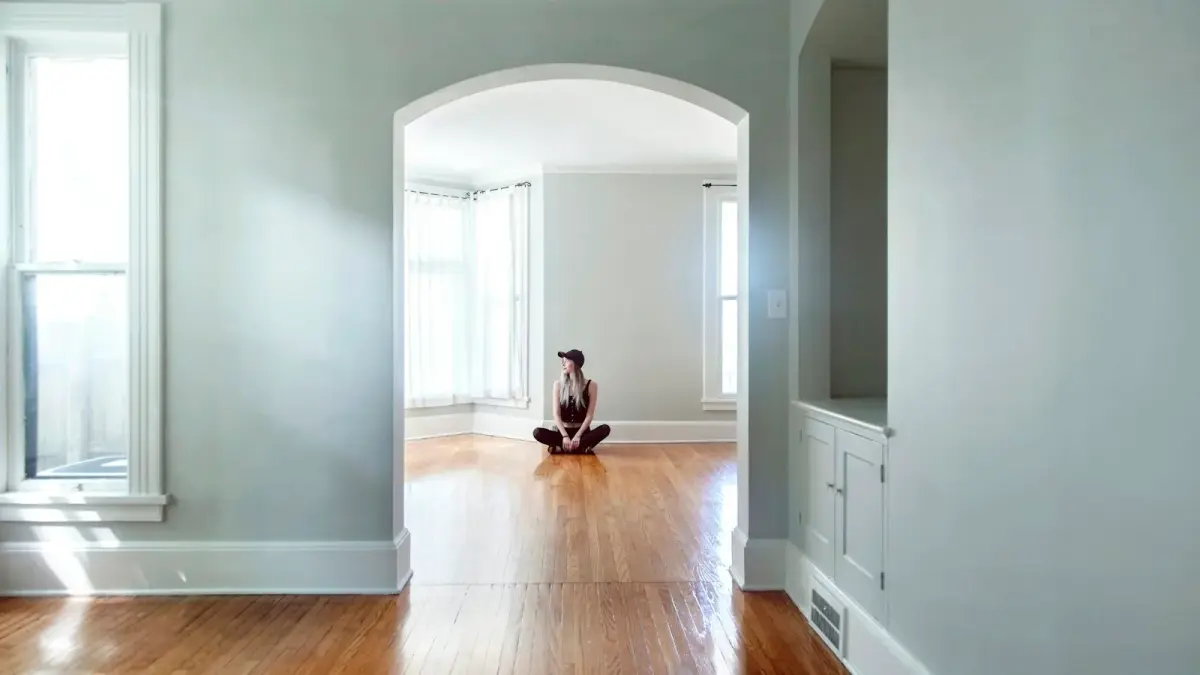
I remember the corner behind my grandmother’s couch. It smelled like old fabric and dust, and it was the only place in that house where nobody needed anything from me. There were always people everywhere - aunts arguing in the kitchen, cousins chasing each other through hallways, a television blaring over someone’s tears. I didn’t hate any of them. I just couldn’t breathe.
So I made myself small. I found the gaps between the noise and I slipped into them. I became so good at disappearing that sometimes my mother would count heads at dinner and forget mine entirely. That wasn’t cruelty. It was just the math of a crowded life.
If you grew up this way - folding yourself into corners, learning to need nothing out loud, becoming the quietest person in every room - then you probably know exactly what I’m about to describe. You became an adult who feels most like yourself when you are completely alone. And the people who love you cannot understand why that doesn’t frighten you.
Here’s the thing they keep getting wrong. Your solitude is not a wound. It is the first place you ever felt whole.
1. You learned that taking up space had consequences
In a chaotic home, visibility was rarely neutral. Being seen meant being given a task, being pulled into a conflict, or becoming the target of someone’s displaced frustration. You learned early that the safest version of you was the smallest version of you.
A 2015 study published in the Journal of Research in Personality found that children who grew up in high-conflict households developed heightened environmental monitoring - a constant scanning of the room for emotional threat. This wasn’t anxiety in the clinical sense. It was intelligence. You were reading the room faster than anyone else in it, and the data kept telling you the same thing: be smaller.
So you perfected the art. You ate quietly. You didn’t ask for seconds. You played alone in your room and called it preference when it was actually strategy.
2. Silence became your first language of safety
Most people experience silence as absence - the removal of sound, of company, of stimulation. But for you, silence was never empty. It was full. It was the sound of nobody needing you to perform, nobody watching, nobody about to erupt.
You didn’t need silence to think. You needed silence to exist without translating yourself for someone else’s comfort.
This is a distinction that most people in your life have never understood. When they walk into a quiet room, they feel something missing. When you walk into a quiet room, you feel something return. The quiet is not where you go to hide from life. It is where you go to finally have one.
3. You became fluent in the needs of others before you could name your own
Children in chaotic homes often develop what psychologist Gabor Mate describes as an extraordinary attunement to other people’s emotional states - not because they are naturally empathic, but because their survival depended on predicting what everyone around them would do next. You learned to read a slamming cabinet door like a weather forecast.
The cost of that fluency was steep. You became so skilled at tracking everyone else’s inner world that your own became a foreign country. Even now, if someone asks you what you need, there is sometimes a blank pause - not because you don’t know, but because the question itself feels unfamiliar. Nobody in your childhood asked you that.
Your solitude as an adult is partly this: the only space where you don’t have to monitor anyone. The only room where the only emotional weather belongs to you.
4. You confused peace with loneliness because everyone told you to
Here is where the story gets complicated. You found your quiet corner. You built a life with space in it. You started to feel something that might actually be peace - and then someone who loves you said the words that made you doubt all of it.
“I just worry about you being alone so much.”
A 2020 study in Psychological Science drew a sharp distinction between solitude and loneliness, finding that people who actively chose solitude reported higher levels of emotional stability and self-awareness than those who were alone involuntarily. The research was clear. Chosen solitude is not isolation. It is a form of emotional regulation.
But try explaining that to your sister who calls every Sunday to make sure you’re okay. Try telling your partner that wanting a Saturday alone is not a rejection of them. The world treats solitude like a symptom, and it has been telling you that story for so long that some part of you half believes it.
You don’t have to believe it. Your peace is not a problem to solve.
5. Your home became the person you could finally trust
If you grew up in a house that felt unpredictable, then the concept of home was always complicated. Home was supposed to be safe, and yours wasn’t - not in the bone-deep way that safety needs to work. So you spent decades not quite understanding why other people talked about going home like it was a relief.
Then at some point - maybe in your thirties, maybe later - you built a space that was truly yours. An apartment with the door locked. A house where nobody raises their voice. A room where every object is where you left it.
And something in your nervous system exhaled for the first time.
You are not antisocial. You are not depressed. You are a person who spent their entire childhood without a single square foot that belonged to them, and now that you have it, you are not willing to fill it with noise just because quiet makes other people uncomfortable.
6. You love people - but in smaller doses than they expect
This is the part that hurts. You genuinely care about the people in your life. You think about them when they’re not around. You would show up at three in the morning if they needed you. But after two hours at a dinner party, something in you starts to shut down - not because you’re bored, but because you’re full.
Susan Cain’s research on introversion describes this as a difference in stimulation thresholds, but for you it goes deeper than temperament. Your threshold was shaped by years of overstimulation that you had no power to escape. Every family gathering that went on too long, every night of yelling through thin walls, every morning of pretending nothing happened - those experiences calibrated your system.
You are not rejecting connection. You are protecting your capacity for it. You leave the party early so that you can actually miss the people there. That is not a flaw. That is extraordinary self-knowledge.
7. You carry guilt for needing what heals you
This might be the cruelest part of the pattern. You found the thing that makes you feel most like yourself - solitude, quiet, the absence of chaos - and instead of celebrating it, you feel guilty about it. You worry that you’re selfish. You worry that you’re broken. You worry that your need for space means you are fundamentally incapable of love.
You are not incapable of love. You are someone who learned, very young, that love came bundled with noise and unpredictability and the constant sensation of being needed until you were hollow. Of course you need to refill alone. Of course you guard your quiet. You are not withholding yourself from the world. You are making sure there is a self left to offer.
A 2019 study in Frontiers in Psychology found that adults who experienced childhood emotional neglect in high-stimulus environments often developed what researchers called “restorative solitude patterns” - deliberate, recurring retreats into alone time that functioned as nervous system regulation. The researchers did not call this avoidance. They called it adaptation.
8. The people who understand you never ask you to explain
You know the ones. The friend who texts instead of calls. The partner who reads in the same room without speaking. The sibling - if you’re lucky enough to have one like this - who sits with you on the porch and lets the silence be the conversation.
These people do not ask why you need so much time alone. They do not take your quiet personally. They understand, maybe from their own experience, that your stillness is not rejection. It is presence. The most honest kind you know how to offer.
If you haven’t found these people yet, let me tell you something: they exist. And when you meet them, you will recognize each other almost immediately. Not by what you say but by how comfortable you both are saying nothing.
9. Your solitude is not where you go to avoid life - it is where you finally get to live it
The narrative about people who crave aloneness is almost always wrong. It assumes that real life happens in groups, in noise, in connection - and that the person sitting alone in a quiet room is missing out on something. But you know better. You know what you were missing in all those crowded rooms: yourself.
Brene Brown has written about the difference between fitting in and belonging - how fitting in requires you to change your shape, while belonging lets you keep it. Your childhood taught you to fit in by disappearing. Your solitude now is the first place where you actually belong.
That is not sad. That is not something to fix. That is you, after decades of contortion, finally standing in your own shape and finding that it fits.
If you read this and felt something loosen in your chest, I want you to sit with that for a moment. You do not need to justify your quiet. You do not need to explain to anyone why an empty room feels more like home than a full one ever did.
You spent years learning how to need nothing. You are allowed to need this.
The solitude that worries the people around you is not a sign that something went wrong. It is a sign that something, after a very long time, is finally going right. You found safety. You built it yourself, in the quiet, with no blueprints and no permission.
That is not loneliness. That is the bravest kind of peace there is.