Children who rehearsed every conversation in their head before having it - who ran the dialogue forward and backward at seven, looking for the version that would not make anyone angry, who could not knock on the teacher's door without knowing exactly which sentence they would start with - often become adults who draft a single text message nine times before sending it, not because they are perfectionists but because a child whose words were met with unpredictable reactions learned that the only safe sentence was one they had already tested against every possible response
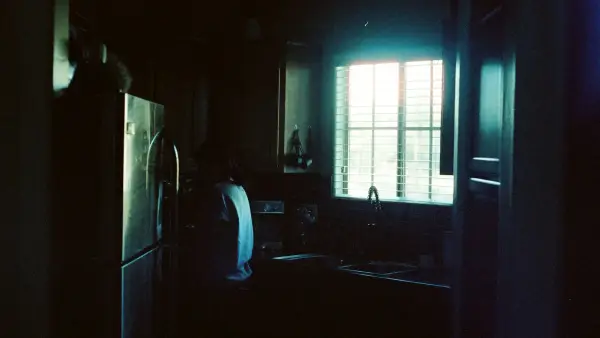
I was nine years old and standing outside the kitchen, silently mouthing the sentence I was about to say to my mother.
I had already run it four times. The first version started with “Mom, can I” - but that sounded too demanding. The second tried “Would it be okay if” - softer, but maybe too soft, like I was already apologizing. The third added a reason, an explanation she hadn’t asked for. The fourth stripped the reason back out because too many words sometimes made things worse.
I settled on a version. Walked in. Said it. She barely looked up from the counter. “Sure,” she said.
And I remember the wave of relief - not because I got what I wanted, but because I had chosen the right sentence. The one that didn’t land wrong.
I didn’t know that what I was doing had a name. I didn’t know other children were doing it too - standing in hallways, lying in bed at night, running future conversations through an internal rehearsal space that was more detailed than any script. I just thought I was careful. I thought everyone triple-checked their words before letting them out.
It took me decades to understand that what looked like caution was actually a survival system built by a very young person who had learned, through repetition, that the wrong sentence at the wrong moment could change the weather in an entire house.
The child who became their own editor
Most children speak before they think. That is the developmental norm. Language at age five, six, seven is impulsive, messy, full of half-formed ideas and accidental honesty. Kids blurt things. They say what they feel. They do not run focus groups on their sentence structure before opening their mouths.
But some children learn - early and sharply - that words are not free.
Maybe a parent reacted unpredictably. The same sentence that was fine on Tuesday caused a cold silence on Thursday. Maybe a caregiver punished honesty, or treated questions as challenges, or met vulnerability with irritation. Maybe the child said something perfectly ordinary and watched the room change.
It doesn’t have to be dramatic. It just has to be inconsistent.
A 2019 study published in the Journal of Research in Personality found that children raised in emotionally unpredictable environments develop heightened self-monitoring behaviors that persist well into adulthood. The researchers noted that these children learn to treat social interaction as a high-stakes performance - one where the script matters more than the feeling behind it.
That child doesn’t stop talking. They do something more sophisticated. They become their own editor. They build an internal rehearsal space - a room inside their mind where every sentence gets tested, revised, and tested again before it is allowed to exist outside of them.
By seven, they are running conversations in their head that haven’t happened yet. By ten, they can predict which version of a request will land safest with which parent. By fourteen, they have a fully operational preview system for every social interaction they enter.
They are not anxious. They are not overthinking. They are doing exactly what the environment asked them to do.
What rehearsal actually looks like from the inside
People who didn’t grow up this way imagine it as simple worry. “Oh, you just think about what you’re going to say first. Everyone does that.”
No. This is different.
This is lying in bed the night before a school event, rehearsing what you’ll say to the teacher when you walk in. Not the gist of it - the exact words. The inflection. The facial expression you’ll wear.
This is standing in the grocery store at eleven years old, practicing how to ask someone where the peanut butter is, because even a low-stakes interaction with a stranger feels like something that has to be choreographed.
This is writing a text message to a friend - a simple, ordinary text - and rewriting it six times. Not because any version is wrong, but because you need to check. You need to make sure the words can’t be misread. You need to close every gap where someone could hear something you didn’t mean.
Psychologist Daniel Goleman has written extensively about how emotional self-regulation in childhood shapes the architecture of adult communication. Children who are forced to manage their emotional expression early don’t lose the habit when the original danger passes. They refine it. They get better at it. The rehearsal becomes invisible - running in the background of every conversation, every email, every phone call they will ever make.
This is the person who calls a restaurant and has their order memorized before they dial. Who writes three drafts of a voicemail before leaving one. Who sits in their car for four minutes before a dinner party, running the first five minutes of conversation so they know where to stand and what to say when the door opens.
The rehearsal was never perfectionism
This is where most people get it wrong.
They look at the adult who agonizes over a text and call it perfectionism. They see the colleague who over-prepares for every meeting and label them Type A. They watch someone rehearse a difficult conversation seventeen times and think, “You’re overthinking it.”
But perfectionism is about the product. It is about wanting the thing to be flawless because flawlessness matters to you.
This is not about the product. This is about safety.
The child who rehearsed conversations was not trying to find the perfect sentence. They were trying to find the sentence that would not trigger an unpredictable reaction. They were not polishing their words for beauty. They were scanning them for danger.
A 2021 study in Frontiers in Psychology distinguished between two types of verbal self-monitoring: performance-oriented monitoring, which is driven by the desire to impress, and threat-oriented monitoring, which is driven by the need to avoid emotional harm. The researchers found that individuals who developed verbal self-monitoring in response to childhood unpredictability scored significantly higher on threat-oriented patterns - even when the actual threat had been absent for years.
That distinction matters enormously.
Because when you tell someone who is threat-monitoring that they’re “overthinking it,” you are essentially telling them to stop scanning for the danger that trained them to scan in the first place. You are asking them to walk into a room unscripted - and their entire nervous system remembers what happened the last time they tried that.
The phone call problem
If you grew up rehearsing, phone calls are a particular kind of hell.
Not because you are shy. Not because you have social anxiety in any clinical sense. But because a phone call is live. Unscripted. The other person can say something you did not anticipate, and you will have to respond in real time with no editing, no backspace, no chance to rewrite.
Every person I’ve spoken to who recognizes this pattern says the same thing: “I can handle the call. It’s the five minutes before the call that destroy me.”
Those five minutes are the rehearsal window. That is the child’s system booting up, running every possible version of the conversation, mapping out what the other person might say, preparing contingency responses for each fork in the dialogue.
It is exhausting. And it looks like procrastination, or avoidance, or a strange inability to just pick up the phone. But it is none of those things. It is an intelligence system doing exactly what it was trained to do - predicting, preparing, and protecting.
This same pattern shows up everywhere. In the person who writes an email in twenty minutes and then spends forty-five minutes rereading it. In the one who rehearses asking their boss for a day off as if they are presenting a legal case. In the friend who texts “hey, can I ask you something?” and then takes eleven minutes to type the actual question because they are still running versions.
The cost no one talks about
The rehearsal works. That is the cruel part.
People who pre-script their conversations tend to come across as articulate, measured, and thoughtful. They rarely say the wrong thing. They are excellent in interviews. They give beautiful toasts at weddings. Their emails are precise and warm. Their texts are considered and kind.
The world rewards this behavior. And the world has no idea what it costs.
Because the person who rehearses every conversation is never fully present in any of them. They are always one step ahead of the moment, monitoring, adjusting, checking. They cannot relax into a conversation because relaxing means losing control of the script, and losing the script means the old danger might return.
Susan Cain has written about how introverts - many of whom recognize this rehearsal pattern - often feel a gap between their public competence and their private exhaustion. The performance looks effortless from the outside. From the inside, it is a continuous act of translation between what they feel and what they have calculated is safe to say.
This is why the rehearsal pattern creates a particular kind of loneliness. You are surrounded by people who think they know you - who have received your carefully chosen words and believe those words were spontaneous. But you know the truth. You know that every sentence passed through a filter. And you wonder, sometimes, if anyone has ever actually heard you, or only the edited version of you.
The moment you catch yourself doing it
There comes a day - usually in your thirties or forties - when you catch yourself mid-rehearsal and think: wait.
Maybe you are standing in the bathroom at work, silently mouthing what you are going to say to a colleague about something completely ordinary. Maybe you are in bed, running tomorrow’s conversation with your partner about where to go for dinner - not because the conversation is hard, but because you cannot imagine walking into any exchange without a plan.
And in that moment, you realize: I have been doing this my entire life.
You realize the seven-year-old who stood outside the kitchen is still standing there. Still running sentences. Still looking for the version that will not make anyone angry.
The child assigned themselves homework that never ended. They built a system so effective that it outlived every danger it was designed to protect against. The parent whose reaction you feared may be decades gone. The teacher whose door you could not knock on has long since forgotten your name. The world you live in now does not require a script.
But the rehearsal runs anyway. Because the child who built it was thorough. And because a system that kept you safe does not simply stop when you tell it the war is over.
You are not overthinking
If you recognize yourself in any of this, I want you to hear something clearly.
You are not overthinking. You are not a perfectionist. You are not neurotic, or anxious, or too much.
You are a person whose mind learned - very young, with very little help - to protect you in the only way it knew how. You built an internal rehearsal space because unscripted words had consequences. You became your own editor because no one else was going to catch the sentence that might land wrong.
That system kept you safe. It got you through. And now it is still running because it was never told the emergency is over.
You do not need to dismantle it overnight. You do not need to force yourself into spontaneity as if that proves you are healed. Some of us will always pre-read a room before we speak. Some of us will always take an extra moment with a text.
But perhaps the next time you catch yourself rehearsing - standing in a hallway, mouthing the words, running the versions - you can pause long enough to recognize what you are actually watching.
It is not a flaw. It is not a disorder. It is not something to fix.
It is a seven-year-old, still doing their homework. Still trying to find the safe sentence. Still protecting you with the only tool they had.
You might gently let them know: you made it. The conversation went fine. You can put the script down now - not because you have to, but because you are finally in a room where the wrong word will not change the weather.
You were never overthinking. You were the only person in the room still doing the homework a child assigned herself a long time ago, in a kitchen she no longer lives in, for an audience that is no longer watching.