Children who woke up before everyone else in the house were not early risers - they were children who had learned by six or seven that the first hour of a household determined the emotional temperature of the entire day, and if they could be awake and dressed and already reading the room before anyone else stirred, they had a head start on whatever was coming, and those children almost always become adults who still rise before dawn not because they love mornings but because their nervous system never stopped treating the first quiet hour as a rehearsal for survival
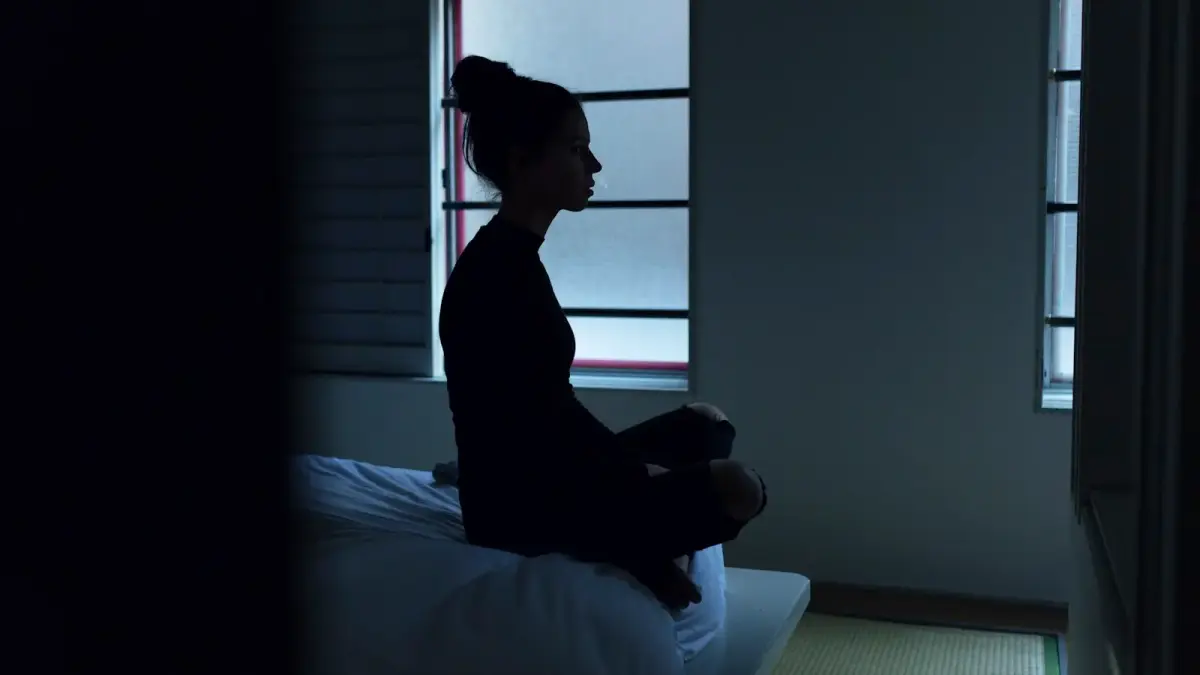
I was always the first one up.
Not by a few minutes. By an hour, sometimes more. I would lie in bed with my eyes open, listening to the house settle, and the moment I could hear nothing - no footsteps, no voices, no cabinet doors closing too hard - I would slip out of my room and begin what I now understand was a kind of reconnaissance mission.
I would check the kitchen. Were the dishes from last night still in the sink, or had someone cleaned them? I would look at the living room. Were the cushions still arranged, or had they been thrown? I would stand very still in the hallway and listen for breathing patterns behind closed doors. And only once I had gathered enough information to predict what kind of day it would be did I allow myself to sit down, pour a bowl of cereal, and pretend I was simply a child who liked mornings.
I was not a morning person. I was a weather station.
And if you were that child too, I want you to know something. That habit you still carry - the one where you wake at 4:45 or 5:00 and immediately begin scanning your environment before anyone else is conscious - that is not discipline. That is not productivity. That is the echo of a survival strategy you built before you had the language to explain why you needed one.
The first hour was never just an hour
In homes where emotional safety was consistent, mornings were unremarkable. Kids woke up, wandered out, found breakfast, and started their day without giving the atmosphere a second thought.
But in homes where the emotional climate was unpredictable - where a parent’s mood could shift between Tuesday and Wednesday for reasons no child could track - mornings became the most important diagnostic window of the day.
The first hour told you everything.
It told you whether last night’s tension had resolved or calcified. It told you whether someone had been drinking after you went to bed. It told you whether the silence was peaceful or loaded. It told you whether today was a good day or a day to be very, very small.
A 2014 study published in the journal Development and Psychopathology found that children raised in emotionally volatile households develop heightened perceptual sensitivity to environmental cues - particularly facial expressions, vocal tones, and spatial arrangements. These children were not just aware of their surroundings. They were reading them the way a pilot reads instruments before takeoff.
And the morning was the cockpit.
You learned to dress before you were fully awake
Here is something people who did not grow up this way rarely understand: you were not just waking up early. You were getting ready.
Dressed. Hair done. Backpack packed. Shoes by the door. You wanted to be ready to leave at a moment’s notice - not because anyone had told you to be, but because being caught unprepared in a volatile household felt dangerous. If things went sideways, you did not want to be the one still in pajamas, still fumbling for socks, still needing something from someone who might not be in a giving mood.
You learned that readiness was a form of protection.
And you carried that into adulthood in ways you probably do not even notice. You are the person who is always packed the night before a trip. The one who arrives fifteen minutes early to everything. The one whose desk is organized not because you love order but because disorder once meant something was wrong. You over-prepare not out of ambition but out of a bone-deep conviction that the world can change tone without warning, and the only defense is to already be standing.
The quiet was not peace - it was data
Most people think of early morning silence as calming. For you, it was information.
You learned to distinguish between different kinds of quiet. There was the quiet of a house where everyone was sleeping soundly - soft, even, neutral. And there was the quiet of a house where someone had been crying, or someone had left, or someone was lying awake in the next room deciding whether to start a fight at breakfast.
Those two silences sound identical to anyone who did not grow up measuring them.
But you could feel the difference in your chest.
A 2019 study in Psychological Science demonstrated that children from unpredictable home environments develop what researchers call “threat-detection biases” - a neurological tendency to scan neutral stimuli for signs of danger. The researchers noted that this bias does not fade with the removal of the threat. It embeds. The nervous system keeps scanning long after the original household has been left behind.
This is why you still wake up and lie still for a moment before moving. You are not savoring the morning. You are listening.
You became the emotional forecast for everyone else
Something that rarely gets discussed about the family alarm clock is the role reversal it represents.
In a well-functioning household, parents set the emotional tone. They wake up, they regulate themselves, and they create a stable atmosphere for their children to enter. The child does not need to assess anything. They just show up.
But when a child is the one waking first to read the room, something has quietly inverted. The child is now doing the emotional labor of the parent. They are forecasting. They are managing. They are deciding, before anyone else is conscious, how today is going to go and what role they need to play in it.
If the house felt tense, you became cheerful - a small, bright presence designed to lighten things.
If the house felt fragile, you became invisible - eating quietly, moving carefully, drawing no attention.
If the house felt dangerous, you became compliant - agreeing with everything, needing nothing, asking for nothing.
You were six years old, and you were already a strategist.
The adult version looks like ambition
Here is where it gets complicated, because the world rewards this pattern.
The child who woke up before dawn and prepared for the day becomes the adult who is always the first one in the office. The person who sends emails at 5 a.m. The one who “just functions better in the morning.” The one whose colleagues call disciplined, driven, self-starting.
And you let them believe that, because the alternative - explaining that your nervous system has been on a pre-dawn patrol since elementary school - does not exactly fit into a performance review.
A 2021 study published in the Journal of Research in Personality examined the relationship between childhood emotional parentification and adult achievement behaviors. Researchers found that individuals who had taken on caretaking roles in childhood were disproportionately represented among high achievers - not because they were more talented, but because they had internalized the belief that relaxation was dangerous. Productivity was their resting state because rest had never felt safe.
Your early mornings are not a lifestyle choice. They are a leftover.
And that does not make them wrong. It just makes them worth understanding.
Your body still rehearses
If you are someone who wakes before your alarm - every single day, without fail, no matter how late you went to bed - I want you to consider the possibility that your body is still rehearsing.
It is still running the old program. Wake up. Scan. Assess. Prepare. Be ready before the world has a chance to surprise you.
You might have a perfectly stable life now. A calm home. A partner who is consistent. A morning routine you genuinely enjoy. And still, somewhere underneath all of it, your nervous system is running the 5 a.m. protocol.
You might notice it most clearly on vacation. You are in a beautiful place, no obligations, no schedule, and you are still wide awake at dawn, lying in an unfamiliar room, listening. For what? You are not sure anymore. But you are listening.
That is not a flaw. That is a child who did something extraordinary - who built an entire early warning system out of nothing but observation and instinct - and whose body never received the signal that the mission was over.
What it means to finally sleep in
I am not going to tell you to force yourself to stay in bed until 8 a.m. That is not how this works. You cannot override decades of nervous system conditioning with a motivational quote about self-care.
But I will say this.
If you recognize yourself in these words, the most important thing you can do is name what happened. Not dramatize it. Not perform it. Just quietly, privately, name it. Say to yourself: I was not an early riser. I was a child who learned to read the emotional weather of a household before anyone else was awake, and I did it because I had to, and it was a remarkable thing to do, and I do not have to do it anymore.
You may still wake up early. You probably will. But there is a difference between waking up because your body is scanning for danger and waking up because you have chosen to greet the day on your own terms.
The difference is not in the hour. It is in what is happening in your chest when your eyes open.
If you were that child - the one padding through the dark hallway in bare feet, checking the kitchen, reading the silence, preparing yourself for whatever version of the day was about to unfold - I want you to know that what you did was not small. You held the emotional pulse of an entire household before you were old enough to ride a bike without training wheels.
You deserved a home where you could have slept until someone gently woke you and said breakfast was ready and everything was fine.
And if no one has said it to you yet: you can put the watch down now. The morning is just a morning. You made it.