He's 56 and earns more than his father made in a decade, but he still can't walk past the clearance rack without checking it first, because the boy who wore hand-me-downs to school is still deciding what he deserves
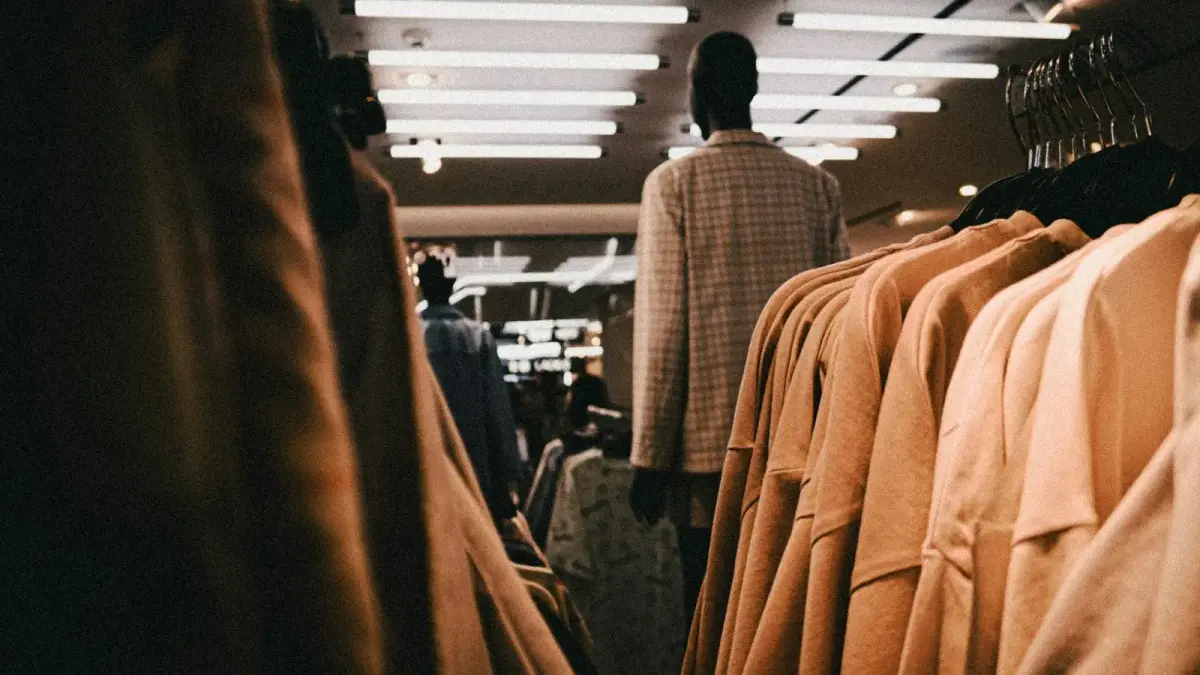
My father owned two good shirts his entire adult life. One was white, for job interviews and funerals. The other was blue, for everything else that required looking presentable. He rotated them with the precision of someone managing a wardrobe of fifty, pressing them on Sunday nights, hanging them on the same two hangers in the same order, treating them the way other men treated cars or watches - with quiet, almost sacred maintenance.
I didn’t understand until much later that the care wasn’t pride. It was arithmetic. Two shirts meant no margin for error. A stain, a torn seam, a missing button - these weren’t inconveniences. They were emergencies.
I’m 56 now. I own more shirts than I can count. And last Tuesday, I stood in a department store holding a $90 henley, running my thumb over the fabric, doing the math in my head - cost per wear, how many seasons it would last, whether I really needed it or was just being indulgent - and I put it back on the rack. Not because I couldn’t afford it. Because some part of me still wasn’t sure I was allowed to have it.
This isn’t a story about money. This is a story about a man who escaped one life and built another, but left his sense of permission somewhere between the two.
The clearance rack is not about savings
I make a good living. A genuinely good living. I’ve looked at the numbers enough times to know that the henley I put back represents less than what I spend on coffee in a week. The math isn’t the problem. The math has never been the problem.
The problem is that every time I walk into a store, my feet take me to the clearance section first. Not deliberately. Not as a strategy. My body just routes me there the way it routes me to the bathroom in the dark - through repetition so deep it feels like instinct.
I browse the marked-down racks with a kind of focused expertise. I check fabric composition, scan for defects, calculate the original price against the discount, and feel a small rush of satisfaction when I find something decent at 70% off. The whole ritual takes maybe fifteen minutes, and during those fifteen minutes, I feel like I’m doing something right. Something responsible. Something my mother would approve of.
And then I walk past the full-price section on my way out, and I feel it - this faint pull, like homesickness in reverse. Not longing for the clothes. Longing for the kind of person who would just pick something off that rack without performing a cost-benefit analysis first.
A 2021 study published in the Journal of Personality and Social Psychology found that adults who experienced economic hardship in childhood maintained what researchers called “scarcity-based identity schemas” - not just financial habits, but core beliefs about who they were and what they were worth. The scarcity didn’t just shape their spending. It shaped their self-concept. They carried an internal model of themselves as someone who needed to earn the right to have things, long after the scarcity itself had ended.
That’s the part nobody talks about. It’s not that you can’t stop being frugal. It’s that frugality became fused with your identity so thoroughly that spending freely feels like betrayal - of your parents, your past, the version of you that made it out by being careful.
The man who buys his kids everything and himself nothing
My daughter turned 24 last month. She called me from her apartment - the one I help pay for without being asked, because I decided years ago that my children would never do the math I did as a kid - and she told me about a jacket she’d seen. A nice one. The kind of jacket a young woman in the city wears when she’s becoming the person she wants to be.
“Get it,” I said. Immediately. Without asking the price. Without a pause.
She laughed and said, “Dad, you don’t even know how much it costs.”
She’s right. I didn’t. And I didn’t care. Because when it comes to my kids, the old programming doesn’t apply. They exist in a different category - the category of people who deserve things without conditions, without calculations, without earning the right to want.
But I can’t extend that same generosity to myself.
My wife noticed it years ago. She pointed out that I’d buy my son $200 sneakers without blinking but wear the same pair of New Balances until the soles went smooth. That I’d take the family to a nice restaurant and then quietly order the second-cheapest entree - not the cheapest, because that would be too obvious, but never the most expensive, because that would feel like a man pretending to be someone he’s not.
She asked me once, gently, who I thought I was pretending to be. I didn’t have an answer. Or I had too many.
Dr. Adam Grant has written about how early experiences of scarcity create what he calls “identity gaps” - the distance between who you’ve become and who you believe you’re permitted to be. You can change your income, your address, your social circle. But the internal permission structure - the quiet rules about what kind of person you are and what kind of person gets to have nice things - those were set decades ago, in kitchens where your mother counted change and said things like “we don’t need that” when what she meant was “we can’t have that.”
The second-cheapest wine
Here is a moment I think about more than I should.
Two years ago, my daughter took me out for my birthday. She chose the restaurant. She made the reservation. She told me, in the voice she uses when she’s being serious, that this was her treat and I was not allowed to argue.
The waiter came. My daughter ordered a glass of the most expensive wine on the menu without looking at the price column. She did this naturally, with the ease of someone who has never had to check. Someone who grew up believing that wanting something and having it were not two separate negotiations.
I watched her do it, and I felt two things at once. Pride - enormous, chest-expanding pride - that I had built a life where my child could be that free. And something else, something quieter and harder to name. A recognition that I had given her a permission I had never figured out how to give myself.
I ordered the second-cheapest glass. I always do.
She noticed. She didn’t say anything at the time, but weeks later, on the phone, she said, “Dad, why do you always do that? You can have the good wine.”
And I said something about not being a wine person, which was a lie. The truth is that the boy who wore his cousin’s old clothes to school and pretended they were new is still sitting at every table I sit at. He’s still scanning the right side of the menu. He’s still calculating what he’s allowed to want.
The shame of wanting nice things
This is the part that’s hardest to say out loud.
I am not just frugal. I am ashamed of wanting. Not ashamed of wanting things for other people - I’ll write checks for my kids, buy rounds for friends, leave generous tips because I remember what it’s like to depend on them. But wanting something for myself, something that isn’t practical or necessary or justifiable by some utilitarian calculus, makes me feel exposed in a way I can barely describe.
It feels like being caught. Like someone is going to see me reaching for the nice version of something and know - know that I came from nothing, that I’m performing a class I wasn’t born into, that the real me is the kid in the hand-me-downs and this comfortable life is just an elaborate costume I’ll eventually be asked to return.
A 2018 study in Frontiers in Psychology examined what researchers called “class-based impostor syndrome” - the phenomenon of people who had moved up the socioeconomic ladder feeling like frauds in their new economic reality. Participants didn’t just feel financially cautious. They felt ontologically displaced. They described their prosperity as something that had happened to them rather than something they had built, as if wealth were a borrowed coat they might have to give back.
I read that study three times and cried the third time. Not because it was sad. Because it was the first time someone had described exactly how I feel standing in the full-price section of a department store.
What the boy in the hand-me-downs still needs to hear
I’ve been in therapy for six years. Good therapy, the kind where you sit with a person who asks you questions you don’t want to answer and then waits without filling the silence. My therapist once asked me to describe the moment I felt poorest as a child. Not the most financially deprived - she was specific about this - but the moment I felt it most.
I told her about a Wednesday in fifth grade when a kid named Derek pointed out that my jacket was the same one his older brother had donated to the church clothing drive the year before. He wasn’t being cruel. He was just observant. But I felt something collapse inside me - a wall between what I knew about my family and what other people could see.
That collapse never fully rebuilt. The wall went back up, but it went up crooked, and for the last forty-five years, I’ve been trying to stand straight behind it.
My therapist said something that has stayed with me. She said, “You don’t have a spending problem. You have a deserving problem. You built a life that exceeds everything your parents imagined, and you still haven’t updated your internal list of what someone like you gets to have.”
Someone like you.
Those three words contain the whole thing. Because “someone like me” was set in concrete before I had a voice in the conversation. Someone like me wears hand-me-downs. Someone like me orders the second-cheapest option. Someone like me checks the clearance rack first, not because he’s smart, but because the full-price section is for other people - real people, people who belong in this tax bracket, people whose comfort isn’t borrowed.
The slow, imperfect work of permission
I want to tell you that I’ve fixed this. That I walked into that department store last week and bought the $90 henley and felt nothing but clean, uncomplicated satisfaction.
I didn’t. I went back a few days later and bought it on sale for $62, which felt like a compromise I could live with. My therapist would probably call that progress. The boy in the hand-me-downs would call it responsible. I don’t know what I’d call it, except honest.
What I’m learning - slowly, with a lot of resistance - is that the clearance rack isn’t the problem. The problem is the belief system underneath it. The conviction, laid down in childhood like rebar in concrete, that deserving is something you earn through deprivation. That comfort is for people with a different origin story. That wanting the full-price version of anything - a shirt, a meal, a life - is an act of arrogance for someone who started where I started.
Brene Brown has written that the opposite of scarcity is not abundance. It’s enough. Not having more than you need, but believing that you are enough - that your presence at the table isn’t conditional, that your order doesn’t need to be justified, that the boy who wore donated jackets grew into a man who is allowed to want things without apology.
I’m not there yet. But I’m closer than I was last year, and much closer than I was at twenty-five, when I got my first real paycheck and immediately put half of it in savings because spending it felt dangerous.
Some days I still check the clearance rack. Some days I walk past it. Most days I do both - check it out of habit, then stand in the aisle for a minute, breathing, reminding myself that the price tag is not a measure of what I deserve.
The boy in the hand-me-downs is still there. I don’t think he ever leaves. But I’m learning to sit with him instead of letting him drive. To hear his voice without obeying it. To say, gently, the thing nobody said to either of us when it would have mattered most.
You’re allowed to have this. You were always allowed.