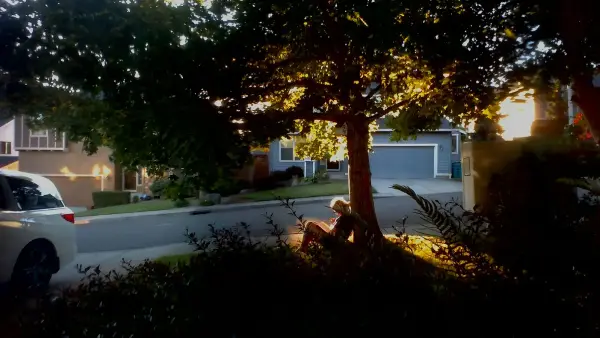
He is 58 and still buys the same brand of coffee his father drank even though he has tried better ones and knows the difference - it is not loyalty to a brand, it is that the smell of that particular roast in a kitchen before sunrise is the closest he will ever get to standing in his father's kitchen at seven years old, watching a man who never said the words pour a second cup without being asked just because his boy had wandered downstairs
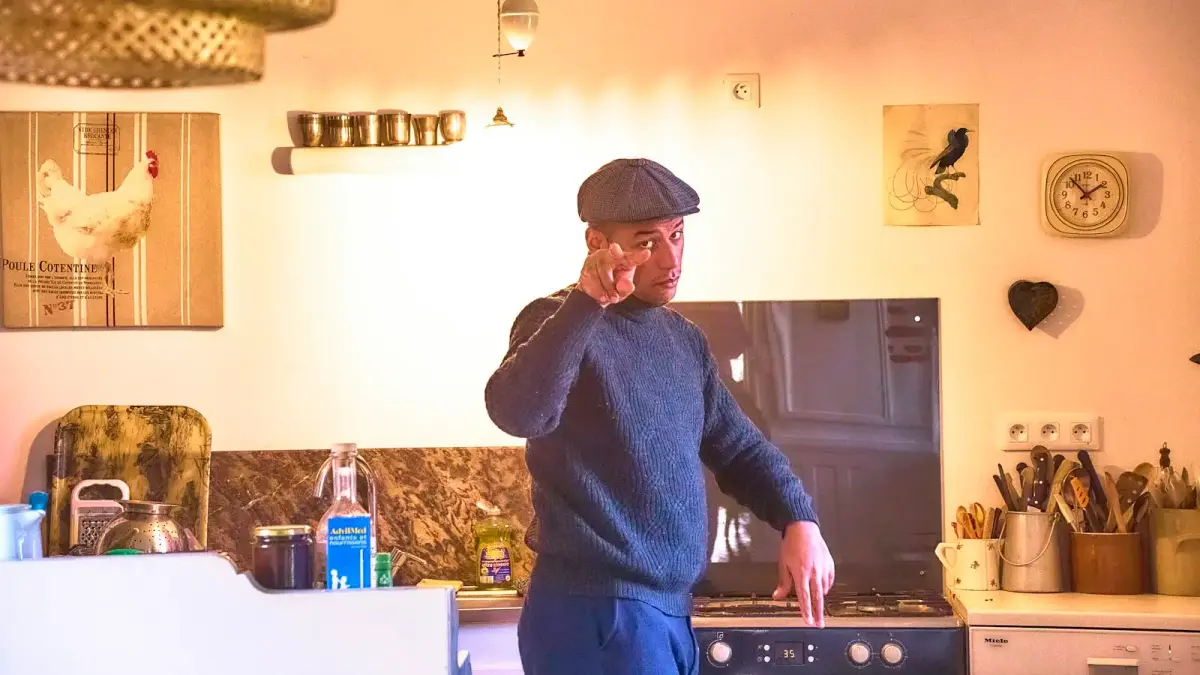
I was standing in the coffee aisle last Tuesday when my wife called and asked why I was taking so long at the store.
I had been standing there for eleven minutes. I know because I checked my phone afterward and saw the time gap between walking in and her call. Eleven minutes in front of the coffee, holding a red canister I have been buying for thirty years, next to a bag of single-origin something that I know for a fact tastes better.
I put the red canister in the cart. Same as always.
She thinks it is stubbornness. My oldest son, who has become the kind of person who grinds his own beans and talks about tasting notes, thinks it is a generational inability to upgrade. And for a long time I thought they were both a little bit right - that I was just a creature of habit, a man who found his brand in his twenties and never saw a reason to change.
But standing in that aisle, holding that canister, I finally understood what I was actually doing. And it had nothing to do with coffee.
The kitchen before anyone else was awake
My father was a 5 AM man. Every morning of my childhood, he was up before the house, before the light, before anything in the world had a chance to need him. And the first thing he did - the only thing he did before the day started making demands - was make coffee.
Not good coffee. Not carefully sourced or properly measured coffee. Just coffee. The kind that came in a red canister from the grocery store and tasted like the inside of a diner at six in the morning. Strong, slightly burnt, completely unremarkable.
But the smell of it. The smell was the entire architecture of safety in my childhood.
I would come downstairs sometimes, seven or eight years old, unable to sleep or just drawn by something I could not name. And he would be sitting at the kitchen table in the near-dark, both hands wrapped around a mug, not reading, not listening to anything. Just sitting with his coffee in a house that was still quiet enough to belong to him.
He never said come sit down. He never said good morning, son. He never said anything at all, most of the time. He just reached up, took a second mug from the cabinet, poured coffee into it - half a cup, the rest filled with milk so it would be cool enough for me to drink - and set it on the table across from him.
That was it. That was the whole conversation. A mug on the table. A chair pulled out by six inches. A man who could not say I love you finding the only language his body would allow.
Smell is the only sense that does not lie
There is a reason the coffee matters more than the memory itself, and neuroscience explains it with surprising clarity.
The olfactory bulb - the part of the brain that processes smell - connects directly to the amygdala and hippocampus. Every other sense routes through the thalamus first, which acts as a kind of editor, filtering and contextualizing information before it reaches the emotional centers. Smell bypasses that editor entirely. It arrives unprocessed, unfiltered, without the narrative the conscious mind would normally attach.
A 2014 study published in the journal Chemical Senses found that odor-evoked memories were significantly more emotional and more vivid than memories triggered by visual or auditory cues. The researchers described these memories as having a quality of reliving rather than remembering - as if the person were not recalling the past but standing inside it again.
This is what happens every morning when I open that red canister. I am not remembering my father’s kitchen. I am in my father’s kitchen. The smell does not remind me of him. It returns me to him. It puts me back in that chair, seven years old, holding a mug of coffee that is mostly milk, sitting across from a man who is showing me, in the only way he knows how, that my being there is not an interruption.
Gabor Mate has written extensively about how the body stores what the mind cannot articulate. Our nervous systems hold the imprint of every significant emotional exchange, especially the ones that were never spoken aloud. The body does not need the words. It has the temperature, the light, the sound, the smell. It builds its own archive out of sensory detail and keeps it filed under feelings that never got a name.
My father’s love never got a name. But it got a smell. And that smell has survived everything else.
The second cup
I think about that second cup constantly now. Not the coffee in it. The act of pouring it.
He never asked if I wanted coffee. He never made a show of it - no “let me get you some,” no warm greeting, no performance of fatherly tenderness. He just stood up, opened the cabinet, and poured. As if it were obvious. As if a boy wandering into a kitchen before dawn was not a surprise but an expected part of the morning. As if there had always been a second cup waiting.
That is what his generation did instead of saying the thing. They poured the cup. They left the porch light on. They drove forty-five minutes to check the tire pressure on your car and then drove home without staying for dinner. They built the bookshelf you mentioned needing six months ago and left it in the garage without a note.
None of these gestures had words attached to them. And so most of us spent years wondering if our fathers loved us, because we were measuring love by a vocabulary they never learned to speak.
A 2019 study in Frontiers in Psychology examined intergenerational patterns of emotional expression in men and found that fathers who grew up in households with restricted emotional expression were significantly more likely to communicate affection through instrumental behaviors - acts of service, physical provision, silent proximity - rather than verbal affirmation. The researchers noted that these men often reported loving their children intensely while simultaneously feeling incapable of stating it directly.
My father loved me intensely. I know this now. I did not always know it. For most of my twenties and thirties, I carried a low-grade ache that I interpreted as something missing - a deficit in the fathering I received, a gap where warmth should have been.
The gap was not a gap. It was a second cup of coffee poured without being asked. I just did not have the right instrument to measure it.
What the canister is actually holding
My father died eleven years ago. Not suddenly - slowly, over months, in a way that gave everyone time to prepare and no one enough time to say the things that mattered. I sat with him in the hospital during the last week. We did not talk much. He was tired, and I was trying to be the kind of man who could sit in silence without needing to fill it, which, I realized later, was exactly what he had taught me to be.
The morning after the funeral, I went to the grocery store because the house needed milk and my mother needed something to eat and I needed to move through a building where nobody was going to look at me with that particular softness that makes grief feel like it is being witnessed and therefore made permanent.
I walked past the coffee aisle and the smell hit me from ten feet away. Not the smell of that specific canister, because they were all sealed. But the ghost of it. The suggestion. And I stood there in the middle of a Tuesday morning grocery run and felt my father’s kitchen assemble itself around me - the table, the near-dark, the mug with its chip on the handle, the quiet that was never empty because he was in it.
I bought the red canister. I went home and made coffee with it. And I sat at my own kitchen table before anyone else was awake and drank it.
I have been doing this every morning since.
Brene Brown has written about how the most courageous thing we can do is to stay tender in the places where loss has asked us to harden. I think about this often. It would be easier, in some ways, to switch to the better coffee. To let the taste upgrade and the smell change and the morning become just a morning instead of a small, daily act of remembrance that I perform for an audience of zero.
But the tenderness is the point. The ache when I open the canister - the split second where I am simultaneously a fifty-eight-year-old man and a seven-year-old boy - that is not weakness. That is the last surviving thread of a connection that was never expressed in words and therefore can only survive in the body.
The smell that outlasts everything
I know what people think when I tell them I have been buying the same coffee for thirty years. They think habit. They think stubbornness. They think a man who cannot adapt.
And maybe that is partly true. Maybe there is some stubbornness in it. But stubbornness does not make your throat tighten at 5:14 in the morning when the first pour hits the filter and the kitchen fills with a smell that is not just a smell but a place and a person and the quietest, most complete expression of love you ever received.
That is not habit. That is a vigil.
If you have your own version of this - the cologne you still buy even though they stopped making it and you found three bottles on the internet just in case, the laundry detergent your mother used that you switched to after she passed, the specific brand of hand soap that takes you back to your grandmother’s bathroom where the towels were always folded and the world was always safe - then I want you to know something.
You are not stuck. You are not refusing to move forward. You are not a person who cannot let go.
You are a person whose body found a way to keep someone close after every other avenue closed. And the nose, it turns out, is the one part of us that never agreed to say goodbye.
My father has been gone for eleven years. But every morning at five, in a kitchen he never saw, I open a red canister and he is here. Not as a memory. Not as a ghost. As a smell so specific and so complete that my entire nervous system reorganizes itself around the belief that he is sitting across from me, both hands on a mug, not saying a word.
That was always enough. I just did not know it then.
I know it now. And every morning, I pour the second cup.