There is a kind of tired that has nothing to do with sleep, the kind that lives in a woman of fifty-three whose bloodwork is perfect and whose body has been running the surveillance system a child built, because the tiredness was never a symptom, it was a bill that finally arrived
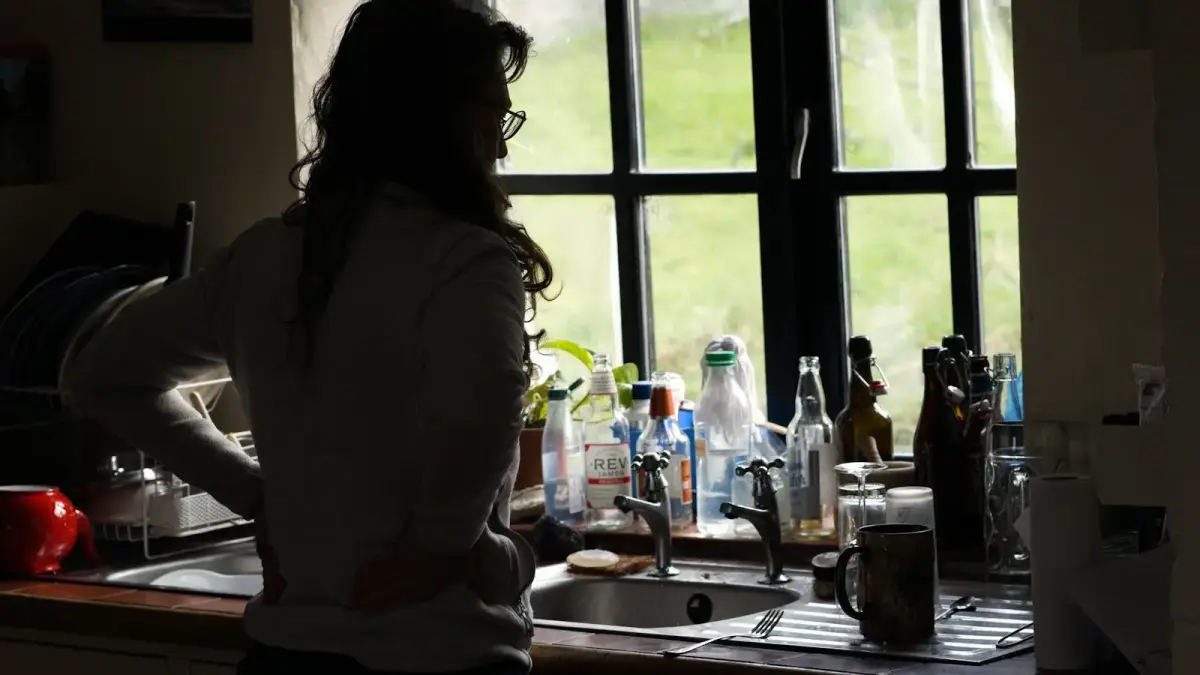
I sat in my doctor’s office last spring, staring at a printout of lab results that said I was fine.
Every number in range. Every marker unremarkable. The doctor smiled like she was handing me good news, and I smiled back because that is what I do. I smile when I am handed things. I smile when I am confused. I smile when I want to cry in a fluorescent-lit room because I came here looking for an answer and all I got was a clean bill of health that did not explain why I have not woken up rested in years.
I drove home and sat in my driveway for eleven minutes. Not thinking. Not crying. Just sitting in the particular kind of stillness that comes when you realize the thing that is wrong with you does not have a name on a blood panel.
The tired I am talking about is not the kind that sleep repairs. It is the kind that sleep does not even touch.
The body remembers what the mind stopped counting
You learned early. Maybe you were six, maybe younger. You learned that the climate of the room was your responsibility. That the tightness in your father’s jaw meant dinner would be difficult. That the silence after your mother closed the bedroom door was a different silence than the one after she opened it.
You learned to read rooms the way other children learned to read books - with your whole nervous system leaned forward, scanning for signals.
A 2017 study published in Psychoneuroendocrinology found that children who grow up in unpredictable emotional environments develop chronically elevated cortisol patterns that persist well into adulthood. The body does not simply forget the years it spent on high alert. It files them. It stores them in the shoulders, the jaw, the shallow breath you take before answering the phone.
You did not know you were doing labor. You thought you were just being good.
But the body was keeping a different ledger. Every mood you monitored, every conflict you absorbed, every room you walked into already braced - all of it was being recorded somewhere beneath consciousness, in a system that never learned how to clock out.
Hypervigilance is not a personality trait - it is a shift that never ended
People call it being “tuned in.” They call it empathy, sensitivity, emotional intelligence. And it is all of those things. But it is also a forty-five-year shift at a job you never applied for, performed without pay, without breaks, and without anyone noticing you were working.
The woman who always knows when the energy in the room shifts. The one who can sense a fight brewing between two other people before either of them feels it. The one who adjusts her voice, her posture, her entire presence depending on who she is with - not because she is fake, but because she learned a long time ago that the safest version of herself was the one that made everyone else comfortable.
Dr. Stephen Porges, whose polyvagal theory reshaped how we understand the nervous system, describes this as a state of chronic mobilization. The body is not at rest. It is not in danger. It is in between - perpetually scanning, perpetually ready, burning fuel at a rate that no amount of sleep can replenish.
This is what people do not understand about this kind of tired. You are not tired because you did too much yesterday. You are tired because you have been doing too much every day since you were small enough to believe that keeping everyone okay was the price of being loved.
The woman whose bloodwork is perfect
She is fifty-three. She goes to yoga. She drinks enough water. She takes her vitamins and gets her steps in and does everything the wellness articles tell her to do, and she is still so profoundly exhausted that some mornings the space between opening her eyes and putting her feet on the floor feels like crossing a canyon.
She has been to three doctors. She has had her thyroid checked twice. She has tried iron supplements, B12 injections, elimination diets, earlier bedtimes, and a meditation app she used faithfully for forty-one days before quietly letting it go.
Nothing is wrong with her. That is what they keep saying.
But something is happening to her. Something that does not photograph well on a scan or present neatly in a chart. The exhaustion is not in her blood. It is in her biography.
She was the child who kept the peace. She was the teenager who made herself small so her parents’ marriage could take up the whole room. She was the young wife who learned her husband’s moods the way a sailor learns weather - not out of curiosity, but out of survival. She was the mother who absorbed her children’s anxieties so seamlessly that no one, including her, ever noticed the transfer.
And now that the children are grown and the marriage is quieter and the house is finally still, her body is doing something she did not expect. It is collapsing. Not dramatically. Not in a way that anyone else can see. But slowly, thoroughly, like a building that stayed standing through every storm and is now settling into its foundation in the first calm it has ever known.
The bill does not arrive when you are struggling - it arrives when you stop
This is the part that confuses people. The exhaustion does not show up during the crisis. It shows up after. Sometimes years after.
A 2021 study in Frontiers in Psychology found that individuals with prolonged caregiving histories often experience their most significant fatigue not during periods of active stress, but during periods of relative safety. The researchers called it post-mobilization fatigue - the body’s delayed response to decades of sustained activation.
You held yourself together for the emergency. You held yourself together for the decade after the emergency. And now that no one needs you to hold anything, your arms are shaking.
This is not weakness. This is physics.
A system that has been running at capacity for forty-five years does not gently power down. It crashes. It stutters. It sends you signals you cannot decode because you were never taught to read your own body’s messages - only everyone else’s.
The tired is not a flaw. It is a receipt.
What the tired is actually saying
It is saying you were never nothing. All those years of making sure your sister was okay, of managing your mother’s moods, of reading your boss’s face before you said what you actually thought, of lying awake listening for the sound of a car in the driveway, of showing up with the right thing at the right time so many times that people stopped calling it effort and started calling it your personality - all of that was work.
Real work. Invisible, uncompensated, unrecognized work.
And your body has been counting every single hour.
The tiredness is not a medical mystery. It is not the beginning of decline. It is not something you need to fix with a supplement or a routine or a retreat. It is the natural, inevitable consequence of a nervous system that was asked to do too much for too long without anyone ever saying thank you, or even acknowledging that anything was being done.
Gabor Mate writes about how the body stores what the mind cannot process - how illness and exhaustion often live in the gap between what we experienced and what we were allowed to feel about it. The tired is not just physical. It is the weight of all the feelings you deferred, all the needs you postponed, all the versions of yourself you folded up and put away because someone else needed the space more.
You do not need to earn your rest
This might be the hardest part. Not the tiredness itself, but the guilt that comes with it.
Because you know how to be tired. You have been tired your whole life. What you do not know how to do is stop. To sit in a chair without mentally assembling a to-do list. To let a phone ring. To watch someone struggle without reaching for them. To choose yourself first and not feel like you have abandoned everyone you love.
The surveillance system does not have an off switch. It was built before you had the language to consent to it, and it was reinforced every single day by a world that rewarded you for disappearing into other people’s needs.
But the tired is asking you to try.
Not to become selfish. Not to stop caring. Just to recognize that the exhaustion is not a personal failing. It is evidence of a life spent in extraordinary, unwitnessed service to other people’s emotional wellbeing.
The morning you stop looking for a diagnosis
One day you will stop going to doctors about this. Not because you give up, but because you finally understand what the tired actually is.
It is not a disease. It is not a deficiency. It is not age catching up.
It is the sound your body makes when it finally feels safe enough to tell you the truth. That it has been carrying something enormous. That it has been carrying it alone. That it would like very much to set it down now, if you would let it.
The tired is not your enemy. It is your body’s first honest conversation with you after a lifetime of putting everyone else’s needs on the line ahead of its own.
You are not broken. You are not lazy. You are not falling apart.
You are a woman whose body has finally stopped pretending it was not working. And the exhaustion you feel is not the problem. It is the beginning of the body’s long, slow, sacred act of telling you what it actually needs.
Which might just be the one thing you never learned to give yourself.
Permission to stop counting everyone else’s hours and start counting your own.