She's 62 and just realized she still buys her adult children's favorite cereal every grocery trip even though they haven't lived at home in twenty years - it's not forgetfulness, it's a woman whose body learned that keeping the pantry stocked was the closest she could come to guaranteeing they'd always come back
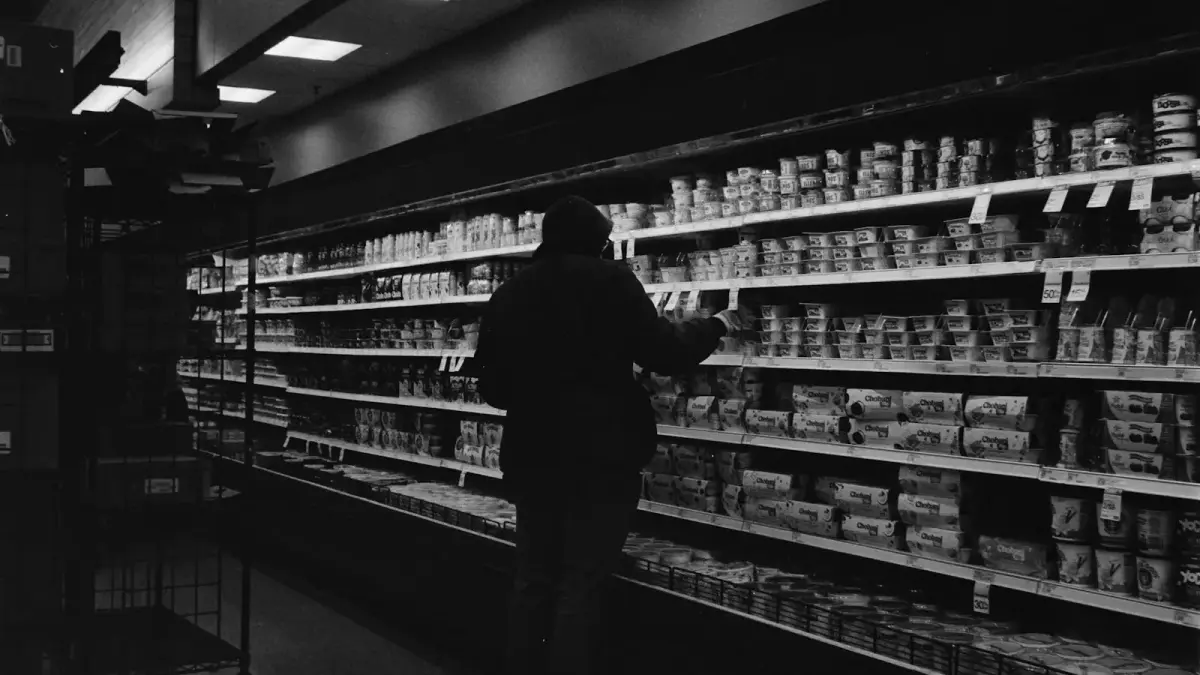
I was halfway down aisle seven when my hand did it again.
It reached for the yellow box of Cheerios - the regular kind, not Honey Nut, because that was always too sweet for them - and placed it in my cart before my brain had any say in the matter.
I stood there for a moment with my fingers still wrapped around the cart handle, staring at that box. My children are thirty-four and thirty-one. They live in different cities. One is married. The other just got a cat. Neither of them has eaten Cheerios since middle school.
I have been buying this cereal for twenty years for people who are not here.
And when I finally understood what I was doing - really understood it, standing under the fluorescent hum of a Tuesday morning grocery store with nobody watching - I didn’t feel embarrassed. I felt found. Like I had caught myself in the middle of something so honest it didn’t have a name yet.
If you have ever done something like this - kept a bedroom exactly the way they left it, cooked portions for four when there are only two, stocked a snack nobody reaches for anymore - then you already know this is not about groceries. And it is not about memory failing you.
It is about a kind of love that your body refuses to let go of, even when your mind has accepted the math.
When Your Hands Remember What Your Head Already Knows
There is a version of this that sounds clinical. Something about conditioning or routine or the brain’s tendency to automate familiar tasks. And sure, some of that is probably happening.
But that is not the whole story.
The whole story is that for about fifteen years, buying that cereal meant something. It meant the morning was going to start with bare feet on kitchen tile and the sound of a spoon against a bowl. It meant they were here. It meant you had done one small thing right.
Your body learned that equation. Cheerios equals presence. Stocked pantry equals full house. Full house equals safe.
And your body is not interested in updating that equation just because the variables changed.
A 2014 study published in the Journal of Consumer Psychology found that habitual purchasing behaviors are among the last to change after a major life transition - even more persistent than the emotional responses to the transition itself. Researchers described these lingering patterns as echoes of identity, behaviors that continue to reverberate long after the circumstances that created them have shifted.
You are not stuck in a loop. You are echoing. And there is a real difference between the two.
An echo is not a malfunction. It is proof that something meaningful was said in the first place.
The Pantry as a Transitional Object
Donald Winnicott, the British pediatrician and psychoanalyst, introduced the idea of transitional objects in the 1950s. The blanket. The stuffed bear. The worn-out thing a child clings to as they learn to tolerate the distance between themselves and their mother.
We talk about these objects as though they belong to childhood. As though adults outgrow the need for something tangible to hold the space between connection and separation.
But we don’t outgrow it. We just get more sophisticated about hiding it.
The Cheerios on the third shelf of your pantry are a transitional object. They are not food. They are a bridge between who your family was and who your family is becoming. They hold the shape of something that used to be here, and they make the absence feel less absolute.
Keeping them there is not irrational. It is tender. It is the same impulse that makes you keep their drawings on the fridge long after the tape has yellowed. The same instinct that keeps their phone number saved under the name they had before they got married.
You are holding open a door. And the fact that nobody walks through it every morning anymore doesn’t mean the door is pointless. It means you are a person who builds doors that stay open. That has always been your particular kind of strength, even when you didn’t recognize it as one.
Continuing Bonds and the Myth of Moving On
For decades, the dominant model of grief and loss - including the quiet, unacknowledged loss that comes with an empty nest - was that healthy adjustment meant letting go. Detaching. Moving forward without looking back.
That model was wrong.
In the mid-1990s, researchers Dennis Klass, Phyllis Silverman, and Steven Nickman introduced the concept of continuing bonds. Their work, which reshaped the field of bereavement studies, showed that the healthiest people after a loss were not the ones who severed their emotional ties. They were the ones who found new forms for those ties to live in.
Continuing bonds theory tells us that love does not require presence. That connection does not expire when proximity does. That the woman who buys cereal for children who no longer live at home is not failing to adapt. She is adapting in the most human way possible - finding a new container for a bond that hasn’t ended, even though its daily expression has changed shape.
The cereal is the new form. The stocked shelf is the continuing bond. And you didn’t need a textbook to figure this out. Your body got there decades before the research caught up.
Gabor Mate has written extensively about how the body stores relational patterns long after the conscious mind has processed them. Your nervous system does not understand that your children grew up and moved away. It understands that it once had a job - keep them fed, keep them close, keep them safe - and it is still reporting for duty every Tuesday morning in the cereal aisle, loyal as anything.
That is not dysfunction. That is devotion wearing the quiet clothes of habit.
What the Yellow Box Is Really Saying
If you could translate the gesture - the hand reaching for the shelf, the box dropping into the cart without thought - it would not say “I forgot they moved out.”
It would say something closer to this.
I am still your mother. I am still the person who knows what you like for breakfast and how you take your toast and which bowl was your favorite before it chipped. I still have a place for you here. The shelf is not empty. The room is not gone. You can always come back, and when you do, there will be something waiting for you that tastes exactly like it did when you were eleven and the world had not yet asked you to be anywhere else.
It is a prayer, of a kind. Not a religious one. A bodily one. A prayer made of muscle and memory and yellow cardboard, recited without words every time the cart rolls past aisle seven.
Brene Brown has talked about how the most courageous thing we can do is to stay tender in the places where life has asked us to toughen up. The empty nest is one of those places. The culture tells you to celebrate your freedom, redecorate their bedroom, finally take that trip you have been putting off for two decades.
And maybe you do those things. Maybe you also keep buying Cheerios.
Both things can be true at once. You can be a woman who has moved forward and a woman whose hands still reach for the past. These are not contradictions. They are the full width of a life that loved hard enough to leave marks on the muscle.
The Shelf That Stays Full
I still buy the cereal. I want you to know that.
After my little moment of recognition in aisle seven, I did not put the box back. I set it in the cart and kept walking. Because understanding a thing does not mean you have to stop doing it. Sometimes understanding just gives the ritual a name it never needed.
The Cheerios sit on my shelf next to the oatmeal I actually eat. Nobody touches them. Eventually they expire and I replace them with a fresh box. This is not efficient. It is not practical. It would probably confuse anyone who opened my pantry and tried to make sense of what they found there.
But it is mine. It belongs to me and to the version of my life that made it necessary.
And if you have your own version of this - the extra plate you still set without thinking, the childhood blanket folded at the top of the closet, the recipe you make every Thanksgiving even though the only person who really loved it now lives three states away and hasn’t asked for it in years - then I want you to hear something.
You are not foolish. You are not stuck in the past. You are not a woman who cannot let go.
You are a woman whose love outlasted the logistics. And the world is full of shelves that stay stocked and doors that stay open and quiet prayers disguised as grocery lists, offered up by people who loved so completely that their bodies simply refused to get the memo that the daily work was finished.
The daily work of loving them was never finished. You know that already.
Your hands have always known.