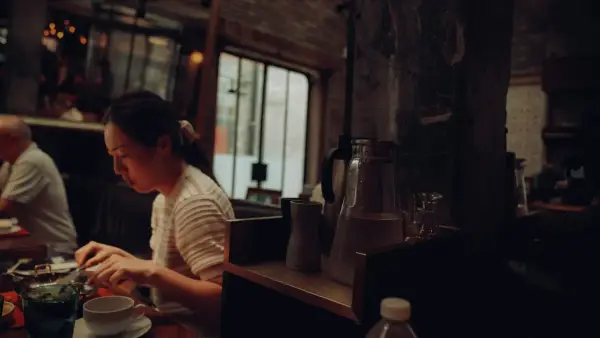
He's 59 and has stopped pretending that the dinner parties he attends every month bring him anything besides exhaustion - and the night he finally told his wife he'd rather stay home with a book than perform interest in people he'll never know was the night he started being honest about who he actually is
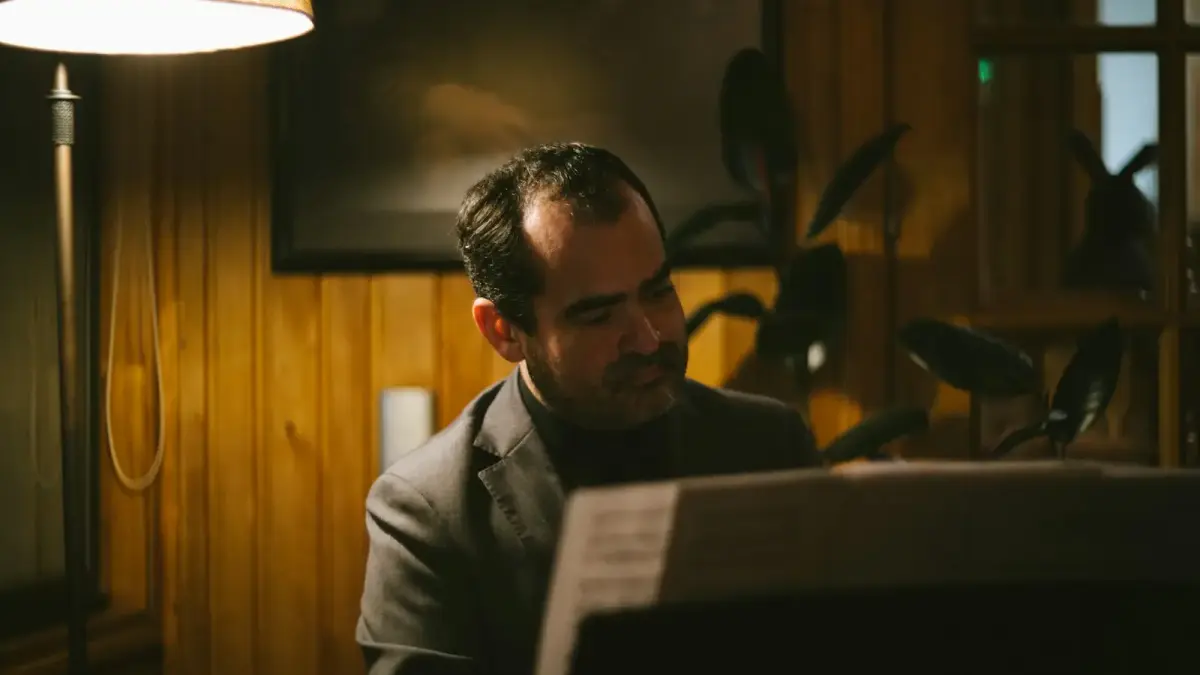
The night I told my wife I didn’t want to go to the Hendersons’ dinner party, my hands were shaking. Not because it was a fight. Not because she’d be angry. But because I was fifty-nine years old and about to say something I’d never said out loud to another human being.
I’d rather be home. Alone. With a book and the quiet.
That’s it. That was the confession. And it felt like pulling a pin out of something I’d been carrying in my chest for forty years.
She looked at me for a long moment. Then she said, “I know.” Two words. She already knew. She’d known for years. The only person I’d been performing for was myself.
The Costume Nobody Asked You to Wear
I want to talk about what it costs a man to spend four decades pretending he enjoys rooms full of people. Because the cost isn’t dramatic. It doesn’t show up as a breakdown or a crisis. It shows up as a low hum of dread every Saturday afternoon when your wife mentions plans.
It shows up as pouring a second glass of wine before you’ve finished the first, just to soften the edges of small talk. It shows up as that specific tiredness that isn’t physical - the kind where you’ve been smiling for three hours and your face aches but the real ache is somewhere behind your sternum.
I’ve been going to dinner parties, neighborhood barbecues, work functions, and holiday gatherings since I was nineteen. I learned early that men who wanted to be alone were suspicious. Antisocial. Weird.
So I built a version of myself that could walk into any room, shake hands, ask about someone’s kids, laugh at the right moments, and leave four hours later having said nothing real to anyone. I was good at it. That’s the worst part. I was so good at it that nobody - not my wife, not my friends, not my own children - ever thought to ask if I actually wanted to be there.
The Quiet Lie Men Tell Themselves
Susan Cain wrote something in Quiet that stopped me cold the first time I read it. She described how Western culture, particularly American culture, underwent what she called the shift from a “Culture of Character” to a “Culture of Personality” in the early twentieth century. Suddenly, being likable, outgoing, and magnetic wasn’t just preferred - it was the definition of a functional person.
For men, that shift carried extra weight. Masculinity already demanded performance - strength, confidence, decisiveness. Add sociability to the list and you’ve got a blueprint for a man who can never, under any circumstances, admit that a room full of people makes him want to disappear.
A 2022 study published in the Journal of Research in Personality found that introverted men reported significantly higher levels of “social masking” than introverted women - meaning they were more likely to adopt extroverted behaviors in social settings and more likely to describe those behaviors as exhausting rather than enjoyable. The researchers noted that masculine social norms created a specific pressure for men to perform gregariousness as a proxy for competence.
I read that and thought: that’s not a study. That’s my biography.
Every Dinner Party I Ever Attended
Let me tell you what a dinner party looks like when you’re an introvert pretending not to be.
You arrive and immediately scan the room for the person who talks the most. You position yourself near them because they’ll carry the conversation and you can nod. You ask open-ended questions - not because you’re curious, but because every minute someone else is talking is a minute you don’t have to.
You find a task. You offer to pour drinks. You clear plates. You stand by the grill. Anything that gives your hands something to do and your silence a reason.
When someone asks what you’ve been up to, you have three answers ready. You rotate them. Nobody notices you said the same thing last month.
Around the two-hour mark, something shifts in your chest. It’s not boredom - it’s depletion. Like someone slowly turning down a dimmer switch behind your eyes. You’re still smiling. Still nodding. But the person behind the smile checked out twenty minutes ago and is thinking about the book on your nightstand.
You drive home. Your wife says, “That was fun.” You say, “Yeah, it was.” And that tiny lie - repeated a thousand times across a thousand evenings - becomes the architecture of your social life.
What Honesty Actually Sounds Like at Fifty-Nine
The night I told my wife the truth, I expected her to be hurt. I’d been bracing for it. Instead, she sat down across from me and said something that cracked me open.
“You always looked tired after. I just thought you’d tell me when you were ready.”
She’d been waiting. Not because she didn’t care, but because she understood something I didn’t - that I needed to be the one to say it. That the admission had to come from me, not be extracted.
A 2021 study in Frontiers in Psychology examined what researchers called “authentic self-expression in long-term partnerships” and found that couples where one partner disclosed a long-suppressed personal need - even a small one - reported higher relationship satisfaction in the months that followed. Not because the disclosure solved a problem, but because it signaled trust. It said: I’m showing you who I actually am, and I’m trusting you not to flinch.
That’s what happened in my kitchen that night. I wasn’t confessing a flaw. I was showing my wife something I’d hidden from everyone, including myself. And her response wasn’t disappointment. It was relief.
The Myth That Solitude Is Loneliness
Here’s what nobody tells you about being an introverted man in your late fifties: people assume you’re depressed. They assume something is wrong. Your kids worry. Your friends make jokes about you becoming a hermit.
But there’s a difference between isolation and solitude, and it’s the difference between a cage and a room you chose to enter.
Adam Grant has written about how solitude is one of the most misunderstood human needs - that the capacity to be alone without being lonely is actually a marker of psychological health, not a symptom of withdrawal. Gabor Mate goes further, suggesting that the compulsive need to be around others can itself be a trauma response - a way of avoiding the discomfort of sitting with your own thoughts.
I spent forty years avoiding my own thoughts by filling every evening with other people’s voices. When I finally sat alone in my living room on a Saturday night with a novel and a cup of tea, I didn’t feel lonely. I felt like I’d come home to a house I’d been locked out of since I was twenty.
A 2023 study published in Psychological Science found that adults over fifty who actively chose periods of solitude - as opposed to having solitude imposed on them - showed lower cortisol levels, better sleep quality, and higher scores on measures of self-awareness. The key variable wasn’t being alone. It was choosing to be alone.
That word - choosing - is everything.
The First Honest Season
I’m sixty now. My wife and I have renegotiated our social life in ways I didn’t know were possible.
She goes to the dinner parties she enjoys. Sometimes I join her - but only when I genuinely want to, which turns out to be about once every two months. The rest of the time, she comes home and tells me about it, and I listen with more interest than I ever had while actually sitting at the table.
We take walks together in the evening instead. Quiet ones. We read in the same room without talking. We’ve found that our best conversations happen when neither of us is performing for an audience.
My friends have adjusted. Some of them understood immediately. A few were confused at first - one buddy asked if everything was okay at home, which is its own kind of revealing. The assumption that a man opting out of socializing must be in crisis tells you everything about what we expect men to endure without complaint.
But here’s what I want you to hear if you’re the person reading this who recognizes every word.
You are not broken for wanting quiet. You are not antisocial for choosing a book over a dinner table. You are not failing your spouse, your friends, or your family by saying, honestly and without apology, that you need less noise and more space.
What I Wish I’d Known at Thirty
If I could go back and talk to the version of me who stood in his first boss’s living room at twenty-three, holding a beer he didn’t want, laughing at a joke he didn’t find funny, I’d tell him this.
The rooms you don’t want to be in will keep multiplying. You’ll get better at pretending. And the better you get, the harder it will be to stop. Because one day you’ll be fifty-nine and you won’t know if you even like people or if you’ve just been managing them your whole life.
Start telling the truth now. Not all of it. Not loudly. Just the small truths. “I think I’ll head home early.” “I’m going to skip this one.” “I need a quiet night.”
Those sentences aren’t rejections. They’re introductions. They’re you, finally, walking into the room as yourself.
The night I told my wife I’d rather stay home was not the night I gave up on connection. It was the night I stopped confusing performance with presence. And the quiet that followed - the book, the tea, the sound of her car pulling into the driveway later that evening - was the most connected I’d felt in years.
You don’t owe anyone your exhaustion. You never did.