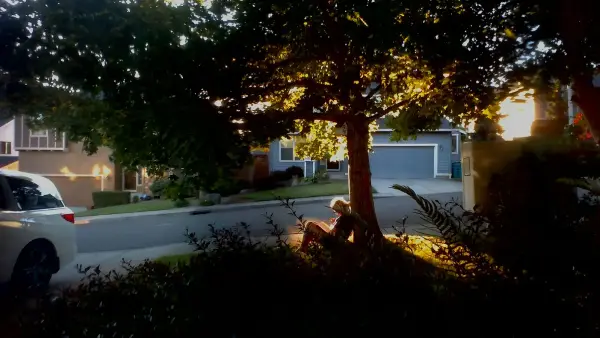
He's 59 and just realized that the reason there are almost no photographs of him from his children's entire childhood is not that he hated being photographed - it's that he was always the one holding the camera, and thirty years of birthdays, beach trips, and school plays are documented entirely from behind his eyes, and his children have thousands of images proving they were loved but almost none proving he was there
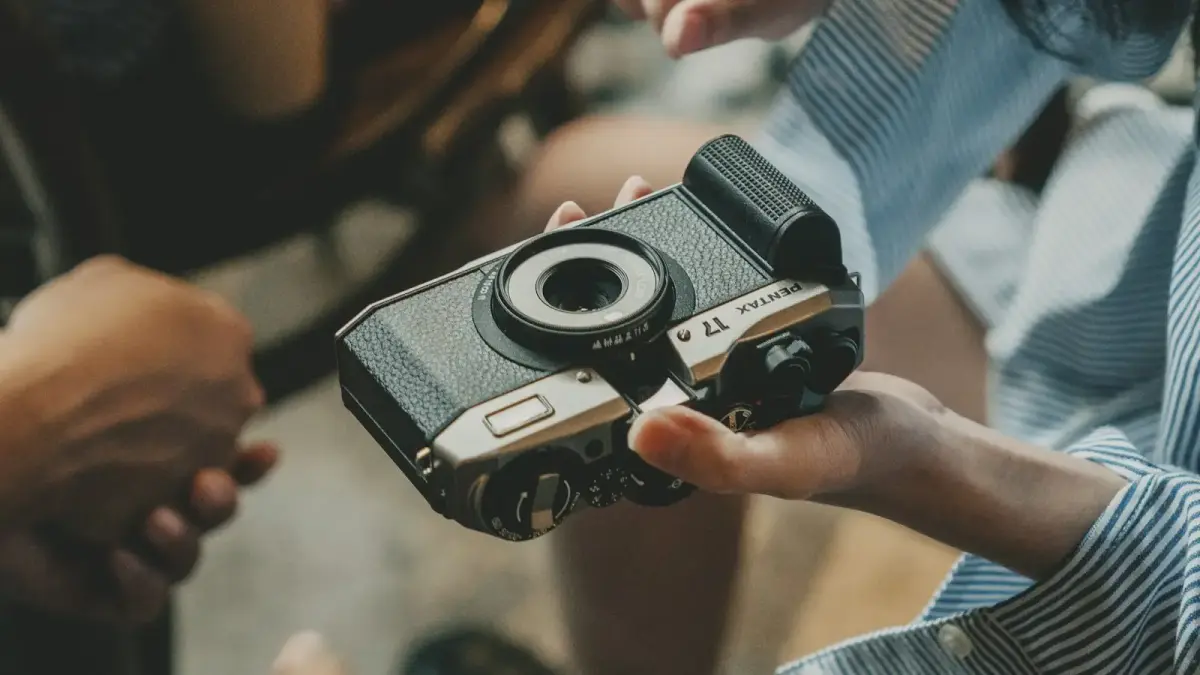
Every Photo He Ever Took Was a Love Letter No One Recognized
A friend of mine turned 59 last month. His daughter made him one of those digital photo slideshows - the kind set to music, the kind that makes you cry in the kitchen at 11 a.m. on a Saturday. She’d pulled together hundreds of images spanning three decades. Birthday cakes with too many candles. Sandy feet at the Jersey Shore. Trick-or-treat costumes held together with duct tape and stubbornness. His wife laughing in every season of her life.
He watched it twice. And then he noticed something that sat in his chest like a stone.
He wasn’t in any of them.
Not missing from a few. Missing from almost all. Thirty years of holidays, recitals, first days of school, backyard barbecues, lazy Sunday mornings - documented in thousands of photographs - and he appeared in maybe a dozen. A blurred shoulder at the edge of a frame. One shot someone else grabbed when he wasn’t paying attention. His shadow on the sand in a beach photo from 1998.
He told me he sat with that realization for an hour and couldn’t figure out why it hurt so much. It wasn’t anger. It wasn’t resentment. It was something quieter than that. Something closer to grief for a version of himself that existed fully but was never recorded.
The Man Behind the Lens Was Never Hiding
Here’s what I want you to understand, because I think a lot of men will recognize themselves in this and not know what to do with the feeling.
He wasn’t avoiding the camera. He wasn’t self-conscious or shy about photographs. He just never thought to hand the camera to someone else, because picking it up was automatic. It was reflexive. When his daughter blew out her candles, his hand reached for the camera the way another person’s hand might reach for a tissue during a sad movie. Without thinking. Without deciding.
He was documenting love. That’s what it was. Every time he lifted the camera to his eye, he was saying something he didn’t have the vocabulary to say out loud. Look at this. Look at her. Look at what we built. Don’t let this disappear.
A 2019 study published in the Journal of Personality and Social Psychology found that the act of photographing meaningful experiences can actually deepen emotional engagement with those moments - that people who take photos during positive events often report feeling more immersed, not less. The researchers noted that photography can function as a form of active savoring, a way of participating more fully in something you want to hold onto.
He wasn’t stepping out of the moment. He was stepping deeper into it. But the record doesn’t show that. The record shows everyone except him.
How a Generation of Men Learned That Love Was Labor, Not Presence
I keep thinking about why this pattern is so common among men his age - men who grew up in the 1970s, became fathers in the late ’80s and ’90s, and learned their emotional roles by watching their own fathers, who were often even more invisible.
These men inherited a definition of love that was entirely about function. Love was the mortgage payment. Love was showing up to the game even when you were exhausted. Love was carrying the cooler, driving the car, assembling the bike at midnight on Christmas Eve, and yes - love was picking up the camera so that everyone else could simply exist in the moment without worrying about whether it was being captured.
Nobody told them that being in the photograph mattered too. Nobody told them that their children might someday want proof not just that they were loved, but that their father was physically, visibly, undeniably there.
Because he was there. That’s the part that aches. He was there for every single one of those moments. His fingerprints are all over that archive. Every composition, every angle, every decision about what to capture and when - that was him. The entire visual history of his family was filtered through his eyes, framed by his choices, preserved by his attention.
He built the album. He just forgot to put himself in it.
The Photographs Are His Handwriting
I asked him if his kids ever noticed. He said his son mentioned it once, years ago, almost as a joke. “Dad, there are like no pictures of you from our whole childhood.” He’d laughed it off. Said something about always being the photographer. His son moved on.
But the joke sat somewhere in him the way certain sentences do - the ones that feel like nothing when you hear them and everything when you understand them later.
What I want to point out - and what I think matters for any man reading this who recognizes himself - is that the photographs themselves are evidence of him. Not of his face or his body in the frame, but of his attention. His care. His particular way of loving.
Think about it. Every image in that archive was taken by someone who was present, who was watching, who wanted to hold onto what he was seeing. The fact that the birthday cake is in focus and the candles are caught mid-flicker - that’s because he was there, close enough to see it, attentive enough to capture it, invested enough to care about the details.
A 2022 study published in Frontiers in Psychology explored how family photo practices reflect and reinforce emotional roles within households. Researchers found that the family member who most often takes photographs tends to be the one who carries the strongest sense of responsibility for the family’s emotional continuity - the person who feels, often unconsciously, that it is their job to make sure nothing important is forgotten.
That was him. The keeper of the record. The one who made sure the moments survived.
What His Children Actually Inherited
His daughter, the one who made the slideshow, called him the next day. She’d noticed it too - that he was barely in any of the photos - and she wanted to say something about it.
She told him she’d never thought about who was taking all those pictures until she started collecting them. And then it hit her all at once. Every single photo of her childhood - the ones she’d posted online, the ones she kept framed on her bookshelf, the ones she looked at when she missed being young - had been taken by him. Her entire visual memory of being a child was his perspective. She’d been seeing her own life through her father’s eyes without ever realizing it.
She said, “Dad, you’re in every picture. You’re just on the wrong side of it.”
I don’t know if I’ve ever heard a sentence that more precisely captures what a certain kind of fatherhood looks like from the inside.
These men - these fathers who held the camera for thirty years and never asked anyone to turn it around - they didn’t erase themselves. They just defined presence differently than the rest of us. Presence, to them, wasn’t about being seen. It was about seeing. It was about making sure that everything worth remembering was remembered.
And there is something holy about that, even as it breaks your heart a little.
The Absence That Proves Everything
I think about Brene Brown’s research on vulnerability and how she’s described the way many men experience emotional exposure as fundamentally threatening - not because they lack feeling, but because they were taught that being visible with their feelings was a kind of failure. For a lot of men, especially men who became fathers in the era before anyone talked about emotional labor or intentional parenting, the safest way to love was to love from behind the scenes. To be the infrastructure. To be the reason the photo exists rather than the subject of it.
My friend isn’t angry about the photos. He’s not bitter. But there’s a tenderness in him now that wasn’t there before - a quiet awareness that he spent thirty years preserving everyone else’s presence and never thought to preserve his own.
His wife has started pulling him into the frame. His kids have started turning the camera toward him at dinners, at holidays, at ordinary afternoons. He says it feels strange. Uncomfortable, almost. Like being asked to step out from behind something he’s been standing behind his whole life.
But he lets them do it. He stands there, slightly stiff, slightly unsure what to do with his hands, and he lets himself be photographed.
You Were Never Missing
If you’re reading this and you know exactly what I’m talking about - if you’re the one who always held the camera, always carried the bags, always stood at the edge of the group shot to make sure the framing was right - I want you to hear something.
You were not absent. You were so present that you forgot to leave evidence of yourself. You were so focused on making sure nothing was lost that you lost yourself in the record. And your children, whether they’ve said it or not, are starting to understand what all those photos really are.
They’re not just images. They’re thousands of tiny decisions made by someone who loved them enough to look, to notice, to capture the exact moment when the light hit their face and they were purely, completely happy.
Every photo you ever took of your family was a sentence in a letter you were writing across decades.
The letter says: I was here. I saw you. I didn’t want to forget a single thing.
Your children have that letter. They just didn’t recognize the handwriting until now.
And the beautiful, aching truth is this - every photograph in that album, every frame, every angle, every careful composition - is a self-portrait of your love. You are in every single one of them. You always were.