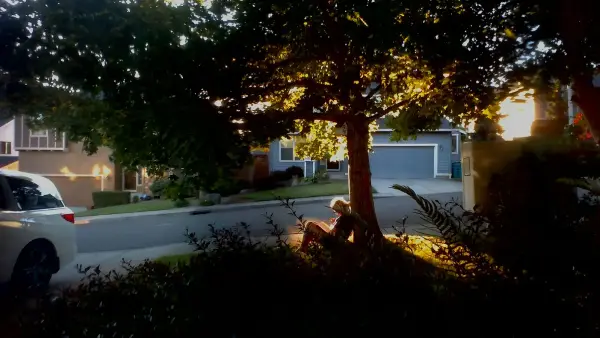
He is sixty-two and has just understood that the advice he gives his adult children - unsolicited, relentless, about things they clearly already know how to do - is not control and is not criticism, it is the last language of love available to a man whose children no longer need anything he was built to provide, and the father who texts his thirty-five-year-old daughter to check her tire pressure is not being annoying but is a man whose entire vocabulary of devotion was built from usefulness, searching for something to attach his love to now that nobody needs him to carry, fix, or protect anything ever again
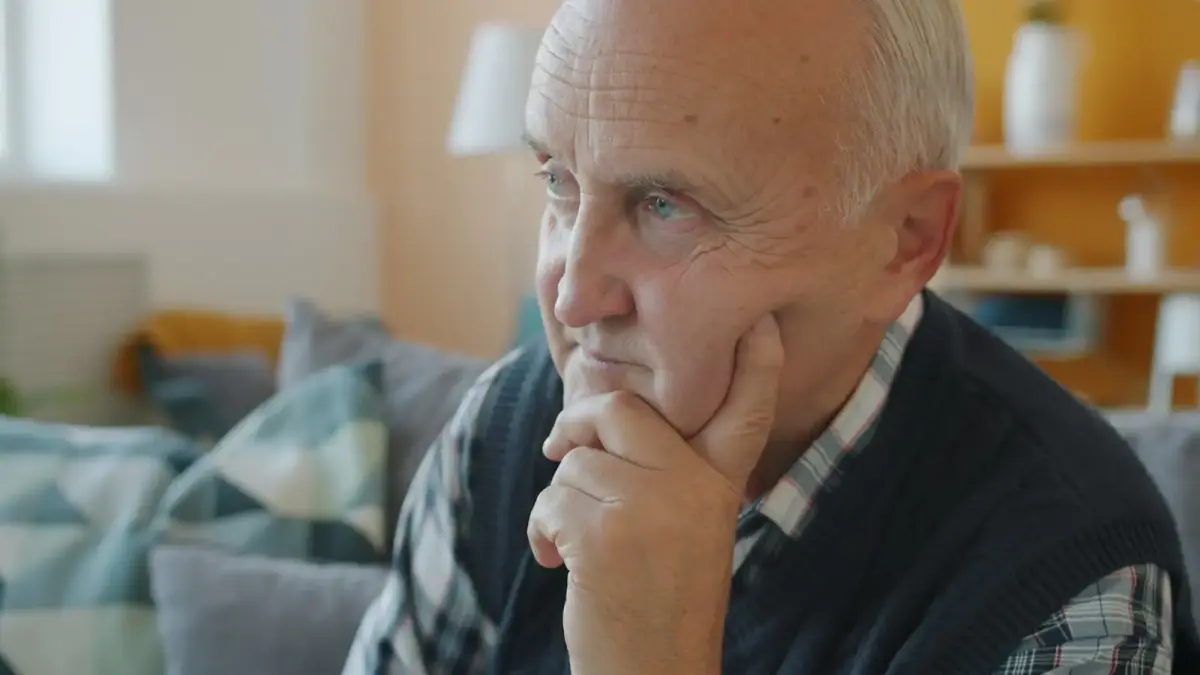
I texted my daughter on Sunday morning to tell her to check her windshield wiper fluid before the rain came later this week. She is thirty-five. She has a master’s degree. She has driven in rain hundreds of times without dying or crashing or even pulling over.
She replied with a thumbs-up emoji and nothing else.
And I sat there on the edge of my bed, phone in my hand, and felt something I have been feeling for years without ever naming it - the particular foolishness of a man who knows, somewhere beneath the reflex, that his daughter does not need to be told about wiper fluid. That she has not needed to be told anything practical in a very long time.
But I told her anyway. Because telling her is the only verb I have left.
The toolbox that lost its purpose
I was built for a specific job. Not by conscious choice, but by the slow accumulation of twenty years during which every way I mattered to my children came through something I could do with my hands, my back, or my willingness to appear at two in the morning without being asked twice.
I carried them. I lifted them onto my shoulders at parades. I held their bicycles from behind and ran alongside until my lungs burned, and the moment I let go was the moment they did not need me for that particular thing ever again.
I fixed the garbage disposal. I assembled the bunk beds. I drove ninety minutes in a snowstorm to pick my son up from a party because he called and said he did not feel safe, and whether I had to work at six the next morning was not a factor I considered for even one second.
A 2019 study published in the Journal of Family Psychology found that fathers who defined their parental identity primarily through instrumental roles - provider, protector, problem-solver - reported the highest levels of identity disruption when their children reached adulthood and no longer required those functions. The researchers called it role exit without replacement.
I can describe it more simply. It is the feeling of being a hammer in a house where nothing is broken.
The text messages nobody asked for
My son is thirty-two. He lives in another state. He calls every Sunday, and every Sunday I find myself saying things like, “Are you checking your oil regularly?” and “Make sure you are not running the heat too high, it dries out the air” and “Did you put salt down on those front steps before the freeze?”
He says, “Yeah, Dad. I know.”
He does know. He has known for years. He is a grown man with a mortgage and a child of his own and a perfectly functional relationship with the maintenance requirements of adult life.
And still I text him about tire pressure. Still I call to ask if he winterized the outdoor faucets. Still I send him links to articles about carbon monoxide detectors, as though my thirty-two-year-old son will forget to exist unless I remind him.
My wife tells me to stop. She says the kids find it overwhelming. She says I need to let them be adults.
She is right. I know she is right the same way I know the wiper fluid text was unnecessary. But knowing and stopping are not the same thing, because the advice is not really advice. It is a language. It is the only language I was ever taught for saying the thing I actually mean, which is: I love you, and I do not know how to love you without a task attached.
What usefulness was always covering
Here is what I have understood at sixty-two that I could not have understood at forty: the doing was never really about the thing being done. It was about contact.
When my daughter was eight and I spent a Saturday building her a bookshelf, I was not building a bookshelf. I was being in the same room as my child for four hours with a reason to be there that did not require me to say anything about feelings or vulnerability or the enormous, terrifying tenderness I felt every time I looked at her.
The bookshelf gave me an excuse. The broken faucet gave me an excuse. The flat tire, the stuck window, the fence post that was leaning - every problem in the house was a doorway I could walk through to be close to the people I loved without having to stand there empty-handed and say, “I just want to be near you.”
Brene Brown has written about how vulnerability requires the willingness to be seen without armor. I understand what she means in the abstract. But understanding and practicing are separated by decades of conditioning, and the conditioning I received was very clear: love is what you do, not what you say. Love is showing up with a drill. Love is driving through the storm. Love is a body that works until it cannot so that the people it loves never have to ask for anything.
Nobody teaches you what to do with the love when the work runs out.
The retirement nobody prepared me for
I retired fourteen months ago. My wife and I planned for it. We talked about travel, the garden, the stack of books on my nightstand that I had been promising myself for a decade. I looked forward to it the way a person looks forward to setting down something heavy.
But what I did not anticipate was the emptiness. Not boredom - I have plenty to do. The emptiness of being no longer necessary in the particular way I was trained to be necessary.
My children do not call to ask me to fix things anymore. They call to check in, to chat, to share something funny that happened at work. And I should be grateful for that. I am grateful for that, in the part of my brain that knows the difference between a relationship and a service contract.
But another part of me - the part shaped by a father who expressed love exclusively through labor, who showed devotion by never sitting down, who communicated tenderness through the twenty-seven years he worked a job he quietly hated without once complaining in front of his children - that part does not know how to show up empty-handed.
A 2021 study in Developmental Psychology examined what happens to fathers’ self-concept when their children reach full independence. The researchers found that fathers who had relied on what they called action-based bonding reported not just a loss of role but a loss of relational language. Without tasks to perform, these men described feeling physically present but emotionally inaudible - as though they were speaking in a frequency their family could no longer hear.
That is exactly how it feels. I am standing in the room. I am right here. But the only way I know to make myself heard is to text about tire pressure.
The daughter who saw through the space heater
My daughter came to visit last month. We were sitting on the back porch, and I started telling her about a recall on certain models of portable space heaters, because she had mentioned that her apartment gets cold in the mornings. I was midway through the model numbers when she put her hand on my arm and said something I have not stopped thinking about.
She said, “Dad, I know you are not really talking about space heaters.”
I did not say anything. I could not. Because she was right, and the fact that she could see through the heater warning to the thing underneath it made me feel more visible than I have felt in years.
What was underneath the space heater recall was this: I am sixty-two years old. My knees ache when I stand up too fast. I cannot carry the things I used to carry. I cannot fix the things I used to fix. And the man who defined himself for thirty-five years by what he could provide for his children is now sitting on a porch with his grown daughter, holding a phone full of unsent links to product recalls, trying to find one more thing to be useful about because the alternative is to sit here with his love fully exposed and his hands completely empty.
She did not need me to fix her heater. She did not need me to fix anything.
She just needed me to sit there. And the sitting - the just being present, with nothing to offer except myself - was the hardest thing I have ever done. Harder than any snowstorm I drove through. Harder than any three AM phone call I answered without hesitating.
Because showing up with a tool is easy when the tool is what you were trained to carry your whole life. Showing up with nothing is the work of a man learning, at sixty-two, that he was always enough without the drill, the advice, and the link to the product recall.
The text about the wiper fluid was not about wiper fluid. It was a man saying I love you in the only language he has spoken fluently for six decades. And the thumbs-up emoji his daughter sent back was not dismissal. It was her saying, I know, Dad. I hear you. You do not have to fix the rain for me.
I am learning, slowly, to believe her. That love without a task is still love. That a father sitting on a porch with empty hands is still a father.
But I will probably still text her about the tire pressure next week. Because sixty-two years of fluency in one language does not vanish in an afternoon, and a man who is learning to speak differently is allowed to stumble back into the familiar words now and then. The stumble is not failure. It is translation in progress. And the daughter who reads the text and sends back a single thumbs-up already knows exactly what her father is trying to say.