He's 62 and has quietly realized that the reason he wakes up an hour before the rest of the house every morning is not discipline and it is not insomnia - it is that the hour between five and six in the morning is the only time of day that belongs entirely to him, and he has been guarding it for thirty years the way another man might guard a locked room
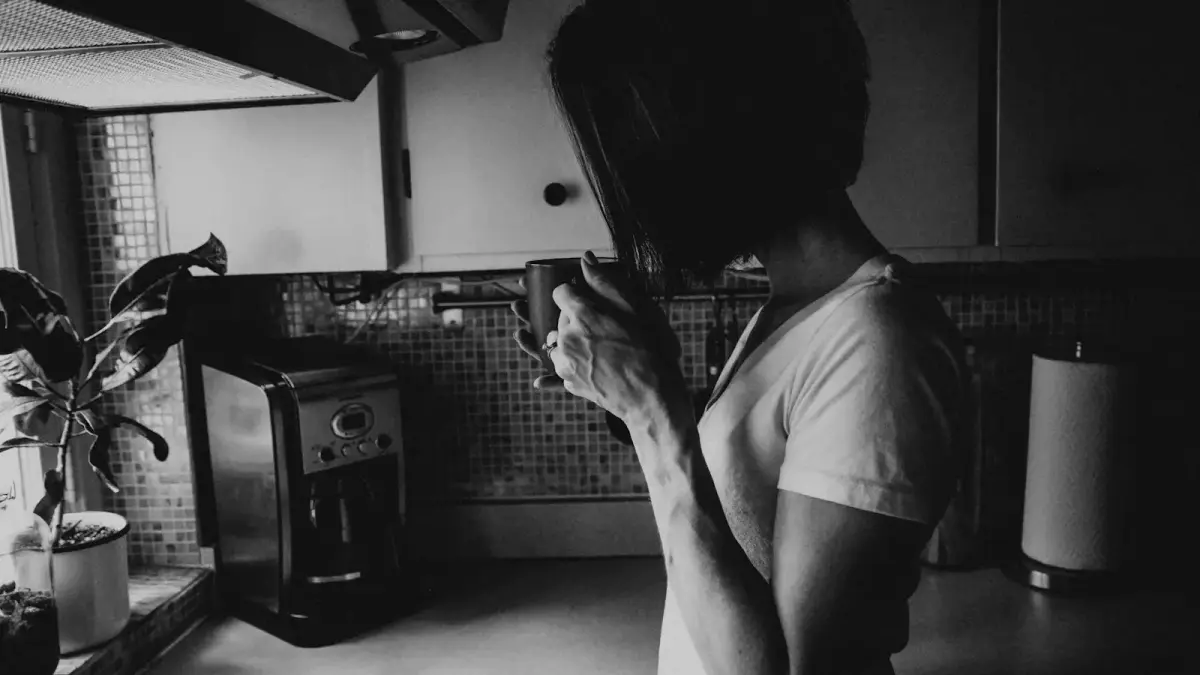
The Kitchen at 5:14 AM
I watched my father do it for twenty years and never once understood what I was seeing.
He would appear in the kitchen before the rest of us stirred - before my mother’s alarm, before the dog even lifted its head from the mat by the back door. The coffee maker would already be halfway through its cycle. The newspaper would be unfolded on the counter, not the table, because the table was where the family ate and this wasn’t family time. This was something else entirely.
He never talked about it. If you asked him why he was up so early, he’d shrug. “Just how I’m wired,” he’d say. Or: “Light sleeper.” Or he’d make a joke about getting old.
It wasn’t until I was well into my forties that I realized none of those explanations were true. He wasn’t wired for early mornings. He wasn’t a light sleeper. He was a man who had found the only unclaimed hour in a day that belonged to everyone else, and he had been quietly defending it for decades.
The Hour That Doesn’t Ask
There’s a specific quality to the time before a household wakes. It isn’t just quiet. It’s undemanding.
Every other hour of the day carries a request inside it. The morning after everyone’s up asks you to be organized, present, responsive. The workday asks you to perform. The evening asks you to be available, to listen, to show up emotionally for the people who love you. Even weekends ask something - they ask you to enjoy yourself, to make the most of the time, to be the version of yourself that’s relaxed and fun.
But five in the morning asks nothing. The light is barely there. The house is still holding its breath. And the man sitting at the kitchen counter with his coffee isn’t being a father or a husband or an employee or a neighbor. He’s just being a person. A body in a chair, watching the window go from black to grey.
A 2019 study published in the Journal of Research in Personality found that individuals with high need for solitude - not loneliness, but chosen aloneness - often develop what researchers call “temporal sanctuaries.” Specific times of day that they unconsciously protect as restorative space. The study noted that men over fifty were particularly likely to locate these sanctuaries in the early morning hours.
Not because they loved mornings. Because mornings were the only unclaimed territory left.
What He Never Learned to Say
Here is the thing about men born in the 1950s and 1960s: nobody ever taught them the word “boundary.”
Not the way we use it now, anyway. They weren’t raised in a culture that said, “You need time for yourself and that’s healthy.” They were raised in a culture that said, “You provide. You show up. You don’t complain.” And most of them listened. Most of them built entire lives around being reliable and available and steady.
But the need for solitude doesn’t disappear because you never name it. It just goes underground. It finds the margins. It carves out space where nobody’s looking.
That’s the early morning. That’s also the long drive home when he takes the back roads instead of the highway. That’s the garage workshop where he goes to “fix something” that didn’t really need fixing. That’s the walk to the hardware store on a Saturday afternoon when he could have just ordered it online.
These aren’t errands. They’re breathing room.
Susan Cain wrote about how introverts in an extrovert-driven world learn to create “restorative niches” - small pockets of solitude embedded inside otherwise overstimulating days. She was talking about everyone, but I think she was especially describing men of a certain generation who never had permission to say, “I need to be alone for a while.”
They couldn’t say it. So they woke up at five instead.
The Irritability That Gives It Away
You know a man is guarding his morning hour when someone else wakes early and he gets irritated.
Not angry. Not dramatic about it. Just - off. Something flickers across his face when he hears footsteps on the stairs at 5:20 instead of 6:15. He’ll say it’s nothing. He’ll pour the other person coffee. He’ll make small talk. But something has been punctured, and he feels it in his chest the way you feel it when someone walks into a room where you were crying and you have to pretend you weren’t.
That irritability is the tell. It reveals the thing he would never say out loud: this was mine.
Not the kitchen. Not the coffee. Not the specific chair or the specific mug, although those matter too, because ritual is how we mark sacred space when we don’t have the language for sacred. What was his was the absence of being needed. The temporary, precious feeling of existing without function.
A 2021 study in Frontiers in Psychology examined what researchers called “identity rest” - the psychological experience of temporarily stepping out of your social roles. They found that people who regularly accessed identity rest showed lower cortisol levels, better emotional regulation, and - this is the part that stuck with me - greater capacity for generosity in their relationships.
In other words, the man who takes the morning hour isn’t being selfish. He’s doing the invisible maintenance that allows him to be present for everyone else for the remaining twenty-three.
A Room of His Own
Virginia Woolf wrote about a woman’s need for a room of her own - a physical, literal space where she could exist outside the demands of domestic life. That idea changed how we think about women’s inner lives.
But nobody wrote the equivalent for men. Not because men had more rooms. Because the assumption was that men already had the world. The office, the career, the public sphere - wasn’t that enough space?
It wasn’t. Because those aren’t spaces where you belong to yourself. Those are spaces where you belong to your role. The office belongs to your ambitions and obligations. The career belongs to the family that depends on it. Even the man cave - that cliche of masculine retreat - is usually framed as recreation, as indulgence, as something slightly embarrassing.
The five AM kitchen isn’t embarrassing. It isn’t recreation. It’s survival.
I think about all the men I’ve known who had their version of this. My uncle who fished alone every Sunday morning, standing in water up to his knees before the sun hit the trees. My neighbor who sat in his truck in the driveway for ten minutes after pulling in, just sitting there with the engine off. My friend’s father who walked the dog at dawn and came back looking like a different person - softer, more open, less braced for impact.
They all found the room. They just built it out of time instead of walls.
The Thirty-Year Secret
Here is what makes the morning hour so tender: it has been going on for decades, and he has never once described it accurately.
He has called it discipline. He has called it habit. He has let people admire his “early bird” nature. He has accepted the compliment when someone says, “I wish I had your willpower to get up that early.” He’s nodded along, because the truth - that he wakes up before the world because the world is too much sometimes, because he needs sixty minutes where nobody’s face is asking him for something - isn’t a truth that men of his generation were built to speak.
But he knows. Somewhere behind the shrug and the joke about aging, he knows exactly what that hour is.
It’s the place where he remembers he’s a person. Not a provider, not a rock, not the guy who handles things. Just a person who likes the way light moves across a kitchen floor when nobody else is watching.
Gabor Mate has written about how the body keeps the score of every unspoken need, how the things we can’t express in language show up in pattern and habit and symptom. The morning ritual isn’t a symptom. But it is the body’s answer to a question the mind was never allowed to ask: when do I get to just be?
Five o’clock. Every morning. For thirty years.
What It Means to Finally See It
If you’re the man reading this, the one who’s been up since before the light changed - I’m not going to tell you to talk about it. I’m not going to suggest you journal about your feelings or tell your wife what the morning means to you. You don’t have to name it to anyone.
But maybe you could name it to yourself.
Not discipline. Not insomnia. Not habit.
Need. A real one. A human one. The need to exist, for a small portion of each day, without being needed.
That’s not weakness. That’s not selfishness. That’s the quiet, uncelebrated act of a man who figured out how to stay whole inside a life that asked him to give every piece of himself away. You found the one hour that nobody else wanted, and you made it into the only room that was ever truly yours.
You’ve been doing this for thirty years. You don’t need anyone’s permission to keep going. But you might feel something shift - just slightly, just once - when you finally let yourself call it what it is.
Not a routine. A refuge.
And you built it yourself, out of nothing but silence and the first light of day.