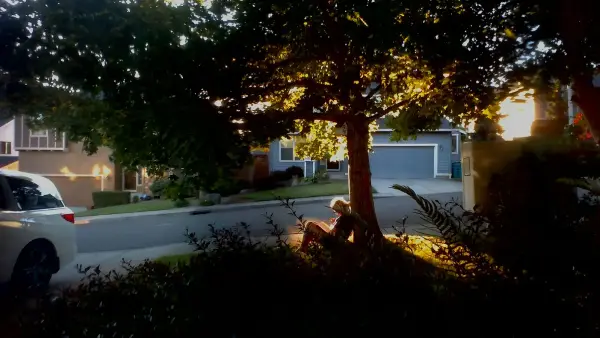
He's 62 and has finally realized that the reason he takes the same walk every morning along the same path through the same neighborhood is not habit and it is not laziness, it is that somewhere around fifty-five novelty stopped being the point and the oak tree he has watched grow from a sapling into something that shades the entire sidewalk is the only evidence he trusts that slow and faithful things still become something remarkable
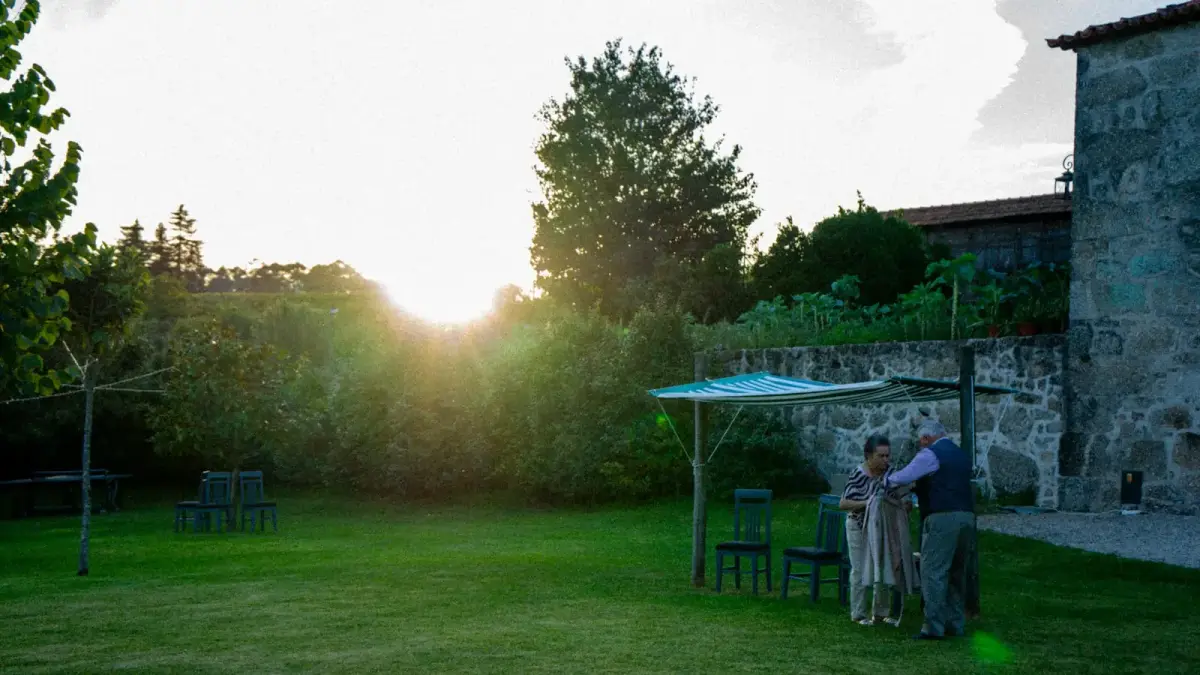
The walk that looks like nothing
I have a neighbor named Gerald who leaves his house at 6:40 every morning. I know this because I used to leave at 6:45, and I would see him halfway down the block, moving at a pace that could only be described as deliberate. Not fast. Not slow. Just steady, like a man who had somewhere to be but was in no particular rush to get there.
For years I assumed he was doing it for his health. Maybe his doctor told him to walk. Maybe his wife encouraged it. Maybe he read one of those articles about how thirty minutes of morning movement adds seven years to your life.
I never asked him about it. I just watched.
Then one morning last spring, I caught up to him at the corner where the big oak tree hangs over the sidewalk. He was standing still, looking up into the canopy. Not photographing it. Not stretching. Just looking at it the way you look at someone you have known for a very long time.
“I planted that,” he said, without turning around. “Thirteen years ago. It was barely taller than my grandson.”
And something about the way he said it - quiet, proud, completely unhurried - made me realize that Gerald’s walk had never been about exercise at all.
When novelty stops being the currency
There is a shift that happens somewhere in your fifties that nobody warns you about. It is not dramatic. There is no single morning when you wake up and feel different. It arrives the way fog does - you look up and realize you are already inside it.
The shift is this: new things stop being automatically interesting.
A new restaurant opens, and you think, “I already have a place I like.” A friend suggests a vacation to somewhere you have never been, and your first feeling is not excitement but a faint exhaustion at the thought of figuring out where to eat breakfast in an unfamiliar city. Someone recommends a book, and you find yourself rereading one you have already read twice instead.
This is the moment when most people panic. They interpret this shift as decline. As giving up. As the slow calcification of a personality that used to be curious and open and willing to try anything.
A 2019 study published in the Journal of Research in Personality found that openness to experience - one of the Big Five personality traits - does decline modestly with age, but the researchers noted something the headlines always miss. The decline was not in curiosity itself. It was in the need for novelty as a source of stimulation. Older adults did not become less interested in the world. They became more selective about which parts of the world deserved their sustained attention.
That distinction matters enormously. Because selectivity is not the same thing as stagnation.
It is the opposite.
The oak tree testimony
Gerald’s oak tree is a pin oak. I looked it up after that morning at the corner. Pin oaks grow about two feet per year in their early decades, then slow down as they mature. They can live three hundred years. The one on Gerald’s block is maybe twenty-five feet tall now, wide enough that its canopy covers the entire sidewalk in deep green shade from May through October.
He planted it the year he turned forty-nine. His kids had just left for college - the youngest one, the daughter who used to ride her bike in circles on the driveway. The house was quiet for the first time in twenty-two years. He did not know what to do with the silence, so he went to a nursery and bought a tree.
He did not buy it because he loved gardening. He bought it because he needed to put something alive into the ground during a season when everything felt like it was leaving.
And then he started walking past it every morning. At first just to check on it, the way you check on anything fragile and new. Then because it became part of his route. Then because the route became part of him.
Thirteen years later, that tree is the most patient thing in his life. It has never rushed. It has never tried to be impressive. It simply grew, two feet at a time, ring by ring, until one day it was tall enough to shade a stranger.
Gerald trusts that tree in a way I think he struggles to trust most other things. Because the tree did exactly what it promised to do, slowly, without drama, without asking for recognition.
The relationship most people never build
Here is what I have come to understand about Gerald’s walk, and about the walks I have started taking myself since that morning under the oak tree: routine is not repetition. Routine is a relationship with time.
Most of us treat time like a resource to be spent. We optimize it. We track it. We feel guilty when we waste it. We structure our days around productivity, and when we are not producing, we feel like something is wrong.
But Gerald’s walk produces nothing. It generates no content, no fitness metrics, no social media posts, no professional advancement. It is forty-five minutes of moving through the same streets, past the same houses, under the same trees, morning after morning after morning.
And yet it is the richest part of his day.
Daniel Goleman wrote about a concept he called “open awareness” - a state of attention where you are not focusing on any single thing but instead allowing your mind to take in the full texture of your environment. It is the opposite of goal-directed thinking. It is what happens when you stop trying to get somewhere and simply notice where you are.
Gerald’s walk is pure open awareness. He notices which neighbor put out new flowers. He watches the light change on the same brick wall at different times of year. He knows which dogs bark and which ones just watch him pass. He has memorized the cracks in the sidewalk the way you memorize the lines on your own face.
This is not mindlessness. This is the deepest kind of attention - the kind that only becomes available when you stop chasing the next thing and commit to knowing one thing well.
What the young cannot see yet
I am fifty-eight now. I started my own morning walk about a year ago, and I will tell you honestly that it took me months to stop feeling like I should be doing something more interesting with my time.
The voice in my head said things like: You are walking the same route again. You could at least drive somewhere new. You could listen to a podcast. You could make phone calls. You could be networking, planning, building.
That voice sounded a lot like my thirty-five-year-old self. And my thirty-five-year-old self, God bless him, was exhausting.
A 2021 study published in Psychological Science found that adults over sixty reported higher levels of emotional well-being than adults in their twenties and thirties - despite having objectively more health concerns, more loss, and less social activity. The researchers attributed this partly to what they called “socioemotional selectivity” - the tendency of older adults to invest more deeply in fewer relationships and activities rather than spreading themselves thin across many.
In other words, the thing that looks like shrinking from the outside is actually deepening from the inside.
My young colleagues at work think I am boring because I eat lunch at the same place every day. My adult children gently suggest that I should “try new things” and “get out of my comfort zone.” They mean well. They love me. They are also operating from a framework where growth means expansion.
But there is another kind of growth. The kind the oak tree knows. The kind where you stop reaching outward and start reaching downward, pushing roots into the soil you have already chosen, becoming more fully present in the life you already have.
The sacred ordinary
Gerald told me something a few weeks ago that I have not been able to stop thinking about. We were walking together - he lets me join him sometimes now, though we do not talk much, which I have come to appreciate - and we passed a house where someone was loading a U-Haul.
“Moving day,” Gerald said. Then, after a long pause: “I have watched eleven families move out of this block since I started walking. Eleven. And every single one of them thought they were going somewhere better.”
He was not judging them. His voice had no edge to it. He was just observing something that you can only observe if you stay in one place long enough to see the full pattern.
People leave. People arrive. The oak tree remains. Gerald remains. The walk remains.
There is a word in Japanese - “tsukimi” - that refers to the practice of moon-viewing. It does not mean glancing at the moon. It means sitting with it, watching it move across the sky, giving it your full, unhurried attention. The practice assumes that the moon is worth watching not because it does something spectacular but because it is there, and you are there, and the act of sustained attention is itself the point.
Gerald’s walk is tsukimi for the ordinary. It is the practice of watching the same street the way you would watch the moon - not because it changes dramatically but because your capacity to notice what was always there keeps deepening.
The evidence of slow and faithful things
I want to tell you something about patience that nobody told me when I was younger, because I do not think I would have believed it.
The most remarkable things in my life did not arrive with fanfare. They arrived with repetition. My marriage became extraordinary not through grand gestures but through ten thousand ordinary mornings of coffee made without being asked. My understanding of myself did not come from therapy breakthroughs or spiritual epiphanies - it came from walking the same internal paths over and over until I finally noticed what had been growing there all along.
Susan Cain, in her work on the power of quiet temperaments, wrote about how our culture systematically undervalues the slow, the steady, and the introverted in favor of the bold, the novel, and the disruptive. We celebrate the startup, not the forty-year family business. We admire the person who moves to a new city, not the one who stays and learns every crack in the sidewalk.
But the oak tree does not care about your admiration. It just grows.
Gerald is sixty-two years old. He takes the same walk every morning along the same path through the same neighborhood. His children worry, gently, that he is stuck. His doctor approves, clinically, because the exercise is good for his heart. His neighbors wave, absently, because they have seen him so many times he has become part of the landscape.
None of them see what he sees.
He sees a sapling that became a canopy. He sees time made visible. He sees proof - the only proof he fully trusts - that slow and faithful things still become something remarkable.
And every morning, when he steps out his front door and turns left and walks the same route he has walked for thirteen years, he is not repeating himself.
He is deepening.
If you have found yourself drawn to the familiar lately - the same chair, the same cup, the same path through the same neighborhood - I want you to consider the possibility that you are not declining. You are not giving up. You are not becoming boring.
You are becoming an oak tree.
And the people who cannot see that yet simply have not watched anything grow long enough to understand what patience actually produces.