He's 62 and still strips the hotel bed and folds the towels before checkout because his mother did the same thing at every motel on the family's one yearly trip, and the boy who watched a woman clean a room she was paying someone else to clean understood without being told that people like them left proof they were not the kind of guests anyone would have to apologize for
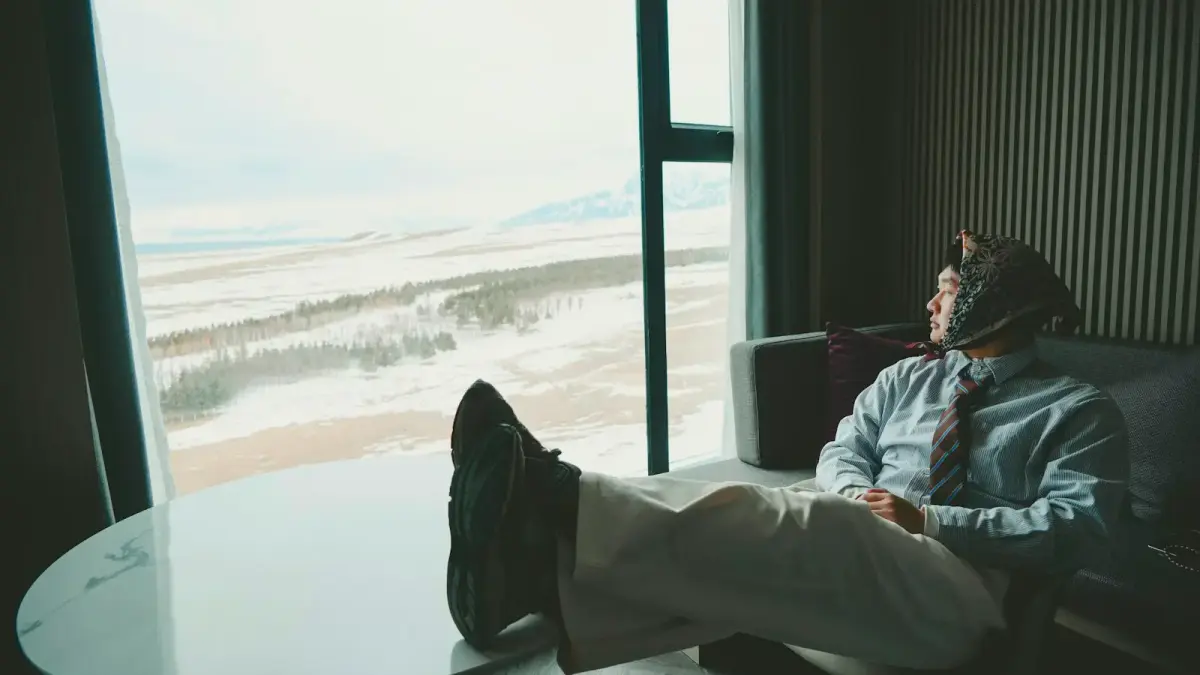
I stripped the bed this morning before checkout. King suite. Fourth floor. Ocean view I paid more than I should have for because my wife said we deserved it.
I pulled the sheets off the mattress, folded them into a neat square on the corner of the bed, stacked the pillows on top. Gathered every towel from the bathroom - the ones on the rack, the ones on the floor, the hand towels, even the washcloths - and folded them. Not perfectly. But folded. I wiped down the counter with one of those washcloths before I added it to the pile. Checked under the bed. Threw away the coffee pods. Made sure the trash bag was tied.
My wife watched me from the doorway with her suitcase already packed. She didn’t say anything. She never does. She married into this particular ritual twenty-eight years ago and learned early that it wasn’t something I could explain or stop.
I am sixty-two years old. I can afford this room. I can afford to leave every towel on the floor and walk out without looking back. But my hands don’t know that.
My hands still belong to my mother.
The choreography nobody taught me
She did it at every motel. Every single one.
Our family took one trip a year - a long weekend, usually somewhere with a pool because my brother and I would complain the entire drive if there wasn’t a pool at the end of it. Budget motels. The kind with the metal key on a diamond-shaped keychain and a sign out front that said “Color TV” like that was still a selling point.
My father would load the car. My brother and I would fight over who got the front seat. And my mother would stay behind in the room for an extra fifteen or twenty minutes, doing something none of us ever questioned.
She stripped the beds. She folded the towels. She wiped the bathroom sink with toilet paper and put it in the trash can. She took the trash bag out and tied it shut and set it by the door. She left the room looking like it barely needed cleaning.
She was paying someone else to do all of this. That was the entire arrangement. You rent the room, you use the room, someone else cleans the room. That is the deal.
But my mother never once accepted that deal.
What the boy understood
I was maybe nine the first time I actually stayed behind and watched her do it. I don’t remember why I wasn’t in the car. Maybe I forgot something. Maybe I just wasn’t ready yet.
I stood in the doorway of a Holiday Inn outside of Myrtle Beach and watched my mother - a woman who cleaned houses three days a week for other families - strip a bed she had paid to sleep in and fold the towels she had paid to use.
Nobody explained it to me. She didn’t turn around and say, “This is what people like us do.” There was no speech. No lesson.
But I understood it in my body the way children understand everything important - not through words but through watching. Through the way her hands moved with a kind of practiced purpose. Through the specific silence she kept while she did it, like this was a private negotiation between her and the room.
What I understood was this: we were guests in a space that did not belong to us, and the way we left that space would tell the next person everything they needed to know about whether we deserved to be there.
A 2019 study published in the Journal of Personality and Social Psychology found that individuals from working-class backgrounds maintain what researchers called “contextual vigilance” - a heightened awareness of how they are perceived in unfamiliar environments. The study noted that this awareness often manifests not as anxiety but as behavioral rituals designed to preemptively manage others’ judgments.
My mother would have called it something simpler. She would have called it manners.
The room you can never quite own
There is a specific way that working-class people move through spaces that aren’t theirs. You learn it young and you never unlearn it.
You sit on hotel furniture carefully. You check your shoes before you step on the carpet. You keep your voice lower in the hallway than you do at home. You treat the minibar like a museum exhibit - you can look, but you don’t touch. You fold the complimentary robe and put it back exactly where it was, even though you are absolutely allowed to wear it.
I have stayed in hotels that cost four hundred dollars a night. I have checked into resorts where a man in a vest carried my bags to a room with a marble bathroom and a balcony overlooking something beautiful. And in every single one of those rooms, some part of me is still nine years old, standing in a Holiday Inn doorway, learning that people like us return borrowed spaces better than we found them.
My wife grew up differently. Not wealthy, but comfortable. Suburban. The kind of household where a hotel room was just a room. You used it, you left it, you didn’t think about it again.
She leaves her towels on the bathroom floor. She leaves the bed unmade. She checks out the way the hotel expects you to check out - as a customer, not as an applicant.
I have never once been able to do that.
What men inherit from their mothers’ hands
There is something particular about the way sons carry their mothers’ labor. We don’t talk about it much, maybe because the vocabulary doesn’t exist for it, or maybe because it sits in a place that feels too tender to examine.
I did not inherit my father’s hands. My father’s hands built things, fixed things, gripped tools. I learned from him too. But the movements that live deepest in my body - the ones I perform without thinking, without choosing, without being able to stop - those came from her.
The way I wipe down a counter in small, circular motions. The way I fold a towel in thirds, not halves, because thirds stack neater. The way I check behind the bathroom door. The way I scan a room one last time before I leave it.
These are her movements. I am performing her choreography in rooms she never saw, in hotels she never entered, in a life she made possible by doing exactly this kind of work for other people.
Psychologist Susan Cain has written about how formative experiences shape our “core personal projects” - the deeply held commitments that organize our behavior even when we aren’t aware of them. For men who grew up watching working-class mothers navigate the world, the core project is often invisible: prove that her effort was not wasted. Prove that we were worth it.
I strip the hotel bed because my mother stripped the hotel bed. But I also strip the hotel bed because my mother spent three days a week stripping other people’s beds for money, and the distance between those two acts is everything I have ever felt about class and dignity and the woman who taught me both.
The vacation she never took
Here is the thing that hits me now, at sixty-two, in a way it didn’t at nine or twenty-five or forty.
That trip - the one yearly trip, the three or four days at a motel with a pool - was supposed to be her break. That was her vacation. Three hundred and sixty-one days a year she cleaned other people’s houses, cooked other people’s meals, folded other people’s laundry. And on the four days she was supposed to rest, she cleaned a motel room.
She could not stop. Not because she didn’t want to. Not because she was compulsive or rigid. But because she had internalized something so deeply that it had become part of her nervous system: she did not get to leave a mess for someone else to handle. That was not who she was. That was not who we were.
A 2021 study in Frontiers in Psychology found that class-based behavioral patterns are among the most persistent forms of social conditioning, often outlasting the economic circumstances that created them by two or more generations. The researchers noted that these patterns frequently operate below conscious awareness, functioning more like reflexes than choices.
My mother was not choosing to clean that motel room. She was being who she had always been required to be.
And the boy who watched her learned - without anyone saying a word - that this was who he was required to be too.
The towels on the floor
My son is thirty-four. He travels for work. He stays in nice hotels, nicer than anything I saw before I was forty.
He leaves his towels on the floor.
I know this because he told me once, casually, like it was nothing. He said it the way his mother might say it. Just a fact. The room has housekeeping. That’s what they’re there for.
And I felt two things at the same time. I felt glad - genuinely, deeply glad - that he doesn’t carry what I carry. That whatever I passed along to him, it wasn’t this particular weight. That he can walk through a hotel lobby without the quiet hum of proving himself.
And I felt something else. Something I can’t quite name. Not disappointment. Not judgment. More like a small, private grief for the woman whose choreography lives in my hands but skipped his entirely. Like her labor - the labor of making a room look like someone responsible was here - ended with me.
Maybe that’s how it’s supposed to work. Maybe the whole point of carrying something heavy is so the next person doesn’t have to.
But my hands still fold the towels.
What the room says after you leave
I checked out this morning. I left the key cards on the dresser, lined up parallel. I double-checked the safe. I opened every drawer to make sure nothing was left behind.
The room looked like it had barely been used.
And I stood in the doorway for a moment - my suitcase in one hand, the door propped open with my foot - and I looked at the room the way my mother must have looked at every room she ever cleaned. Not with satisfaction, exactly. With something more complicated than that.
With the quiet knowledge that someone would walk into this space after I left and know, without knowing anything about me, that whoever stayed here was careful. Respectful. Someone who understood that the way you leave a room tells people who you are.
That is my mother’s voice. That is her lesson. And I am sixty-two years old and I still cannot put it down.
I don’t think I want to.
The towels are folded. The bed is stripped. The room is ready.
And somewhere, a woman who worked her entire life so her sons could stop working the way she did would understand completely why I can’t.