Psychology says people who always turn the water off while brushing their teeth are not being environmentally conscious - they grew up in a house where every running faucet was a conversation about money, and their hand still reaches for the handle because a child's nervous system learned that water running into the drain is the sound of something being wasted that someone worked for
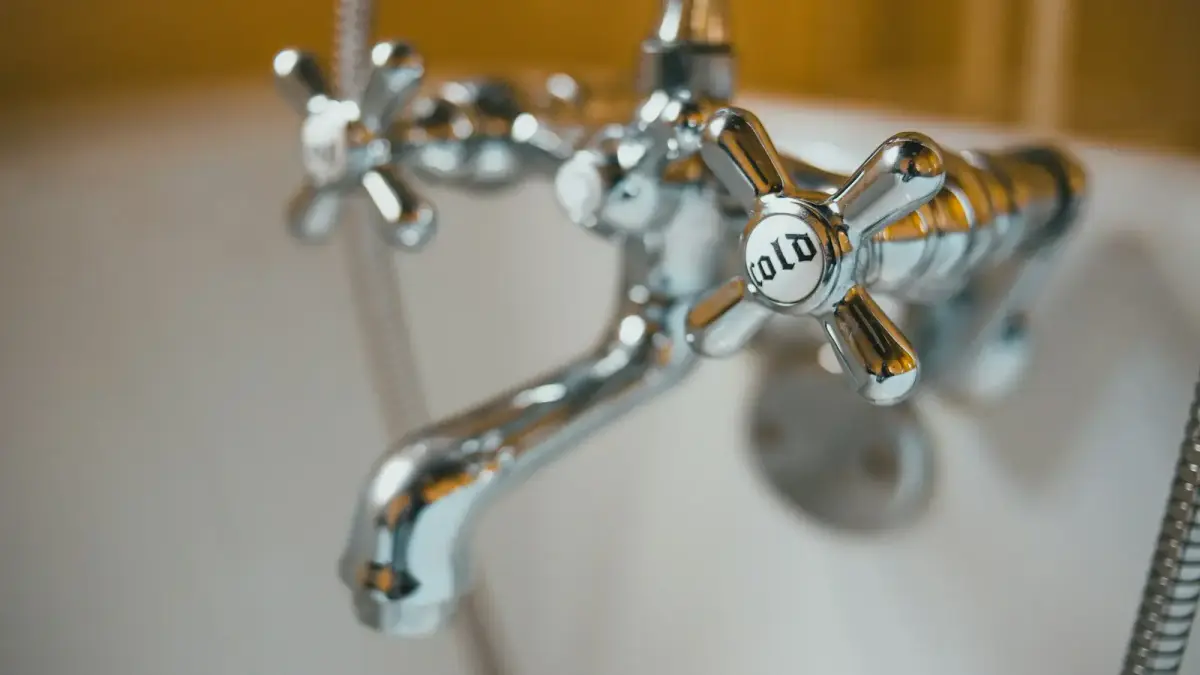
The Faucet in Someone Else’s House
I was standing in my friend’s bathroom last Thanksgiving. One of those bathrooms with the thick towels and the little tray of fancy soaps nobody is supposed to use. I picked up my toothbrush, turned on the water, wet the bristles, and my hand went straight for the faucet handle.
Off.
I didn’t think about it. I didn’t decide to do it. My hand just moved, the way it has moved every single time I’ve brushed my teeth for as long as I can remember.
I stood there with toothpaste foaming in my mouth and looked at the silent faucet and thought - why did I just do that? The water bill in this house is nothing. I don’t even live here. Nobody is listening. Nobody is going to walk past the bathroom door and say anything.
But my hand reached anyway.
And I knew, in that small quiet moment, that this had nothing to do with saving water. It had nothing to do with the environment or being responsible or any of the things I might say if someone asked me about it at a dinner party.
This was something older. Something that lived in my fingers before I had language for it.
The Kitchen Where Water Had a Price
If you grew up in a house where money was tight - not necessarily desperate, but tight in the way that meant someone was always doing math in their head - you know exactly what I’m talking about.
The running faucet wasn’t just water. It was a conversation. Sometimes a loud one.
Maybe it was your father standing in the kitchen doorway saying “you think water is free?” Maybe it was your mother who could hear a tap running from two rooms away and would call out without even looking up from what she was doing. Maybe nobody said anything at all, but you watched the way a parent’s jaw tightened when someone left the water running while they scrubbed a pot.
You learned it the way children learn everything important - not through instruction, but through atmosphere.
A 2019 study published in the Journal of Personality and Social Psychology found that children who grow up in resource-scarce environments develop heightened monitoring behaviors around everyday consumption. Not because anyone teaches them a formal lesson. Because their nervous systems calibrate to the emotional weight that adults place on resources.
Water is the most common one. It’s the resource that runs visibly. You can hear it. You can see it going down the drain. And for a child in a household where waste carries moral weight, that sound - the steady rush of water into a sink nobody is using - becomes a signal.
Not a signal of environmental damage. A signal that something someone worked for is disappearing.
How Scarcity Installs Itself in Small Reflexes
Here’s what most people don’t understand about growing up with less. It doesn’t just change what you think. It changes what your body does automatically.
The hand that reaches for the faucet handle isn’t making a choice. It’s completing a pattern that was laid down decades ago, in a nervous system that was learning what mattered before the frontal cortex was finished developing.
Dr. Gabor Mate has written extensively about how early environments shape our automatic responses. The body, he argues, records what the mind might eventually forget. Your conscious brain may have moved on. You may earn good money now. You may own your own house with your own water bill that you can comfortably pay.
But your hand still reaches.
This is what researchers call embodied cognition - the idea that our bodies carry knowledge and behavioral patterns that operate below conscious awareness. A 2016 study in Frontiers in Psychology demonstrated that resource-monitoring behaviors learned in childhood persist well into adulthood, even when material circumstances change dramatically.
You turn off the water at your partner’s apartment. You turn it off in a hotel. You turn it off at work where you literally do not pay for water. You might even turn it off and then catch yourself and laugh a little, because you know it doesn’t matter here.
But your hand already moved. The hand doesn’t care about your current bank balance.
The hand remembers the kitchen.
The Sound That Means Something Is Being Lost
I think what stays with me most is the sound of it. Or rather, the absence of sound.
When I turn that faucet off mid-brush, there’s a specific kind of silence that fills the bathroom. And in that silence, something in my chest relaxes. Not a lot. Just a tiny loosening. A small “okay” from somewhere deep inside that registers: nothing is being wasted right now.
That’s not environmental consciousness. That’s a child’s relief.
Because in the house where I grew up, a running tap wasn’t just water. It was a tiny hemorrhage. Every faucet left on was a crack in the dam of someone’s careful budgeting. My mother didn’t track water usage on a spreadsheet - she tracked it by sound, the way a sailor tracks wind by feel.
And the thing is, she wasn’t wrong. It wasn’t irrational. When you’re making a household run on a paycheck that doesn’t quite cover everything, every small leak matters. Not because the water bill alone would break you, but because the mindset of letting things run, letting things go, letting things drain away - that mindset is what breaks you.
She was teaching me something real. She just didn’t know she was teaching it to my body instead of my brain.
Daniel Goleman’s work on emotional learning supports this. Children absorb the emotional significance of household behaviors long before they understand the financial mechanics. The lesson doesn’t land in the intellect. It lands in the muscles, the reflexes, the automatic patterns that fire before thinking begins.
It’s Not a Quirk - It’s Class Loyalty
I used to be a little embarrassed by it. The way I’d reach for the faucet in a friend’s bathroom like I was still that kid in the house where water was monitored. I thought it was a leftover, a glitch, something I should have grown out of by now.
I don’t think that anymore.
Because here’s what I’ve come to understand about that reflex: it isn’t compulsive. It isn’t neurotic. It isn’t a failure to update your software.
It’s your body honoring something.
When your hand turns off that water, it’s acknowledging that resources don’t come from nowhere. That the water running down the drain passed through pipes that someone pays for, into a house that someone works to maintain, and that every small thing costs someone something.
That awareness - that deep, cellular understanding that nothing is free, that comfort has a source, that ease was purchased by effort - that is not a weakness.
A 2021 study in the Journal of Research in Personality found that adults who grew up in lower-income households showed greater awareness of resource consumption across all areas of life, and this awareness correlated with higher levels of gratitude and interpersonal sensitivity. The researchers noted that what looks like anxiety about waste often functions as a form of respect - a recognition that resources connect to human labor.
It’s class loyalty expressed as muscle memory. Your hand at the faucet is a small daily prayer to the people who taught you that nothing should be taken for granted.
The Hand That Still Remembers
You might be reading this in a house that’s comfortable. You might have a career your parents couldn’t have imagined. You might go out to dinner without checking the menu prices first, most of the time.
But you still turn the water off when you brush your teeth.
And maybe your kids don’t. Maybe your kids leave the water running and you hear it from the other room and something tightens in your stomach before you can talk yourself out of it. Maybe you’ve said the thing - some version of the thing that was said to you - and then caught yourself, surprised by the echo.
That’s okay. That’s just the conversation continuing.
You are not broken for carrying this. You are not stuck in the past. You are not failing to enjoy what you’ve built.
You are a person whose body remembers where they came from. Whose hand still pays a kind of respect every morning and every night, in the smallest possible gesture, to a household where nothing was wasted because someone in that house worked too hard for waste to be acceptable.
The faucet turns off. The silence arrives. And somewhere inside you, a child exhales.
That’s not a habit you need to fix. That’s a loyalty you get to keep.