He's 63 and just realized he has never once been the first person to sit down at his own dinner table - he hovers near his chair, fills a glass, straightens a napkin, and only lowers himself into his seat after every person at the table has found theirs, because his father stood at the head for thirty years doing the same thing, and a boy who watched a man hold himself upright while everyone else settled in learned that sitting down last was the only way a father could say everyone I love is accounted for without actually saying it
My wife noticed it before I did.
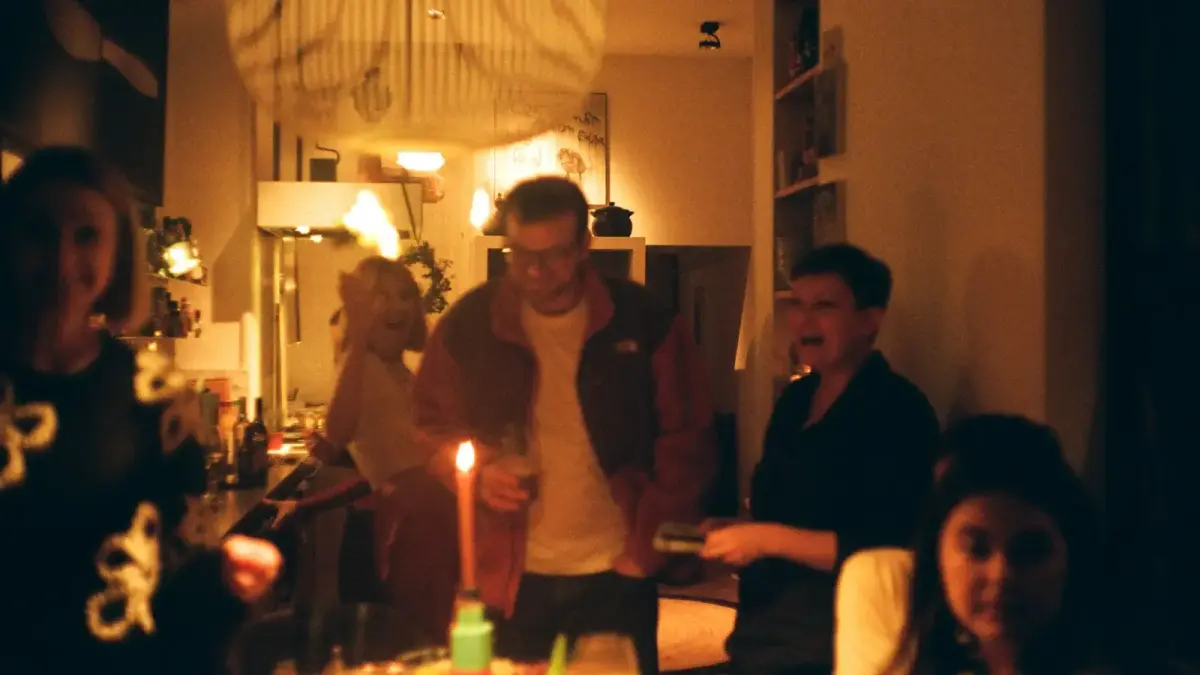
She said it one Sunday evening while the grandkids were climbing into their chairs and I was standing behind mine with a water pitcher in my hand, watching them settle. “You never sit down first,” she said. Not as a complaint. More like she was narrating something she’d been observing for decades and had finally decided to say out loud.
I opened my mouth to disagree and then closed it again. Because she was right. I had never once, in the forty-one years we’d been married, been the first person to sit down at our dinner table.
I thought about it all night. Not because it was dramatic, but because it was so ordinary that I’d never even registered it as a behavior. It was just what I did. I hovered. I filled glasses. I adjusted a chair for whoever needed it. I straightened a napkin that didn’t need straightening. And only after every single person at the table had landed in their seat did I lower myself into mine.
I’m sixty-three years old, and I just understood why.
The Man Who Stood at the Head
My father ate dinner with us every night for thirty years. He worked at a paper mill outside of Bangor, and he came home smelling like wood pulp and industrial soap. He was not a talker. He was not what anyone would have called emotionally available. He expressed love the way a lot of men from his generation did - through presence rather than language.
But there was this one thing he always did.
He stood at the head of the table while my mother brought the food out, while my brother and I scrambled into our chairs, while whoever was visiting found their place. He didn’t sit. He stood there with one hand on the back of his chair and the other resting on the table, and his eyes moved around the room in a slow, quiet sweep.
I didn’t think about it as a child. It was just what Dad did. He stood while we sat. He waited while we settled. And then, only after every person was in their chair, he’d pull his seat back and sit down.
It looked like nothing. It looked like a man waiting for dinner. But it wasn’t nothing. I know that now because I’ve been doing the same thing for four decades without knowing I was doing it.
A Roll Call Without Names
Here is what I think my father was really doing when he stood at that table.
He was counting. Not literally - he knew how many of us there were. But something in him needed to see every chair occupied, every body accounted for, every person he was responsible for safely in their place before he could allow himself to stop standing.
It was a roll call conducted entirely through the body. No clipboard. No names called out. Just a man’s eyes moving from chair to chair, registering the presence of every person he loved, and only releasing himself from his post when the count was complete.
A 2019 study published in the Journal of Family Psychology found that men are significantly more likely than women to express care through what researchers call “instrumental support” - acts of service, spatial monitoring, and physical positioning rather than verbal affirmation. The study noted that these behaviors are often invisible precisely because they don’t look like what we’ve been trained to recognize as love.
My father never said “I need to know everyone is safe before I can rest.” He never said anything about it at all. He just stood there, every night, scanning the room with the patience of a man who understood that his job was not to eat first but to make sure everyone else could.
The Body Learns What Words Don’t Teach
Nobody told me to stand at the dinner table. My father never pulled me aside and said, “Son, a man waits.” There was no lesson. No instruction. No speech about duty or fatherhood.
But the body learns what words don’t teach.
I watched him stand for thousands of meals. My nervous system absorbed the rhythm of it - the hovering, the scanning, the deliberate delay before sitting. It entered my bones the way an accent enters a child’s speech. Not through effort but through exposure. Through years of watching a man hold himself upright while the people he loved found their places.
Dr. Gabor Mate has written extensively about how children absorb their parents’ emotional patterns not through what is said but through what is modeled. The body of a child is a recording device. It captures posture, breath patterns, the way a parent holds tension in their shoulders or releases it. A boy who watches his father stand doesn’t learn a rule. He learns a rhythm. And rhythms are harder to unlearn than rules because they live below the level of conscious thought.
I started doing it in my twenties, the first time I hosted a dinner in my own apartment. I didn’t decide to stand. I just didn’t sit down. My hands found things to do - adjusting the salt shaker, pouring wine, pulling a chair out for my girlfriend. And when everyone was seated, something inside me released, and I sat.
I’ve been doing that for over forty years. It never had a name until my wife gave it one.
What Standing Really Means
When I think about what my father was doing at that table, I don’t think “habit.” I don’t think “tradition.” I think “vigilance.”
Not the anxious kind. Not the kind that comes from fear. The quiet kind. The kind that comes from a man who understood, in some part of himself he could never articulate, that his role was to be the last one standing. The one who makes sure the room is full before he lets himself be part of it.
There’s a particular kind of masculine tenderness that looks like nothing from the outside. It looks like a man standing near a chair. It looks like someone fiddling with a napkin. It looks like restlessness or distraction or a simple lack of appetite.
But from the inside, it feels like this: I cannot rest until the people I love have rested first.
A 2021 study in Frontiers in Psychology examined what researchers called “sentinel behavior” in family dynamics - the unconscious tendency of certain family members to position themselves as monitors of the group’s safety and completeness. The study found that this behavior was most common in firstborn children and in fathers, and that it was often experienced not as a choice but as a compulsion. The sentinel doesn’t decide to watch the room. The sentinel cannot stop watching the room.
My father was a sentinel. And he trained me to be one without ever opening his mouth.
The Inheritance Nobody Mentions
We talk about what fathers pass down. We talk about tempers and addictions and emotional unavailability. We talk about the damage. And there is damage - I’m not pretending there isn’t.
But there are also these other things. These small, physical inheritances that nobody mentions because they don’t look like anything.
The way a man holds a door open and waits for every person to pass through before he follows. The way a father walks on the street side of the sidewalk without being asked. The way a man checks the locks twice before going to bed, not because he’s afraid but because his father checked them twice.
These are not grand gestures. They are not the stuff of speeches or greeting cards. They are the quiet, bodily prayers of men who learned to say “I love you” through positioning. Through placement. Through the stubborn refusal to sit down before everyone else has.
I inherited my father’s posture at the table the way I inherited his jawline. Without consent. Without awareness. It just became part of how my body moved through the world.
Watching My Son Do It
The moment that broke me open was watching my son, David, at Thanksgiving two years ago.
He’s thirty-eight. He has two kids of his own. And as the family gathered around the table - twelve of us that year - I watched him stand behind his chair with his hand resting on the back of it, his eyes moving slowly around the room.
He wasn’t doing anything. He was just standing there. Waiting. Watching his kids climb into their booster seats. Watching his wife settle in. Watching his mother find her place.
And only after every person was seated did he pull his chair back and sit down.
He didn’t know he was doing it. I’m certain of that. Just like I didn’t know I was doing it. Just like my father probably didn’t know he was doing it. It’s the kind of behavior that passes from generation to generation not through language but through the body’s memory. Through thousands of meals watched. Through the quiet absorption of what it looks like when a man says, without words, everyone I love is here.
I looked across the table at David after he sat down, and something caught in my throat. Because I wasn’t just seeing my son. I was seeing my father. I was seeing thirty years of a man standing at the head of a table in a house that smelled like wood pulp, conducting his silent roll call with the patience of someone who understood that love, for men like us, is not a thing you say. It’s a thing you do with your body. It’s the last chair pulled out. The last seat taken. The last man standing.
What I Would Tell Him If He Were Here
My father died eleven years ago. Heart attack, quick and clean, the way he would have wanted it. No long speeches. No dramatic goodbye. Just a man who was here and then wasn’t.
If he were sitting across from me now, I don’t think I’d explain any of this to him. I don’t think he’d want me to. Men like my father didn’t need their love translated into language. They didn’t need someone to point at their standing and say, “I see what you were doing.” They just needed the people they loved to be at the table.
But I’d want him to know that I watched him. Every night, for all those years, I watched him stand. And my body learned something from his body that no conversation could have taught me.
That sitting down last is not a delay. It is a declaration.
It is a man’s way of saying: everyone I love is accounted for. Everyone I love is in their place. And now - only now - I can rest.
I’m sixty-three years old, and I still stand at the table every night. My wife smiles when she sees me do it. My son does it too, though he doesn’t know why yet.
Someday he will. Someday he’ll be standing behind his chair at a holiday dinner, watching his grandchildren settle in, and something will click. He’ll realize he’s been doing this his whole life. And he’ll understand that his grandfather - a quiet man from Maine who smelled like wood pulp and never once said “I love you” out loud - taught him how to pray with his body.
That’s the inheritance nobody mentions. The standing. The waiting. The quiet, stubborn refusal to sit down before the people you love.
It looks like nothing.
It is everything.