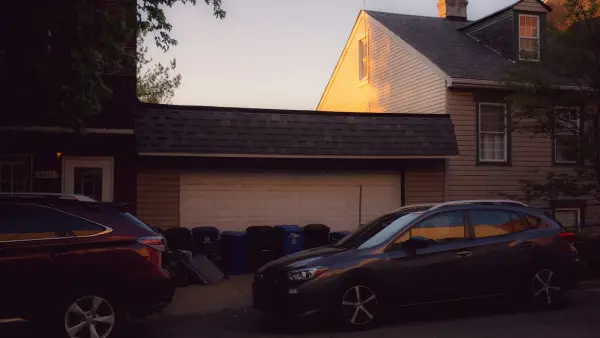
He's 63 and just realized he parks at the back of every lot - the farthest spot from the entrance, the one nobody else wants - not for the exercise or the peace of mind but because his father drove a car with a dent he could never afford to fix and always chose the space where the fewest people would walk past it, and a boy who watched a man hide the evidence of a budget that did not stretch far enough learned that the safest parking spot was the one where nobody was looking
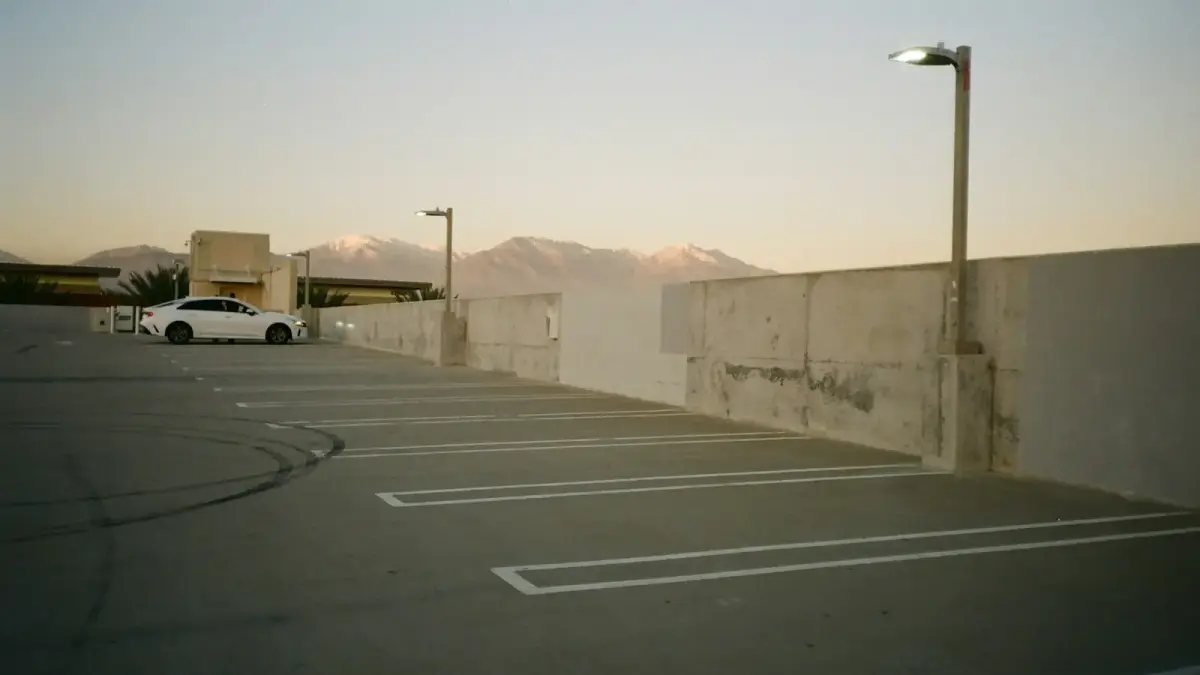
My wife pointed it out last Thursday at the grocery store. She said it like a joke, but there was a question underneath it.
“There are twenty open spots right by the door. Why do you always park all the way back here?”
I laughed. Said something about liking the walk. She didn’t push it, but I could feel her watching me as we crossed the lot, passing all those empty spaces I had driven right by without even noticing. She was right. I do always park at the back. Every parking lot, every store, every restaurant. The farthest spot from the entrance. The one nobody else wants.
I’m 63 years old and I have never once questioned this behavior. Not until she said it out loud and I heard how strange it sounded when it wasn’t just something my body did automatically.
I spent the rest of that evening trying to figure out why. And when the answer came, it arrived not as a thought but as an image - a 1978 Oldsmobile Cutlass with a crease in the passenger-side door that my father never got fixed, parked at the far edge of a Kmart lot on a Saturday afternoon, as far from the other cars as geometry would allow.
The Dent That Never Got Repaired
My father drove that Cutlass for nine years. The dent appeared in year two - someone backed into it in a church parking lot, no note left, no witness - and it stayed for the remaining seven.
It wasn’t a small dent. It was the kind that catches light wrong, that announces itself. The metal buckled inward just enough to make the door look like it had flinched.
He could not afford to fix it. I know that now the way adults know things - through arithmetic, through the memory of how carefully my mother portioned ground beef, through the fact that our winter coats came from the same church that hosted the parking lot where the damage happened.
But as a boy, I did not understand budgets. I understood something else entirely. I understood that my father, a man who stood straight and spoke carefully and kept his shoes polished even when the soles were worn thin, began choosing parking spots differently after that dent appeared.
He started parking far away.
The Geometry of Hiding
Before the dent, my father parked like everyone else - close to the door, wherever was convenient. After, he developed a system I only recognize now because I inherited it.
He would pull into a lot and his eyes would sweep past all the easy spaces. He would drive to the back, to the edges, to the corners where foot traffic was thinnest. He would choose the spot where the fewest people would walk between his car and the entrance.
He never said why. He never said anything about it at all.
But I sat in the passenger seat - the side with the dent - and I watched him navigate toward absence. Toward emptiness. Toward the part of the lot where no one would pause long enough to notice that our car wore its damage on the outside.
A 2019 study published in the Journal of Personality and Social Psychology found that socioeconomic shame operates differently from other forms of shame because it attaches not just to the self but to objects - to homes, clothing, vehicles, possessions that function as public evidence of private financial reality. The researchers called it “material stigma consciousness,” and they found it could persist for decades after the material conditions had changed.
My father was not hiding from danger. He was hiding from perception. And a boy who watched him do it a thousand times absorbed the lesson the way children absorb everything - completely, silently, without any conscious understanding of what was being learned.
What the Boy Learned Without Being Told
Nobody sat me down and said, “Park far away so people don’t see the car.” Nobody had to.
Children don’t need instructions to learn shame. They need proximity to it. They need to watch a parent’s shoulders tighten in certain environments. They need to see which situations produce ease and which produce a particular kind of vigilance - that careful, scanning alertness that says we are being measured and might come up short.
I learned that distance was a form of protection. That the back of the lot was safe because nobody walked there, and if nobody walked there, nobody would see the dent, and if nobody saw the dent, then we were just a family and not a family that couldn’t afford things.
I learned to associate proximity with exposure and exposure with risk.
And I learned it so deeply that I kept doing it for forty years after the Cutlass went to a junkyard, after my father bought a better car, after I bought my own cars - cars without dents, cars that had nothing to hide.
The behavior outlived the reason for it by decades. That is the thing about inherited shame. It does not update when the spreadsheet changes. It lives in the body, not the budget.
The Fossil Record of Scarcity
Psychologist Sendhil Mullainathan, whose research on scarcity has reshaped how we understand poverty’s cognitive effects, has written about how financial stress creates a kind of tunnel vision that narrows attention to immediate threats. But what interests me is what happens when the scarcity ends and the tunnel vision doesn’t.
My father eventually did fine. Not wealthy, but comfortable. He retired with a pension and a house that was paid off and a car without a single dent. And he still parked at the back of every lot until the day he stopped driving.
I do better than fine. I have a car I’m not embarrassed by. I have no financial reason to hide anything from anyone in a parking lot. And yet my hands turn the wheel toward the far spaces the way a compass needle finds north - not through decision but through alignment with a field I cannot see.
A 2021 study in Psychological Science examined what researchers termed “phantom scarcity behaviors” - economic coping strategies that persist in individuals whose financial circumstances have significantly improved. The study found that people who experienced poverty in childhood continued to exhibit resource-guarding behaviors an average of twenty-three years after achieving financial stability. The behaviors weren’t rational responses to current conditions. They were echoes.
I am an echo of my father’s parking. He is an echo of whatever taught him that being seen too clearly was dangerous. The chain goes back further than either of us can trace.
Distance as Dignity
Here is what I want you to understand, if you recognize any of this in yourself.
The man parking at the back of the lot is not being difficult. He is not trying to get his steps in. He is not making a statement about consumerism or personal space.
He is a boy protecting his father’s dignity. He is choosing the spot where the fewest eyes will pass. He is keeping distance between himself and the possibility of being seen as less than enough - a possibility that no longer exists in his bank account but still lives in his nervous system like an old weather pattern that the climate has outgrown but the body has not.
I think about all the small spatial choices we make that we believe are preferences but are actually inherited strategies. The way some of us always sit near the exit. The way some of us never order the most expensive thing on the menu even when we can afford it. The way some of us keep our homes slightly too cold in winter because the thermostat still belongs to a parent who watched the gas bill like a wound.
These are not quirks. They are the fossil record of someone else’s financial reality, pressed into our muscles and habits like leaf impressions in limestone. The original leaf is gone. The impression remains.
The Spot Where Nobody Was Looking
I still park at the back of the lot. I noticed it again yesterday at the hardware store - drove past a dozen open spaces, pulled into the last row, and only realized what I had done when I turned off the engine and sat there for a moment in the quiet.
I don’t think I’m going to stop. And I’m not sure I want to.
Because somewhere in that habit is my father, polishing shoes that needed replacing, straightening a tie before walking into a room where he worried he didn’t belong, driving a car with a dent to the back of a lot where nobody would notice. He was doing his best to move through a world that measures people by what they carry, and he found a small way to control how much of himself was visible.
I carry that forward. Not because I need to hide but because the walking is a kind of remembering. Every long walk across a parking lot is a private conversation with a man who taught me, without ever saying a word, that dignity sometimes means choosing the space where nobody is looking - not because you are ashamed, but because you learned early that the world’s gaze has a price, and some of us were raised by people who could not always afford to pay it.
If you park at the back of the lot and you have never known exactly why, consider the possibility that someone parked there before you. Someone who had a reason. Someone whose reason dissolved but whose habit became yours, passed down like an heirloom nobody talks about but everyone recognizes.
You are not strange for carrying it. You are faithful to a story that was never told out loud.
And there is something quietly beautiful about that.