He's 66 and has finally told his wife he doesn't want to host the holidays at their house anymore - thirty years of moving furniture, faking warmth for in-laws he never connected with, smiling through long tables he was too tired to sit at - and the strange thing is that the moment the words left his mouth, the only feeling he had was relief, not guilt, because he had been waiting for someone to give him permission and only just realized he was the only person who could
My brother called me on a Tuesday in March, and the first thing he said was, “I told her.”
He did not have to tell me what “it” was. I had been listening to him circle around it for years, in that way men of his generation circle things - through asides, through jokes, through long pauses when I asked how the holidays went.
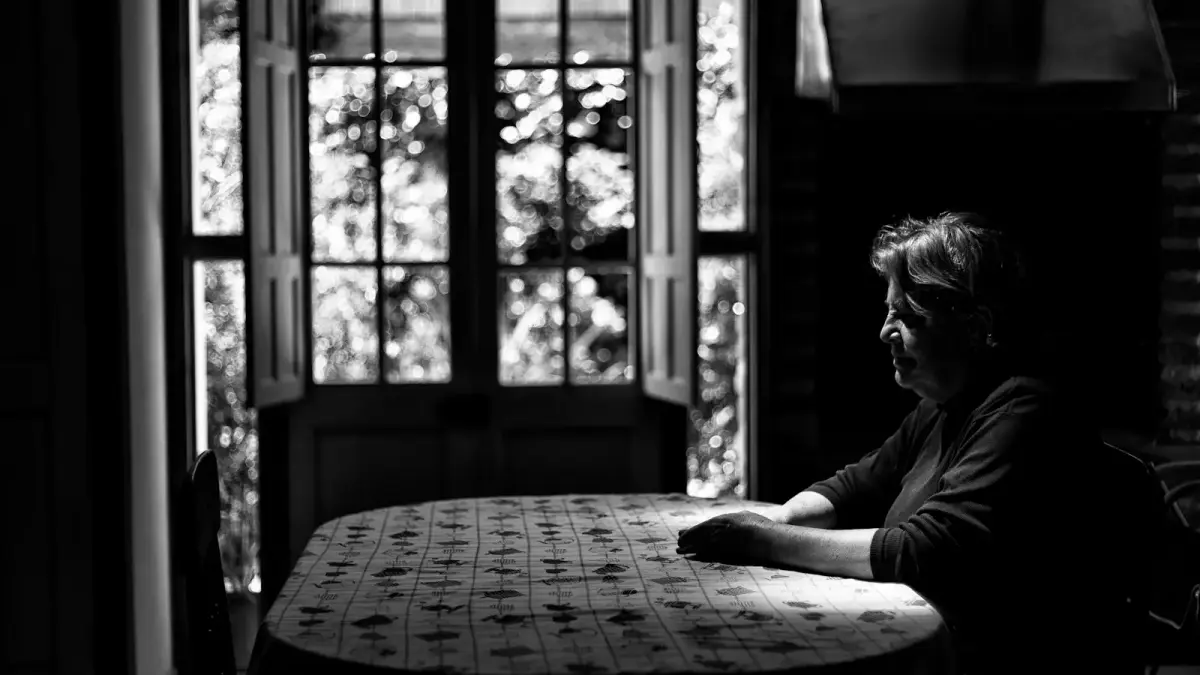
He is 66. He has been hosting Easter, Thanksgiving, and Christmas at his house for thirty years. And on an ordinary Tuesday morning, standing at the kitchen counter while the coffee maker hissed, he told his wife he did not want to do it anymore.
What struck him was not the courage it took. It was how small the moment was.
He had imagined it would feel like breaking something. It felt more like setting down a bag he had been carrying so long he had forgotten he was carrying it.
The Tuesday morning he finally said it
He told me the scene like he was describing a dream he was still trying to make sense of.
His wife had been looking at the calendar on the fridge. She said something light, something like, “We should start thinking about Easter.” And he felt the familiar small drop in his chest - the one that usually arrived about two weeks before any gathering.
Then he heard himself say, very plainly, “I think I’m done hosting.”
He said his wife turned toward him with a look he could not immediately read. Not hurt. Not angry. Just surprised, the way you are surprised when a piece of furniture you assumed was bolted to the floor turns out to be free.
She asked him if he was sure. He said yes. She said, “OK.”
That was the whole conversation.
He told me he had braced for a negotiation, a defense, maybe even tears. What he got instead was a quiet kitchen and a wife who refilled her coffee and went back to looking at the calendar. He said the silence afterward felt almost embarrassing, like he had overestimated how big a deal it would be for anyone other than him.
Thirty years of moving the same furniture
People who have never hosted do not quite understand what hosting costs.
It is not just the meal. It is the two weeks before, when your brain starts a background process you cannot quit. It is the mental inventory of wine and folding chairs. It is the polishing of serving dishes nobody will notice.
For my brother, it was also the physical labor of a house that was not built for gatherings. Every holiday meant moving the couch against the wall, dragging the dining table out, hauling extra chairs up from the basement. Every holiday meant putting it all back the next morning while his body reminded him he was no longer 36.
He told me once that the worst part was not the day itself. It was the two-week mental lead-up and the 48-hour recovery on the other side. Four days of depletion for one afternoon of performing warmth.
A 2018 study in Personality and Individual Differences found that introverted adults experience measurable physiological fatigue from extended social gatherings, and that the recovery time scales with the intensity and duration of the interaction. For introverts over 60, the recovery curve gets longer. The body takes more time to come back.
He did not have the language for that for most of his life. He just knew that by the Monday after Thanksgiving, he felt hollowed out in a way that took until Thursday to fix.
The in-laws he was always polite to but never warmed to
I want to be careful here, because this is not a story about bad in-laws.
His in-laws are perfectly nice people. They bring dishes. They help clear plates. They compliment the turkey. They have never been rude to him in thirty years.
They have also never, in thirty years, asked him a real question.
He is the man in the corner refilling water glasses. He is the host, which means he is the staff, which means he is scenery. They love his wife. They like him in the distant, friendly way you like the man who is married to someone you love. He has accepted this for decades without much complaint.
What he realized, somewhere in his sixties, is that he had been performing a kind of warmth that was not his. He is a quiet man. He is a slow-to-warm man. He likes small dinners with two or three people and long stretches of silence. He likes rereading the same three novelists and going to bed early.
Hosting twelve people three times a year had nothing to do with who he actually was. It had everything to do with who he thought he was supposed to be.
Why he waited until 66
I asked him why now. Why not at 50, or 55, or after the kids moved out.
He was quiet for a long time. Then he said something I have been turning over ever since.
He said, “I was taught that wanting less was selfish.”
Men of his generation were raised on a specific arithmetic. A good husband absorbed inconvenience without naming it. A good host smiled through exhaustion. A good man did not make a fuss about his own needs because making a fuss was what small men did. Hosting was love. Hosting was provision. Hosting was how you proved you were not your father.
That arithmetic had been running in the background of his life for so long that he could not hear it anymore. It just felt like the air he breathed.
Susan Cain has written for years about introversion as a temperament, not a deficiency - something we are wired with, not something we choose or can simply discipline away. My brother read her book in his late fifties and told me it was the first time he had ever seen his own interior life described without the word “problem” attached to it.
He did not change anything right away. It takes a long time for a new idea to reach the part of your body that has been working against it for decades.
Permission as a thing nobody can give you
Here is the part that stopped me when he said it.
He told me he had spent years quietly waiting for someone to give him permission. He was not totally conscious of it. But somewhere in him, a part of him was waiting for his wife to notice how tired he was and suggest they stop hosting. Or for his mother, before she died, to tell him he had done enough. Or for his brother - me - to say, “You don’t have to keep doing this.”
None of us ever said it. Not because we did not love him. Because we did not know he was waiting.
He looked like a man who was fine. He had never once said the word “tired” out loud. He had not complained. How were any of us supposed to hand him permission we did not know he needed?
A 2019 study in the Journal of Marriage and Family on emotional labor in long-term marriages found that partners frequently underestimate each other’s internal workload, especially around recurring hosting and caregiving tasks, because the labor is invisible by design. The whole point of being a good host is that nobody sees the work.
The painful, clarifying realization was this: no one was going to walk into his kitchen and release him. His wife could not release him from something she had not realized he was carrying. His mother could not have released him from beyond the grave. I could not release him, because the house was his and the choice was his.
He had been the only person in the world who could say the words. And once he said them, he understood he had been the only one holding the authority all along.
The unexpected relief
I asked him how he felt after.
He said he expected guilt. He expected a wave of regret, or the urge to take it back, or the creeping sense that he had disappointed someone. What he got instead was a quiet that felt almost suspicious, like a sound missing from a room.
He said his body felt different. He said it in that plain, undramatic way men his age say important things. “My shoulders felt different. Like they’d dropped half an inch.”
There is a body of research now, building on Stephen Porges’ polyvagal work, on what happens when a chronically braced nervous system finally gets the signal that it is safe to stop bracing. The body does not celebrate. It does not throw a party. It just quietly releases. A long, slow exhale that can take days to finish.
That is what he was describing. Not joy. Not triumph. Just the strange lightness of a body that had been holding itself at attention for three decades and had finally been told it could stand at ease.
He told me he kept waiting for the guilt to arrive. It did not.
He said his wife made dinner that night like any other night. She did not bring it up. At some point, late in the evening, she said, “Maybe we’ll go to your sister’s this year.” He said, “Maybe.” And that was it.
The holidays, it turned out, did not need him as much as he had thought they needed him. The only person who really needed him to keep hosting was the version of himself who had been taught that love meant carrying things you never asked to carry.
That man had been worn out for a long time. He deserved the Tuesday morning he finally got.
If you are reading this and you recognize yourself - in him, or in his wife, or in one of the people around the long table who never knew the host was tired - I want you to know that permission is not coming in the mail. Nobody is going to ride up the driveway with it. The person who has been waiting to give you permission is the same person who has been waiting to receive it. That is not a tragedy. That is actually a small, quiet kind of freedom, once you see it.
My brother is 66. He spent thirty years hosting holidays he never really wanted to host. He said the words out loud on a Tuesday in March, in a kitchen, next to a coffee maker, to a wife who refilled her cup and said OK.
And the only thing he felt was lighter.