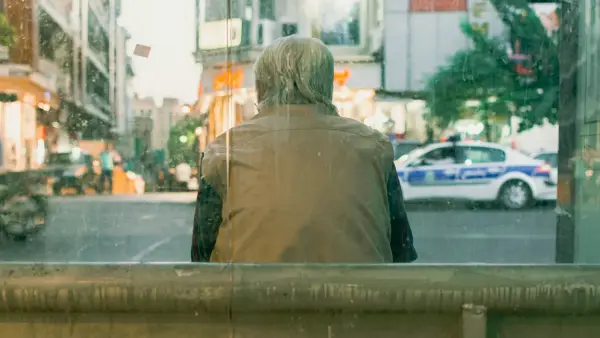
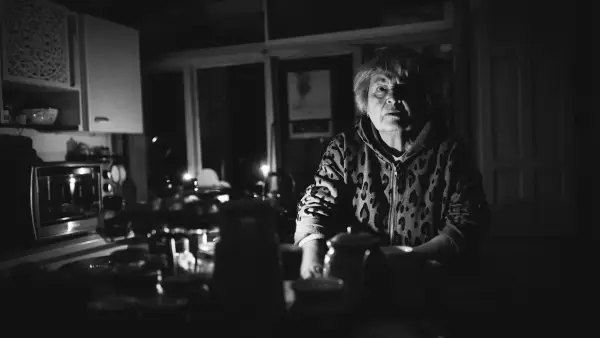
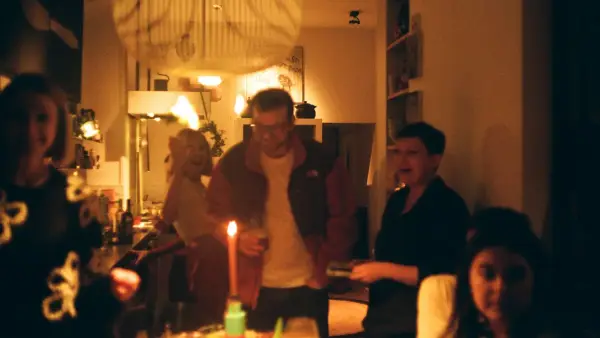
Nobody prepares you for the day you walk into your parents' house and realize it no longer smells the way it did when you were a child - the Sunday roast and fabric softener and wood polish replaced by something quieter - and you understand that the scent was never just a smell but a record of a family operating at full capacity, and its absence is a grief nobody taught you to name
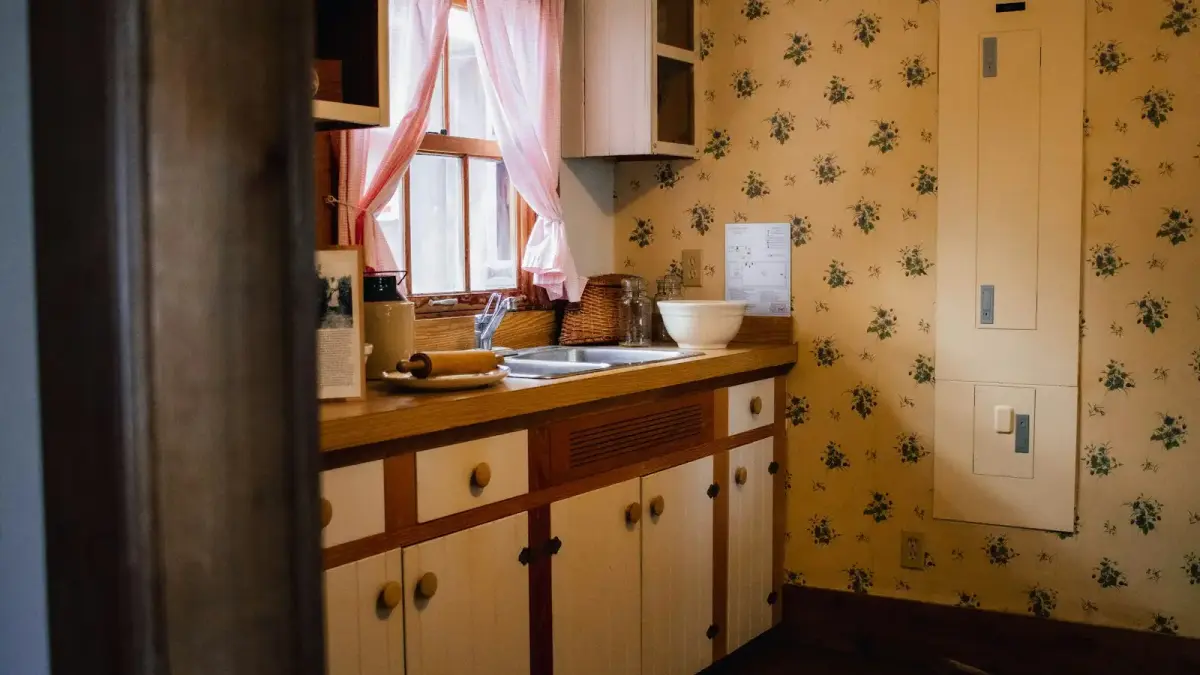
I walked into my parents’ house last Thanksgiving and stopped in the doorway like I’d forgotten something in the car.
I hadn’t forgotten anything. Something was missing inside.
It took me a full minute to understand what it was. The house looked the same - same carpet, same furniture arrangement, same framed photos climbing the staircase wall. But the air was different. The smell that used to catch me at the threshold, the one that had greeted me every single time I’d come home for thirty years, was gone.
Not replaced by something bad. Just replaced by something neutral. Something thinner. The house smelled like a house now. It used to smell like my childhood.
I stood there in the doorway holding a bottle of wine and a pumpkin pie and I felt something crack open in my chest that I still don’t have a clean word for. It wasn’t sadness exactly. It was more like arriving at a place you’ve visited a thousand times and realizing, quietly and without anyone telling you, that the version of it you carry in your memory has officially become the more real one.
The smell you never noticed while you were living inside it
Here is something nobody tells you about the house you grew up in - it had a specific, singular scent that was as unique as a fingerprint, and you had absolutely no idea.
You couldn’t smell it because you were inside it. Your nose adapted to it completely. It was the baseline of your sensory world, the zero point from which every other smell was measured. You only discovered it existed on the days you came back.
After a week at summer camp. After your first semester of college. After moving into your own apartment that smelled like fresh paint and someone else’s cooking.
You’d walk through your parents’ front door and it would hit you like a wall of warm air. And for about ninety seconds, before your nose recalibrated, you were eight years old again. You were standing in the kitchen waiting for dinner. You were lying on the living room carpet watching Saturday morning cartoons. You were home in a way that had nothing to do with geography.
That scent was the most complete time machine you ever had access to. And you didn’t even know it was working.
What the scent was actually made of
If you could have bottled it and read the label, you would have found an ingredient list that was really just the daily operations manual of your family.
It was whatever your mother or father cooked most often - the onions softened in butter on Sunday mornings, the particular brand of tomato sauce that simmered on weeknights, the coffee that started brewing at six a.m. before anyone else was awake. Those smells soaked into the walls over decades. They settled into the curtains and the upholstery and the wood of the kitchen cabinets.
It was the cleaning products. The specific laundry detergent your mother bought for twenty years because she found one she liked and never saw a reason to change. The furniture polish. The dish soap. The faint chemical sweetness of the dryer sheets that made your childhood bedsheets smell like your childhood bedsheets.
It was the house itself. The particular mustiness of a basement that never fully dried out. The cedar of a closet. The old paperback novels on a shelf in the hallway. The heating system pushing warm air through ducts that hadn’t been cleaned since the Reagan administration.
Every one of those ingredients was a byproduct of a family running at full speed. People cooking, cleaning, doing laundry, living in every room, filling the house with the chemical residue of their daily effort. The scent of your childhood home was not a fragrance. It was evidence.
The science of why a smell can take you back further than any photograph
There is a reason this works so powerfully, and it’s not sentimental. It’s anatomical.
A 2002 study by Rachel Herz at Brown University found that memories triggered by smell are significantly more emotional than memories triggered by sight or sound. Not more accurate - more emotional. When participants encountered an odor linked to a past experience, they didn’t just remember the event. They re-experienced the feeling of it. The ache. The warmth. The particular quality of light in the room.
This happens because of how your brain is wired. Smell is the only sense that routes directly to the amygdala and hippocampus - the brain’s emotional processing and memory formation centers - without passing through the thalamus first. Every other sense gets filtered. Smell arrives raw and unedited, which is why a whiff of something familiar can buckle your knees before you’ve even consciously identified what you’re smelling.
Research by Johan Willander and Maria Larsson, published in Chemical Senses in 2006, found something even more striking. Odor-evoked memories tend to come from earlier in life than memories triggered by words or images. Most of them cluster in the first decade - before age ten. The smell of your childhood home doesn’t just take you back. It takes you back further than almost anything else can reach.
This is why you can look at a photo of your parents’ kitchen and feel a gentle nostalgia, but walking through the front door and catching that specific combination of scents can reduce you to something wordless. The photo is a record. The smell is a portal.
When the smell begins to change
It doesn’t happen all at once. That would be easier to grieve.
It happens in increments so small that you might visit three or four times before you consciously register that something has shifted. The house still mostly smells like home, but there’s a new note in there. Something clinical. Something absent.
Maybe your mother stopped making the Sunday roast because it was too much effort now. Maybe your father switched to a different brand of coffee because the old one was discontinued. Maybe someone got sick and the house started smelling like medications and antibacterial wipes and the particular staleness that comes from windows that don’t get opened as often.
Maybe they downsized. Moved from the house you grew up in to a smaller place that smells like new carpet and someone else’s history. The old furniture went to Goodwill or got divided among siblings. The curtains that held thirty years of kitchen smoke were thrown away. The bookshelves that smelled like aging paper were replaced by a single shelf of large-print novels.
Or maybe nobody moved and nothing dramatic happened. Maybe your parents just got older and the rhythms of the house slowed down. Less cooking. Less cleaning. Fewer people coming through the door. The smell of a home is generated by the activity inside it, and when the activity diminishes, the scent thins out like a song fading at the end of a record.
You notice it one visit. You stand in the kitchen and something is different and you can’t name it. And then you realize - this place smells like a house where two elderly people live quietly. It doesn’t smell like the place where you were a child anymore.
The grief that has no category
This is not a grief anyone prepares you for because it doesn’t fit into any of the categories we’ve built for loss.
Nobody died. Nobody left. The house might still be standing. Your parents might still live there. You might still visit for holidays and sit in the same chair at the same table. Everything looks the same. But something fundamental has changed, and it changed so quietly that there was no moment to mark it, no event to point to, no casserole from the neighbors.
Psychologist Pauline Boss spent decades studying what she called ambiguous loss - grief without closure, loss without a clear ending. A 2007 paper she published in Family Process described how these unresolved losses can be among the most psychologically taxing because there is no ritual to process them. No funeral. No ceremony. Just a slow, private dawning that something you relied on has disappeared.
The changing smell of your parents’ house is ambiguous loss at its most intimate. You are grieving a version of your family that still technically exists but has been quietly replaced by a later edition. The cast is the same. The setting is the same. But the production has changed in ways only someone who memorized the original would notice.
And you did memorize the original. You memorized it with your body.
What the scent was really preserving
When I think about what I was actually smelling all those years when I walked through my parents’ front door, I don’t think it was the cooking or the furniture polish or the laundry detergent.
I think it was capacity.
The smell of a family home at full strength is the smell of people with enough energy to maintain the rituals of daily life. The cooking happens because someone has the health and the will to stand at a stove. The laundry gets done because someone has the routine and the stamina. The cleaning products get used because someone still cares about the surfaces.
When those smells fade, it’s because the capacity behind them has faded too. Not all at once. Not dramatically. Just one pot roast at a time. One skipped load of laundry. One Saturday morning where the coffee maker doesn’t go on at six because nobody’s in a rush anymore.
You’re not mourning a fragrance. You’re mourning the evidence of your family running at full tilt, and you’re recognizing for the first time that you spent your entire childhood inside that evidence without ever knowing it was something that could be lost.
Something to hold instead of something to fix
If you’ve felt this and didn’t know what to call it, I want you to know that what you experienced in your parents’ doorway was not an overreaction.
It was your body recognizing something your conscious mind hadn’t caught up to yet. The most primitive part of your brain - the part that processes smell without filtering it through logic or language - detected that the world you came from has changed. And it told you the only way it knows how, which is by making you feel something enormous in a moment that looked, from the outside, completely ordinary.
You don’t need to fix this feeling. You can’t recreate the scent. You can’t go back to the version of the house that made it.
But you can understand what you were really breathing in all those years. It was never just air. It was the accumulated evidence of people who loved you expressing that love through a thousand daily acts so small and so consistent that they literally changed the chemistry of the air you breathed.
That’s what home smelled like.
And the fact that you still remember it - that your body still reaches for it every time you walk through that door - means it did exactly what it was supposed to do. It got into you. It became part of how you understand safety and belonging and love.
The smell is gone. But the thing it built inside you is not.