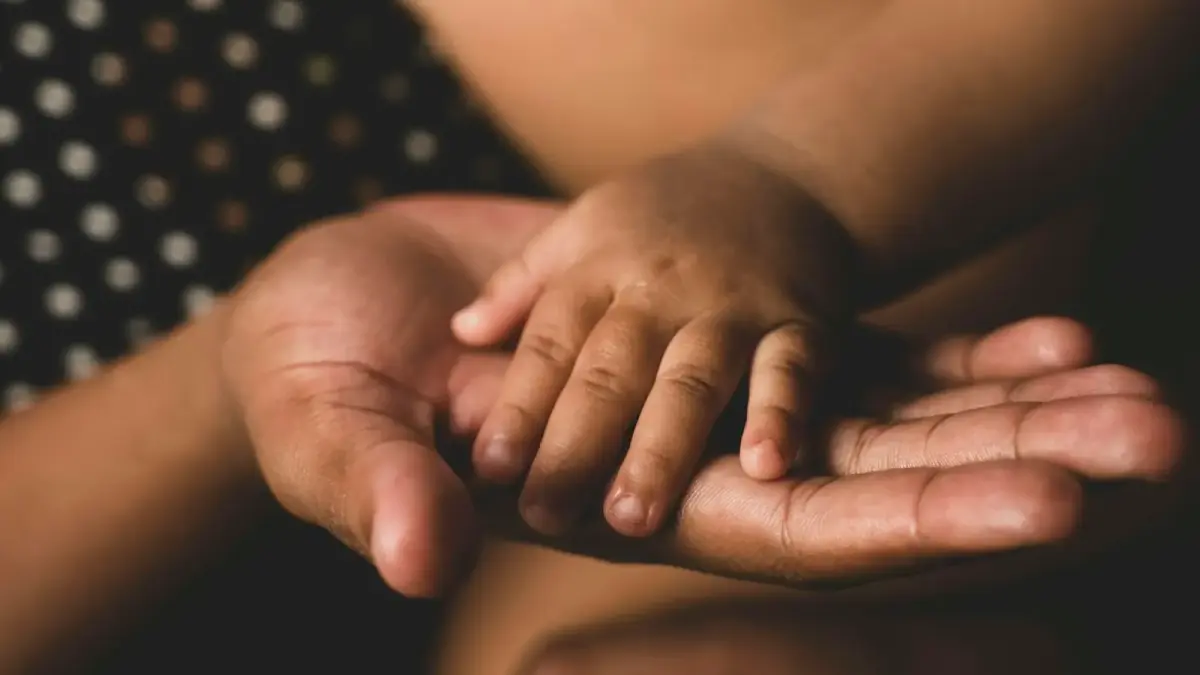
There is a particular kind of man who always warms his hands before touching someone he loves - who rubs his palms together, blows into cupped fingers, presses them against his own chest before reaching for a child's face or placing a hand on his wife's back - because a boy whose father's hands were always cold from the workshop, the garage, the unheated morning, learned that touch should never arrive as a shock, and the man who warms his hands at sixty-two is not being fastidious but honoring the only rule of affection he was ever taught: that love, if it is going to land, must arrive warm
The Temperature of His Hands
My father worked in a machine shop for thirty-one years. He came home most evenings with his knuckles split and his palms carrying the temperature of steel in January. I remember being small enough that his hand could cover the entire side of my face, and I remember flinching - not because I was afraid of him, but because his skin was so cold it felt like being touched by the outside.
He noticed. He always noticed.
After that, he started warming his hands before he touched me. He would come through the door, set his lunchbox on the counter, and stand at the kitchen sink running hot water over his fingers. Sometimes he would just press his palms flat against his own stomach, trapping them under his flannel shirt until the cold bled out. Then he would find me. Then he would put his hand on my head, on my shoulder, on the back of my neck in that way fathers do when they are proud but do not have the vocabulary to say it.
I did not understand what I was watching. I thought he was just cold. I thought he was taking care of himself.
It took me thirty years to realize he was taking care of me.
The Ritual Nobody Teaches
You have seen this man. Maybe you are married to him. Maybe you raised him. Maybe you are him, and you have never once thought about why you do it.
He is the man who rubs his palms together briskly before placing a hand on a child’s forehead to check for fever. The man who cups his hands around his coffee mug for a few extra seconds, not because he is savoring the warmth, but because he knows his daughter is going to crawl into his lap in a minute and press her face against his fingers.
He blows into cupped hands in the parking lot before reaching for his wife’s hand. He tucks his fingers into his armpits during the football game, not because he is cold but because his grandson will want to be carried to the car afterward. He presses his palms against the heating vent in the hallway before walking into the nursery.
Nobody taught him to do this. No parenting book. No therapist. No conversation with another man about how touch should feel.
He learned it the way most men learn tenderness - by remembering what its absence felt like, and deciding, without ever articulating the decision, that his hands would not carry the same temperature as his father’s.
What Cold Hands Meant
There is a particular kind of childhood where your father’s body was always marked by his work. His hands were calloused. His shoulders carried the shape of whatever he lifted. His skin smelled like motor oil or sawdust or the sharp chemical scent of industrial solvent that no amount of Lava soap could fully remove.
And his hands were cold. Not neglectfully. Not cruelly. They were cold because the garage was not heated. Because the morning shift started at five and the truck’s cab did not warm up until he was already at the plant. Because concrete holds December in its bones and transfers it faithfully to anyone who kneels on it.
A boy does not think about this consciously. He does not sit in his room and reflect on the thermoregulatory consequences of manual labor. He just knows that when his father picked him up, there was a moment - brief but indelible - where the touch landed like something other than affection.
It landed like weather.
And the boy’s body catalogued that sensation and filed it somewhere between love and discomfort, in that strange drawer where we keep experiences that were not harmful but were not quite warm either.
A 2008 study published in Psychological Science by researchers Lawrence Williams and John Bargh found that physical warmth directly influences how people perceive interpersonal warmth. Participants who briefly held a warm cup of coffee rated a stranger as significantly more caring and generous than those who held an iced coffee. The body does not separate temperature from tenderness. When touch arrives cold, something in us - something old and mammalian and beyond language - registers it as less safe than it might otherwise be.
This is not a criticism of those fathers. They were not cold men. They were men whose work made their bodies cold, and nobody told them that the temperature of their hands was writing a story their sons would spend decades trying to revise.
The Translation
Here is what I think the hand-warming man is actually doing, even if he has never framed it this way.
He is translating.
He inherited a version of love that arrived at the wrong temperature. Not the wrong intention - the intention was always there. His father loved him. His father showed up. His father’s hand on his shoulder at the baseball game was real and meant something. But the hand was cold, and the boy’s body received the message with static.
So the man - the grown man, the father now, the grandfather - performs a small act of translation before every touch. He converts the cold his body carries into the warmth his love requires. He closes the gap between what he feels and what his hands communicate.
This is emotional labor of the most invisible kind. It happens in doorways, in parking lots, in the three seconds between standing up from the couch and reaching for a child. It is so small and so habitual that the man himself often does not know he is doing it.
But the people he touches know. They know because his hands always arrive warm. They know because his touch never startles. They know because somewhere in the body’s memory, every time his palm meets their skin, the signal is clean: this is safe. This is love. This is not the weather.
A Borrowed Warmth
John Bowlby, the psychiatrist who gave us attachment theory, wrote extensively about how physical comfort forms the foundation of emotional security. His work, and the now-famous experiments by Harry Harlow with infant rhesus monkeys, demonstrated something that seems obvious but that our culture still struggles to absorb - that warmth is not a luxury of affection but its infrastructure.
Harlow’s monkeys chose the warm cloth mother over the wire mother that dispensed food. They chose comfort over sustenance. They chose temperature.
The man who warms his hands is Bowlby’s theory made flesh. He is building a secure base with every touch, ensuring that the warmth is there before the contact, that the infrastructure of safety is in place before affection is delivered.
He probably has no idea he is doing this. If you asked him, he would shrug and say he just does not like having cold hands. He might even look confused. He might say, “I don’t know, I’ve always done that.”
That “always” is doing a lot of work. That “always” stretches back to a boy in a kitchen watching his father run his hands under hot water and understanding, without words, that love has a preparation step.
The Inheritance
What moves me most about this particular kind of man is that he did not reject his father’s love. He refined it.
There is a version of this story where the boy grows up and decides that his father was insufficient. That the cold hands meant something about the man behind them. That the flinch was evidence of a failure.
But the hand-warming man tells a different story. He says: my father loved me with what he had. His hands were cold because he was building something for us. He gave me everything he could, including, without meaning to, a lesson about how touch should feel.
And I am going to honor that lesson by ensuring my hands carry the temperature he wished his could have.
This is not correction. It is completion. The father started something. The son finishes it. The love was always warm - it just needed a generation to reach the right temperature.
A 2014 study from the University of Colorado Boulder, published in the journal PLOS ONE, found that interpersonal touch can synchronize physiological states between people - heart rate, breathing, even the experience of pain. When a partner held a hand with warmth and presence, the synchronization was stronger. The body reads touch not just as contact but as communication. And temperature is part of that language.
The man at sixty-two who rubs his palms before touching his granddaughter’s cheek is speaking a language he inherited and improved. He is saying, in the only dialect his body knows, that he has thought about how this will feel for her. That he has prepared. That his love is not arriving as it comes but as he wants it to arrive.
The Men Who Prepare
I warm my hands now. I do it without thinking, the way you turn down the radio when you are looking for an address - an automatic adjustment that reveals how carefully you are paying attention even when you appear to be on autopilot.
I warm my hands before I touch my children. Before I reach for my partner. Before I place my palm on a friend’s back. I warm them on my coffee, on my jeans, against my own ribs. I press them together and generate the small friction of a man converting himself into something softer before he makes contact with someone he loves.
If you recognize this man - if you are standing in a kitchen right now watching someone run his hands under warm water before coming to hold you - I want you to know what you are witnessing.
You are watching someone prepare to be gentle. You are watching a man whose father’s hands carried the cold of honest work, and who decided, probably before he was old enough to drive, that his touch would arrive differently. Not better. Not in opposition. Just warmer.
You are watching a man who learned that love has a temperature, and who has spent his whole life making sure his runs warm.
That is not a small thing. In a world that rarely teaches men the physics of tenderness, the man who warms his hands invented his own curriculum. He studied under a father who could not teach him directly but who taught him completely. And every time he presses his palms together, every time he blows into cupped fingers, every time he holds his hands against his own chest for three extra seconds before reaching for someone he loves - he is not being cautious.
He is being devoted. He is honoring an inheritance. He is making sure that when his love finally lands, it arrives the only way it should.
Warm. Ready. Worth the wait.