There is a particular kind of man who has never once left the house without patting his pockets three times - wallet, keys, phone, in that exact order, the same sequence his father performed in the hallway every morning before the door opened - not because he has ever lost any of them but because a boy who watched a man confirm he was carrying everything he needed before crossing the threshold learned that a responsible man never walks into the world unprepared, and the sixty-one-year-old who still taps front left, back right, jacket breast in the same order is not forgetful but faithful to a handshake with a man who has been dead for twelve years
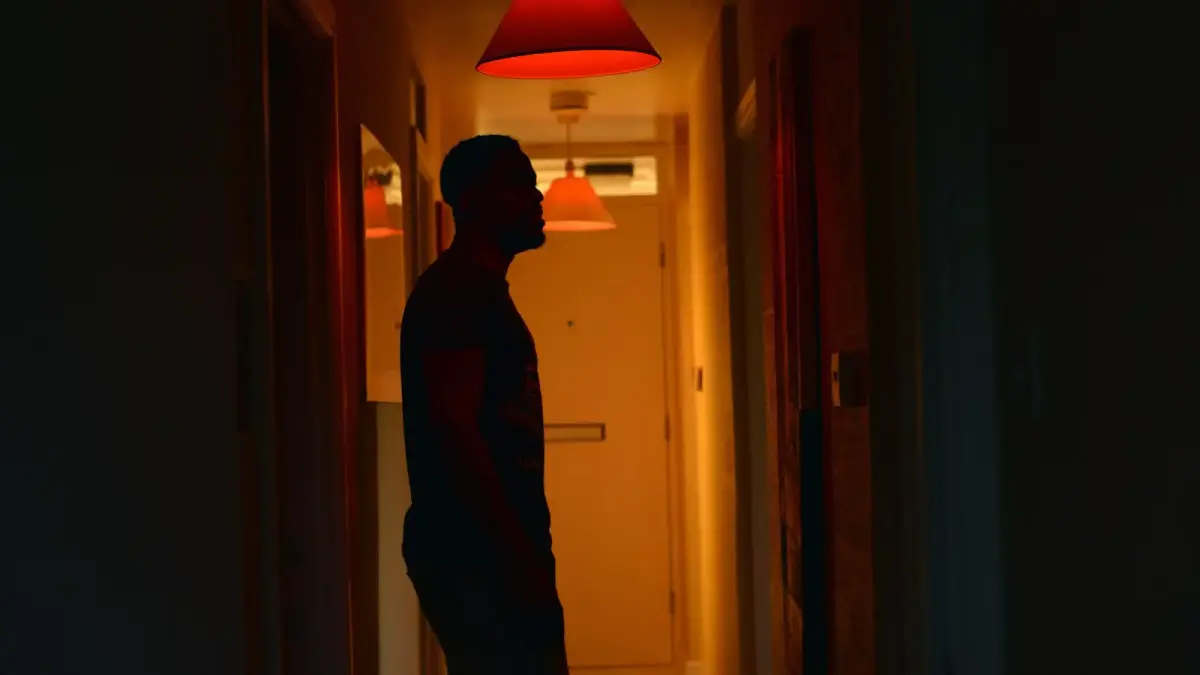
The hallway where two men still meet
Every morning for as long as I can remember, my uncle stood in the front hallway of his house and performed the same three-beat rhythm before opening the door. Front left pocket - wallet. Back right pocket - keys. Jacket breast - phone.
He never looked down. He never opened his wallet to confirm the cards were inside or jangled the keys to hear them. It was a tap, a touch, a confirmation made entirely through fabric and pressure. Three contacts, always in the same order, always completed before his hand reached the doorknob.
I was maybe ten when I first noticed it. I was staying at his house for the weekend and had come downstairs early, still in pajamas, to find him already dressed and standing in front of the hallway mirror. He wasn’t looking at his reflection. He was looking at something I couldn’t see - some internal checklist written in a language I didn’t yet speak. Tap, tap, tap. Then the door opened, and the morning swallowed him whole.
It took me another twenty years to understand what I had been watching.
What a boy absorbs without being taught
Nobody sat my uncle down and said, “Before you leave the house, always check three pockets in this order.” There was no lesson. There was no lecture about responsibility or preparedness or what it means to be a man who doesn’t forget things.
There was only a boy standing behind his father in a hallway, watching.
His father - my grandfather - performed the same ritual every weekday morning for over thirty years. He worked at a paper mill forty minutes from home and left the house at six-fifteen regardless of weather, season, or how he felt. The pocket-check was as fixed as the departure time. It was not a habit in the way we usually mean the word. It was architecture.
A 2019 study published in the Journal of Research in Personality found that children absorb behavioral patterns from parents not primarily through instruction but through repeated observation of ritualized sequences. The researchers called these “procedural inheritances” - motor patterns that transfer between generations without verbal encoding. The child doesn’t learn the rule. The child learns the rhythm.
My uncle learned the rhythm. He learned it the way you learn the melody of a song that plays in every room of your childhood - not by studying it but by living inside it until it becomes indistinguishable from your own pulse.
The geometry of masculine care
Here is something nobody talks about when they talk about men and emotions: the pocket-check is one of the most intimate gestures in the masculine repertoire.
Think about what it actually communicates. A man standing in a hallway, confirming he has everything he needs before he walks into the world. Wallet - he can provide. Keys - he can return. Phone - he can be reached. The three taps are not a nervous tic. They are a quiet declaration of availability. I am carrying what I need to take care of you, even when I am not here.
My grandfather never said “I love you” to his children. This is not unusual for men of his generation, and I am not interested in pathologizing it. What I am interested in is the possibility that the pocket-check was his version of saying it. That every morning, in the hallway, in front of the mirror, he was performing a small ceremony of devotion that his son understood without ever being told what it meant.
Daniel Goleman, in his work on emotional intelligence, has written extensively about how men often express care through acts of preparation rather than words of affirmation. The father who checks the tire pressure before his daughter drives to college. The husband who fills the gas tank on Saturday so his wife doesn’t have to stop on Monday morning. These are not substitutes for emotional expression. They are emotional expression - just in a dialect that doesn’t always get recognized.
The pocket-check belongs to this dialect. It says: I have confirmed that I am equipped to take care of this family for another day. You can count on me. I have checked.
A ritual that outlives the man who started it
My grandfather died twelve years ago. He was seventy-eight. His last morning at home, before the ambulance came, he was found in the hallway. My aunt told me he had gotten dressed - dress pants, button-down shirt, belt, shoes - and was standing in front of the mirror. She thought he was confused. She thought the illness had disoriented him and he believed he was going to work.
But I don’t think he was confused. I think he was doing the only thing he knew how to do with a morning. The same thing he had done with every morning for over fifty years. He was checking his pockets. He was confirming he was ready.
He died four days later.
My uncle, who is now sixty-one, still performs the pocket-check every morning. Same hallway. Same order. Front left, back right, jacket breast. He has never lost his wallet. He has never forgotten his keys. He has never once needed the check to remind him of anything he was actually carrying.
What he needs it to remind him of is something else entirely.
The last room where two hands perform the same gesture
A 2022 study published in Frontiers in Psychology examined what researchers called “embodied grief” - the way bereaved individuals unconsciously maintain physical habits inherited from the deceased as a form of continuing bonds. The study found that motor rituals shared with a lost loved one activated the same neural pathways associated with secure attachment, suggesting that the body uses repeated gestures to maintain a felt sense of connection that the conscious mind cannot sustain on its own.
My uncle’s pocket-check is embodied grief. It is also embodied love. It is the place where those two things become impossible to separate.
When he stands in the hallway each morning and taps his three pockets, he is not performing a practical function. He is stepping into a posture his father held. He is placing his hands where his father’s hands went. He is repeating a sequence that only two people in the history of the world have ever performed in exactly that way, in exactly that spot, and one of them is gone.
To stop doing it would not feel like breaking a habit. It would feel like leaving a room. The last room where the two of them still stand together, facing the same mirror, preparing for the same world.
What we carry when we carry everything we need
I think about this ritual often. Not because it is dramatic or unusual, but because it is the opposite of those things. It is the most ordinary gesture imaginable - a man checking his pockets before he leaves the house. It happens in a million hallways every morning. Nobody notices. Nobody comments. The wife walks past and sees a man patting his jacket. The children run by and see nothing at all.
But underneath the ordinariness, there is a cathedral.
There is a boy who stood behind a man and memorized his choreography. There is a son who absorbed his father’s preparation ritual without knowing he was absorbing it. There is a sixty-one-year-old who performs a gesture that no longer serves any practical purpose and cannot stop - not because he is anxious, not because he is forgetful, but because his hands remember something his mouth was never taught to say.
Brene Brown has spoken about how grief often hides inside the ordinary - the coffee mug you keep washing even though no one else drinks from it, the radio station you never change because it was the one playing in someone else’s car. We expect grief to be dramatic, visible, loud. But the deepest grief is often the quietest. It lives in muscle memory. It lives in the hallway at six-fifteen in the morning when nobody is watching.
The door that stays open
My uncle doesn’t talk about the pocket-check. I have never heard him mention it. If you asked him about it, I suspect he would look at you blankly and say something like, “I just make sure I have everything before I leave.”
And he would be telling the truth. He does make sure he has everything.
He just doesn’t know how much “everything” includes.
It includes a father’s hands. A hallway mirror. A six-fifteen departure. A thirty-year career at a paper mill. A man who never said I love you but who confirmed every single morning, in front of his son, that he was carrying what the family needed. A boy who watched and learned. A man who watches and remembers.
The pocket-check is not a habit. It is a handshake across a distance that no amount of time can close and no amount of grief can widen. It is two men, twelve years and an entire lifetime apart, performing the same gesture in the same hallway, confirming the same thing.
I am here. I am ready. I am carrying everything.
And every morning, when the hand reaches the doorknob and the door swings open, there is a moment - just a fraction of a second - when the sixty-one-year-old son is still standing behind the man in the mirror, still watching, still learning what it means to walk into the world prepared.
The door opens. The morning comes in. And the hallway, for just that moment, holds both of them.