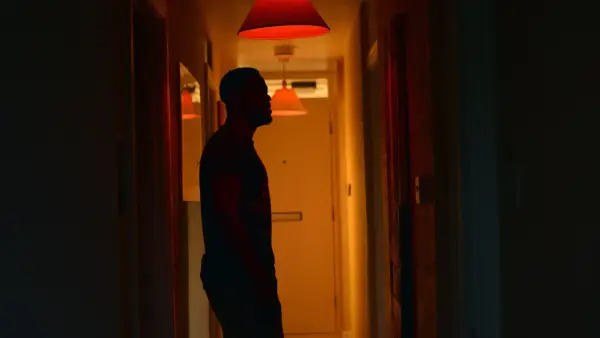
She is 61 and just realized she has never once hung up the phone without saying 'I love you' to anyone in her family - not because she is overly affectionate but because a girl whose grandmother died between phone calls, who picked up the receiver to call her back on a Tuesday afternoon and heard only a dial tone that meant she would never hear that voice again, learned that the last thing you say to someone might actually be the last thing, and the woman who ends every conversation with those three words at sixty-one is not sentimental but standing guard at a door that closed without warning forty-five years ago

The Call That Never Happened
I was sitting in my kitchen last Thursday, watching my phone screen go dark after talking to my sister, when it hit me. I had just said “I love you” right before hanging up. Not because we had been having a deep conversation. We had been arguing about whether our mother’s old soup tureen was worth keeping or donating.
And yet there it was, automatic as breathing. I love you. Click.
I tried to remember a single phone call in my adult life - one call, to anyone in my family - where I had not said those three words before the line went quiet. I could not find one. Not one in forty-five years. And in that moment, sitting alone with a cup of tea going cold, I understood exactly why.
I am sixty-one years old, and I have been standing guard at a door that closed without warning when I was sixteen.
A Sunday Conversation About Nothing
My grandmother and I talked on the phone every Sunday. This was 1981, and phone calls were still events. You sat in a particular chair. You held the receiver with both hands if the cord would let you. You spoke to one person at a time, and you gave them your full attention because there was no screen pulling you somewhere else.
Our Sunday calls were never about anything important. She would tell me about her garden. I would tell her about school. She would ask if any boys were being nice to me, and I would groan and say “Grandma,” and she would laugh in that way she had - like laughter was something she had been saving up all week just for me.
That last Sunday was no different. She told me her tomatoes were coming in early. I told her I had a history test on Wednesday. She said she loved me. I said I loved her too.
I was going to call her back on Tuesday. I had a question about a recipe she had mentioned, something with lemon and butter that I wanted to try for a home economics assignment. Tuesday was the plan. Tuesday was certain.
She died on Monday night.
The Space Between Calls
There is a particular kind of grief that lives in the gap between what you planned to do and what actually happened. It is not the grief of the funeral or the empty chair at Thanksgiving. It is quieter than that, and in some ways more permanent.
It is the grief of the call you were going to make.
I picked up the phone on Tuesday afternoon, dialed her number from memory, and heard it ring into nothing. My mother had already called me that morning to tell me, but my hands did not know that yet. My fingers still believed Tuesday was a day when Grandma would answer.
A 2015 study published in the Journal of Personality and Social Psychology found that unfinished emotional business - things left unsaid, gestures left unmade - creates what researchers call “incomplete grief processing.” The unresolved intention becomes a kind of permanent open tab in the mind. You carry it forward not as memory but as mission.
I did not know any of that at sixteen. I only knew that I had planned to call and hadn’t, and that the space between Sunday and Tuesday had swallowed something I could never get back.
The Protocol That Built Itself
I did not make a conscious decision to say “I love you” at the end of every phone call. There was no moment where I sat down and created a rule for myself. It just started happening.
First with my mother. Then with my father. Then with my sister, my brother, my cousins. When I got married, it extended to my husband. When I had children, it was never a question.
Every phone call. Every single one. Even the short ones - “Can you pick up milk?” “I love you.” Even the angry ones, the ones where someone had hurt my feelings or I had hurt theirs. Especially those.
It was not a pleasantry. It was not a habit the way cracking your knuckles is a habit. It was a seal. A closing prayer. A way of making sure that if the worst thing happened - if Monday night came again - the last sound between us would not be a grocery list or an argument or silence.
The last sound would be love, spoken out loud, on the record.
When Someone Doesn’t Say It Back
Here is something I have never admitted to anyone. When someone in my family hangs up without saying it - when the call drops, or they are distracted, or they just forget - I feel a flash of something close to panic.
It is not rational. I know that. A dropped call is not a death. A distracted goodbye is not an omen. But the girl who is still sixteen somewhere inside me does not know the difference between “the call ended without those words” and “you will never hear their voice again.”
I have called people back. More than once. Just to say it. Just to close the circle.
My husband learned this about me early. He told me once that he had never met anyone who treated the end of a phone call like a sacrament. I laughed when he said it, but he was not wrong. That is exactly what it is. A sacrament performed at the altar of a kitchen counter, a car dashboard, a grocery store parking lot.
Gabor Mate has written about how early loss installs what he calls a “template of vigilance” - a permanent readiness for the thing you most fear to happen again. You do not choose it. It chooses you. And it disguises itself as personality, as warmth, as just being the kind of person who says I love you a lot.
But it is not personality. It is protection.
The Daughter Who Inherited the Ritual
My daughter is thirty-four. She says “I love you” at the end of every phone call. Every one. To me, to her father, to her brother, to her friends. I have heard her say it to the woman at her dentist’s office, though I think that one was accidental.
She does not know why she does it.
I mean, she knows on the surface. She would say it is just how our family talks. She would say it is nice, that it makes people feel good, that she likes being someone who says those words freely. And all of that is true.
But she does not know about the Tuesday afternoon. She does not know about the phone ringing into nothing. She does not know that the ritual she performs so effortlessly was born from the worst silence I have ever heard.
A 2019 study in Frontiers in Psychology found that family communication rituals are among the most reliably transmitted behaviors across generations - more durable than religious practice, more consistent than dietary habits. Children absorb the rhythm of how their parents end conversations the way they absorb an accent. They do not learn it. They become it.
My daughter became it. And part of me aches with tenderness when I hear her say those words, because she is carrying something precious without knowing its weight.
What We Guard Without Knowing
I think about all the things we do that look like personality but are really loyalty. Loyalty to a moment, to a loss, to a version of ourselves that learned something the hard way and never fully put it down.
The friend who always texts when she lands safely - because someone she loved once did not land. The father who walks his grown daughter to her car every time she visits - because the world took something from him in a parking lot once. The woman who checks that the stove is off three times - because a fire once started in a house she was not watching.
We call these things quirks. We call them habits. We call them being a certain kind of person.
But sometimes they are memorials. Small, private, daily memorials to the moments that taught us the world could change between Sunday and Tuesday, between one phone call and the next, between the last thing you said and the silence that followed.
Research published in 2020 in Psychological Science found that people who have experienced sudden loss develop what the researchers described as “anticipatory emotional closure” - a drive to resolve emotional loose ends in real time, rather than trusting that there will be another chance. It presents as warmth. It presents as attentiveness. It presents as being the person who always says the important thing out loud.
It is all of those things. But underneath, it is a hand reaching for a phone that already stopped ringing.
The Last Thing and the First Thing
I am sixty-one. My grandmother has been gone for forty-five years. I have grandchildren of my own now, and when they call me - usually by accident, because they are three and five and phones are just shiny rectangles to them - I say “I love you” before the call dissolves into giggles and someone pressing buttons.
They will not remember these calls. But I will. And somewhere in the pattern of how our family speaks to each other, in the three words that close every conversation like a hand on a door, my grandmother is still here.
She is here in the ritual she never meant to create. In the lesson she never meant to teach. In the way her granddaughter, who is no longer a girl but a woman with silver in her hair and reading glasses she keeps losing, still picks up every phone with the quiet understanding that this might be the last time.
I am not sentimental. I am not overly affectionate. I am not performing closeness for anyone’s benefit.
I am a woman who learned at sixteen that love is not a feeling you get to assume. It is a thing you say out loud, every time, because the silence after a phone call can last forever. And if it does, I want the last thing between us to be the truest thing I know.
I love you. Click.
That is not a habit. That is a promise I have been keeping since 1981, and I am not going to stop now.