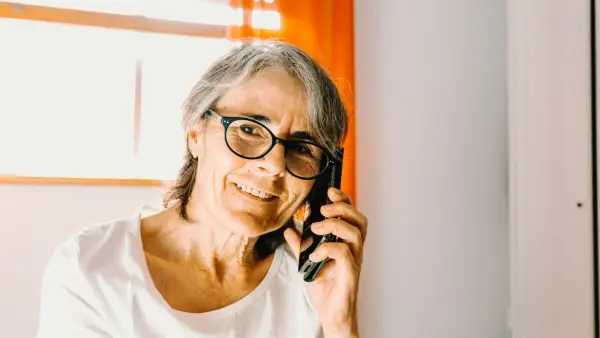
She is 64 and has never once baked a single batch of anything - not cookies, not banana bread, not the lemon squares she brings to every church potluck - because a woman who watched her mother always make two of everything learned that a kitchen was not a room where you fed your family but a room where you proved you were ready for whoever might need you, and the woman who doubles every recipe at sixty-four is not generous but faithful to a generation that believed being caught without something to offer was the one failure a woman could not explain away
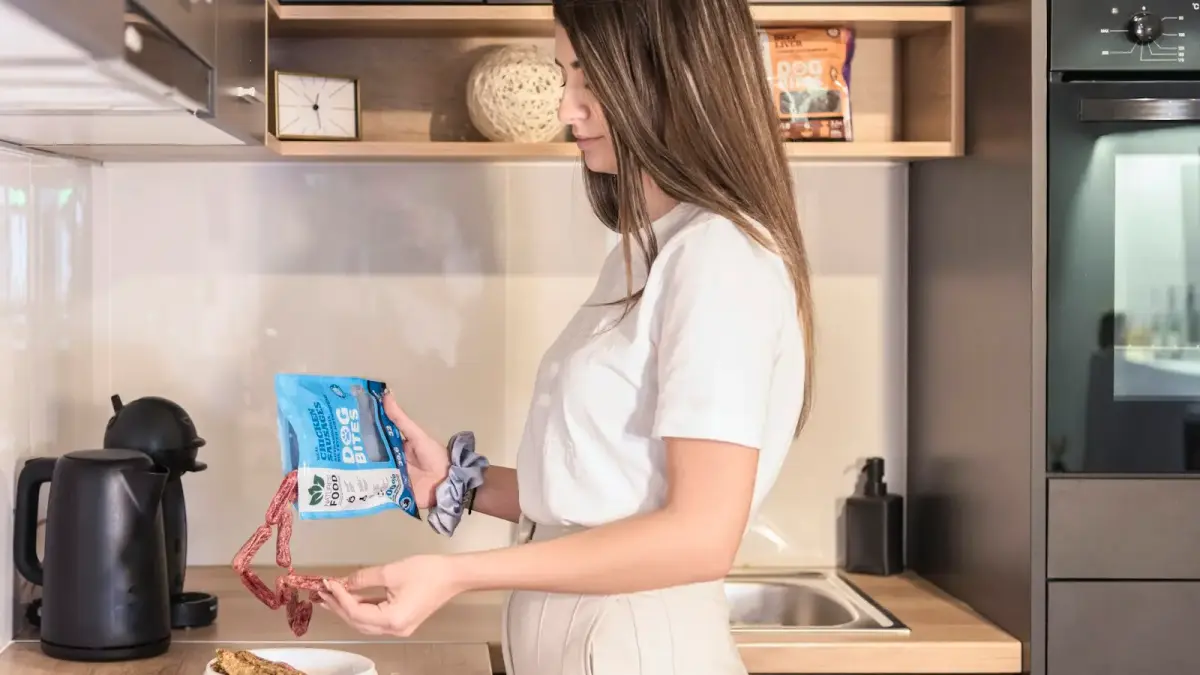
She Never Owned a Single Recipe Card That Wasn’t Doubled in the Margins
I found my mother’s recipe box after she passed. It was one of those tin ones with the faded rooster on the lid, stuffed so full the clasp barely held. Every card inside had the same handwriting in the same blue ink - her original notes on the left, and then a second column squeezed into the margins where she’d rewritten every measurement times two.
Not some of them. Every single one.
Her snickerdoodles. Her tuna casserole. The banana bread she made so often the card had gone soft and translucent from years of butter-stained fingers. All of it doubled. All of it written as though a single batch had never been an option worth considering.
I sat on her kitchen floor with that box in my lap and I cried - not because I missed her, though I did, but because I suddenly understood something about her that I’d been looking at my entire life without seeing. My mother had never once baked for just us. She had always, always been baking for whoever might show up next. And I realized, sitting there at sixty-four years old with flour ghosts on those index cards, that I had inherited the same reflex so completely I couldn’t remember a time before it.
I have never in my life made a single batch of anything.
The Doubling Was the First Thing I Learned
Before I learned to crack an egg without getting shell in the bowl, before I could tell the difference between baking soda and baking powder, I learned that you always double. My mother didn’t teach this as a tip. She taught it as a fact of the world - like gravity, like manners, like the understanding that you wrote thank-you notes within forty-eight hours.
“You never know who’s going to stop by,” she’d say, pulling out two loaf pans instead of one. “And you never want to be caught with nothing.”
Caught. That was the word she used. Not inconvenienced. Not unprepared. Caught - like it was something shameful, something you could be accused of. A woman with an empty kitchen was a woman who had been found out.
I absorbed this the way children absorb everything - without questioning it, without even realizing it was a belief rather than a truth. By the time I was twelve, I was doubling recipes on my own. By the time I had my own kitchen at twenty-three, I didn’t know how to halve anything. The math only went in one direction.
A 2019 study published in the Journal of Family Issues found that women who grew up in households with strong domestic performance expectations were significantly more likely to report anxiety around hospitality and food preparation - not because they disliked cooking, but because they had internalized cooking as a metric of personal adequacy. The kitchen wasn’t a creative space. It was an exam room.
Her Kitchen Had a Door That Was Never Locked
My mother’s back door was unlocked from six in the morning until she went to bed. This wasn’t carelessness. This was policy. Neighbors came through that door for coffee. Church friends came through for a plate of whatever she’d made that morning. My father’s coworkers stopped by sometimes, unannounced, and she’d have something on the table before they’d finished taking off their coats.
She was spectacular at it. I want to be clear about that. She wasn’t resentful, at least not visibly. She moved through her kitchen like a woman who had memorized the choreography of care so thoroughly that it looked effortless.
But here is what I noticed only later, only after years of doing the same thing in my own home: she never sat down first. She never made a plate for herself until everyone else had been served. She never ate the first cookie off the cooling rack. She tasted things while she cooked - a pinch here, a spoonful there - but she never sat at her own table and ate like a person who belonged there as a guest rather than as staff.
Her kitchen fed everyone. But I’m not sure it ever fed her.
What Looks Like Generosity Is Sometimes Something Else Entirely
I’ve spent most of my adult life being praised for the same thing my mother was praised for. “You always have something ready.” “Your house always smells like something’s baking.” “You’re so generous.”
Generous. That word followed my mother around like a title. And it follows me too. But I want to tell you something I’ve only recently been able to say out loud: the doubling was never generosity. It was vigilance.
There is a difference between a woman who bakes because she loves to share and a woman who bakes because she was taught that an empty counter is an indictment. One of those women is relaxed in her kitchen. The other is on patrol.
I was on patrol for forty years before I recognized it. Every time I pulled out the flour and the sugar and the butter, some part of me wasn’t thinking about how nice the cookies would taste. Some part of me was thinking about who might come to the door and what it would mean about me if I had nothing to hand them.
A 2021 study in Frontiers in Psychology examined what researchers called “compulsive hospitality” in women over fifty and found that it was strongly correlated not with extroversion or warmth but with anxious attachment and an externalized locus of self-worth. The women who hosted the most, who cooked the most, who were always ready - they weren’t the most social. They were the most afraid of being perceived as insufficient.
When I read that study, I set down my coffee and stared at the wall for a long time.
A Generation of Women Who Were Never Off Duty
My mother was born in 1932. She came of age in a world where a woman’s competence was measured almost entirely by her domestic output. Could she keep a clean house? Could she raise polite children? Could she put a meal on the table that made her husband look like he’d chosen well?
And underneath all of that - could she do it without appearing to strain? Could she make it look like love rather than labor?
This was the contract her generation signed without ever being handed the paperwork. You would maintain a home that was always ready for inspection, always ready for company, always prepared to prove that you were enough. Not enough as a person. Enough as a woman - which, in that framework, was a narrower and more demanding category.
The doubling was part of that contract. You didn’t make one pie because one pie served your family. You made two because the second pie served your reputation. The second loaf of banana bread wasn’t food. It was insurance.
A 2017 study published in the Journal of Personality and Social Psychology traced how domestic labor expectations shape identity across generations and found that women who grew up watching their mothers perform high levels of “anticipatory caregiving” - preparing for needs that hadn’t yet been expressed - were more likely to experience guilt when resting, difficulty identifying their own desires, and a persistent sense that relaxation was something that had to be earned through visible productivity.
My mother never sat in a chair without something in her hands. Knitting. Mending. Snapping beans. I thought she was industrious. Now I think she was unable to stop.
The Second Batch Was Never for the Neighbors
Here is the part that took me the longest to understand. The second batch - the extra loaf, the additional casserole, the cookies wrapped in foil “just in case” - was never really for whoever might stop by. It was for my mother’s sense of herself.
If someone came to the door and she had nothing to offer, she would have felt - what? Not just embarrassed. Something deeper. Something closer to existential failure. As though the empty counter proved something about her character that no amount of explanation could undo.
This is what gets passed down. Not recipes. Not techniques. Not even the love of cooking, though that gets passed down too. What gets passed down is the equation: your worth equals your readiness to serve. Your value lives in what you can produce for others at a moment’s notice. Your kitchen is not your room. It is your post.
I stood at that post for decades. I stood there on holidays and weekdays and Saturday mornings when I would rather have been reading. I stood there when I was tired and when I was sick and when my back hurt so badly I had to lean against the counter between steps. I doubled every recipe. I wrapped extras in foil. I kept my door unlocked.
And I told myself I did it because I was generous.
What Changes When You See It
I want to be careful here because I’m not writing this to condemn my mother or her generation. Those women built worlds out of flour and butter and sheer force of will. They fed neighborhoods. They held communities together with casserole dishes and coffee pots and the radical, exhausting act of always being ready.
But I think we owe it to them - and to ourselves - to name what it actually cost.
It cost them the experience of their own kitchens as spaces of pleasure rather than performance. It cost them the freedom to be caught without something to offer and to discover that the people who loved them would not leave over an empty cookie jar. It cost them rest. It cost some of them their health. It cost all of them the quiet luxury of making a single batch of something, just for themselves, just because they wanted to taste it.
I am sixty-four years old. Last Tuesday, for the first time in my life, I made one dozen cookies. Not two dozen. Not three. Twelve cookies from a recipe I did not double.
I ate four of them warm, standing at my own counter, and nobody came to the door, and I had nothing extra wrapped in foil, and the world did not end.
It was the most radical thing I have ever done in a kitchen.
She Would Have Understood
I think my mother would have understood this, if she’d had the language for it. I think somewhere beneath all that beautiful, tireless readiness, she knew. She knew the doubling was not abundance. She knew it was a kind of watchfulness that never let her rest.
But she didn’t have the framework to separate her worth from her output. Her generation wasn’t given that tool. They were given rolling pins and casserole dishes and the unspoken instruction to never stop producing.
If you recognized yourself in any of this - if you have never made a single batch of anything, if your freezer is full of extras “just in case,” if you cannot sit in your own kitchen without calculating what you should be making - I want you to hear something that nobody told my mother and nobody told me until I was old enough to tell myself.
You are not your kitchen. You are not your readiness. You are not the foil-wrapped loaf on the counter waiting for someone who may never come. You are a person who was taught a beautiful, brutal equation, and you followed it faithfully, and that faithfulness is not your flaw.
But you are allowed to make twelve cookies.
You are allowed to eat them yourself.
You are allowed to let someone knock on your door and find you with nothing but your own company to offer, and to discover that you are, even empty-handed, more than enough.