There are people who still eat the bruised part of the fruit first and save the good half for last, who always take the smaller portion and leave the bigger one, who never reach for the last of anything even in their own kitchen - and it is not politeness and it is not habit, it is a childhood that taught them the best of anything was something you earned your way toward, not something you were ever supposed to take first
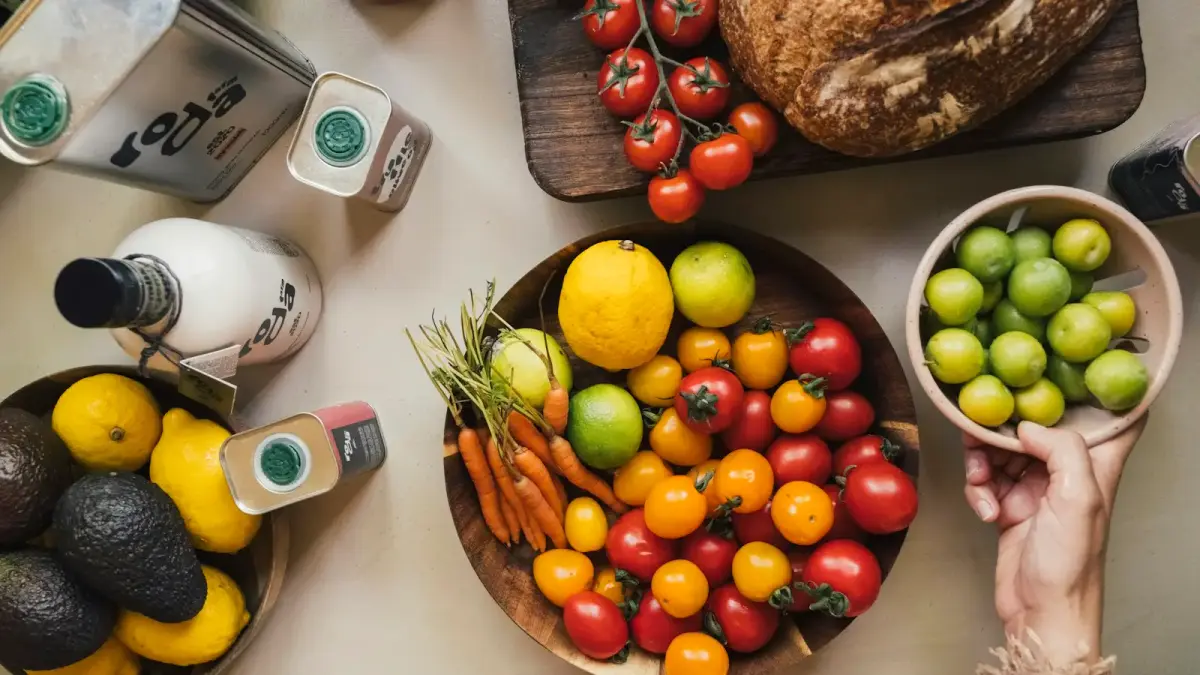
I watched my mother cut a peach in half once, when I was maybe nine or ten. One side was perfect - golden, warm, the kind of ripe that almost glows. The other side had a bruise the size of a thumbprint, the flesh gone soft and brown beneath the skin.
She ate the bruised half first. Didn’t think about it. Didn’t announce it. Just turned the damaged side toward her mouth and bit in, the way you reach for the thing that’s already yours without checking if anyone’s watching.
She saved the good half for last.
I didn’t understand it then. I thought it was just what you did with fruit - you ate the bad part so it wouldn’t go to waste, and then you got your reward. It seemed logical. Practical. The kind of thing sensible people did.
It took me thirty years to understand that she never got to the good half. Something always interrupted. Someone needed something. The phone rang. The moment passed. And that perfect golden side sat on the counter until it bruised too, and then she ate that.
I do the same thing now. I’m forty-seven years old, and I still eat the bruised part first.
The rituals no one taught you but everyone recognized
You know the ones. The small, almost invisible negotiations you make with yourself before you’ve even finished waking up.
You take the smaller piece. Not because you want it, but because reaching for the bigger one feels like something you’d need to explain.
You give away the seat by the window. You let someone else choose the restaurant. You order the second cheapest wine on the menu - never the cheapest, because that would draw attention, but never what you actually want either, because wanting too openly still feels like a kind of exposure.
You never take the last of anything. Not the last cookie. Not the last slice. Not the last scoop of ice cream, even when it’s been sitting in your own freezer for two weeks and no one else in the house has touched it.
You wait for someone to offer before you reach.
These aren’t preferences. They’re positions. They’re the coordinates you learned to occupy in a household where resources - food, space, attention, peace - were never quite guaranteed, and the safest thing you could be was the person who needed the least.
Where it started
In homes where there wasn’t quite enough, wanting was dangerous.
Not dramatically dangerous. Not the kind of danger that makes headlines. But the quiet, atmospheric kind - where asking for seconds made someone’s jaw tighten, where saying “I want the big one” earned a look that lasted longer than the sentence, where enthusiasm about anything too nice was met with a correction so gentle it didn’t register as a wound until decades later.
“Don’t be greedy.” “Other people need some too.” “You don’t need that.”
These phrases weren’t cruel. They were survival. They were parents managing scarcity with the only tools they had, which were shame and deflection and the quiet installation of a belief that would follow their children into tax brackets their parents never reached.
The belief was this: the best part of anything is not for you first. Maybe not for you at all. But certainly not first.
A 2019 study published in the Journal of Personality and Social Psychology found that people who grew up in lower socioeconomic environments continued to exhibit resource-conservation behaviors long after their material circumstances had changed. The researchers called it “scarcity imprinting” - the way early resource environments shape not just what we do, but what we believe we’re allowed to want.
The scarcity ends. The imprint doesn’t.
The second cheapest wine
There’s a particular kind of person who walks into a restaurant and already knows they won’t order what they actually want.
They’ll scan the menu. They’ll find the thing that sounds perfect - the thing their mouth actually waters for - and then they’ll let their eyes slide one line down or one price bracket lower, and they’ll order that instead. Not because they can’t afford the other thing. Often they can. They’ve worked hard. They’ve built something. They could order whatever they want.
But the internal arithmetic doesn’t care about your bank balance. It runs on a different economy entirely - one where pleasure has a cost that isn’t measured in money, and the price of taking the best thing is the feeling that you’ve taken more than your share.
This is the part that’s hardest to explain to people who didn’t grow up this way. It’s not about money anymore. It hasn’t been about money for years. It’s about the feeling in your chest when you reach for the good thing - that tiny flare of guilt, almost too fast to name, that whispers: who do you think you are?
You order the second cheapest wine because the cheapest would embarrass you and the one you actually want would expose you, and the space between those two is the only place that feels safe.
Generosity that isn’t generosity
People call it considerate. They say you’re thoughtful. They say you’re generous, selfless, the kind of person who always thinks of others first.
And you smile when they say it, because it’s easier than explaining that what looks like generosity is actually a reflex - a flinch dressed up as a gift.
You give away the bigger portion because keeping it would require you to believe you deserved it, and that belief was never installed. The hardware isn’t there. You can understand intellectually that you’re allowed the bigger piece, the better seat, the nicer thing. But understanding and believing are different animals, and the one that runs your body - the one that moves your hand toward the smaller slice before your brain has finished deciding - that one still answers to a kitchen you left twenty-five years ago.
Dr. Gabor Mate has written extensively about how early environments shape not just our behaviors but our deepest sense of what we’re worth. The patterns we develop in childhood, he argues, aren’t about what happened to us - they’re about the conclusions we drew. And the conclusion many children in scarcity households drew wasn’t “there isn’t enough.” It was “I am not the one who gets enough.”
That second conclusion is quieter. It’s also permanent, unless someone names it.
The last cookie in the jar
Here is the strangest part.
You could live alone. You could be the only person in the apartment, the only mouth to feed, the only hand that reaches into the pantry. And you would still leave the last cookie in the jar.
Not because you’re saving it for someone. There is no someone. You would leave it because taking the last of anything triggers something in you that logic can’t touch - a feeling that finishing something, using it up, taking the final piece, is a kind of transgression.
It’s not rational. You know it’s not rational. You’ve told yourself a hundred times that the cookie is yours, the apartment is yours, the life you’ve built is yours. But the body doesn’t speak that language. The body speaks the language of a house where the last of anything was either fought over or sacred, and either way, you learned to leave it.
A 2021 study in Frontiers in Psychology examined how childhood socioeconomic status influenced adult consumption patterns and found that individuals who experienced resource scarcity in early life were significantly more likely to engage in what the researchers termed “anticipatory self-denial” - the preemptive forgoing of resources even when those resources were abundant and exclusively available to them.
You’re not being careful. You’re performing a ritual of smallness that no one asked you to keep performing, in a kitchen that belongs to you, in a life you built with your own hands.
The good half of the peach
I think about my mother and that peach more often than makes sense.
I think about how she ate the bruised part with the same expression she wore for everything - steady, unsurprised, like someone who had long ago stopped expecting the texture of a thing to match what she’d hoped for.
I think about how she saved the good half the way some people save nice candles or guest towels - not for a specific occasion, but for a version of herself that felt ready to enjoy something without apology. That version never arrived. Something always came first.
I see it in myself now. The way I’ll save the best bite for last and then give it away. The way I’ll book the cheaper hotel room and then lie awake wondering why I always feel like a guest in my own life. The way I’ll buy something beautiful and leave it in the bag for three weeks because wearing it would mean admitting I thought I was someone who wears beautiful things.
The scarcity isn’t material anymore. It’s existential. It’s the belief - buried so deep it feels like personality - that you are the person who makes do, who gets by, who finds the good in the lesser thing because reaching for the better one would mean believing you belonged there.
What the bruised fruit was really teaching you
It was teaching you that your comfort comes last.
That wanting is a form of taking, and taking is a form of selfishness, and selfishness is the one thing you must never be, because in the house you grew up in, the selfish person was the one who ruined it for everyone.
So you became the opposite. You became the one who needed nothing. The one who was fine with whatever was left. The one who smiled when someone else got the bigger piece and said, honestly, I prefer the smaller one.
And the thing is - you did prefer it. Not because it tasted better, but because it felt safe. Because wanting less meant risking less, and risking less meant surviving, and surviving was the only project that mattered in a childhood where the ground was never quite solid beneath you.
But you’re not surviving anymore.
You’re in a kitchen that’s yours. You’re holding a piece of fruit that’s yours. And the good half - the golden, unblemished, beautiful half - is not going to disappear if you eat it first. No one is going to tighten their jaw. No one is going to say you’re greedy. No one is watching.
You are allowed to start with the good part.
It was never about the fruit
It was about what you believed you were worth when no one was looking.
And the answer you learned - the one your hands still know by heart, the one that moves you toward the smaller piece and away from the last cookie and into the second cheapest wine - that answer was written by people who loved you but didn’t have enough to go around, and the only way they could manage the math was to teach you to want less.
They didn’t mean to teach you that you were less. But the lesson landed anyway, the way all the important ones do - not in words, but in the space between what was offered and what was withheld, in the silence after you reached for something and someone’s expression changed.
You carried that silence into every room you’ve entered since.
You are not the bruised half of anything. You never were. You were a child who learned to make yourself smaller so the people you loved could have more, and you did it so well that you forgot it was a strategy and started to believe it was who you are.
It’s not who you are.
It’s what you learned. And learned things, even the ones that live in your hands, even the ones that feel like breathing - those can be unlearned. Slowly. Gently. One peach at a time.
Eat the good half first. You’ve earned it. You’ve always earned it. The only person who didn’t know that was you.