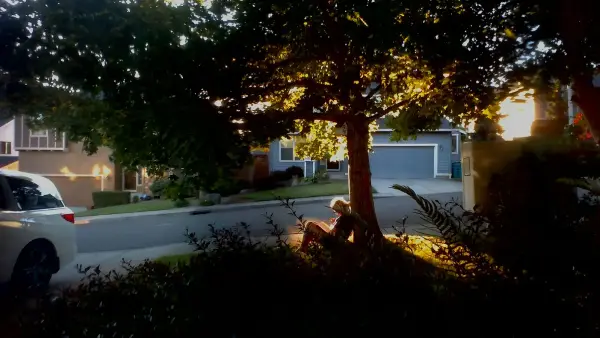
There are people who have reached an age where they no longer explain why they left the party early, why they stopped answering the phone after nine, or why they take their coffee alone on the porch before anyone else is awake, and the silence they have wrapped around these choices is not rudeness - it is the quiet authority of someone who finally stopped auditioning for rooms that were never going to seat them comfortably
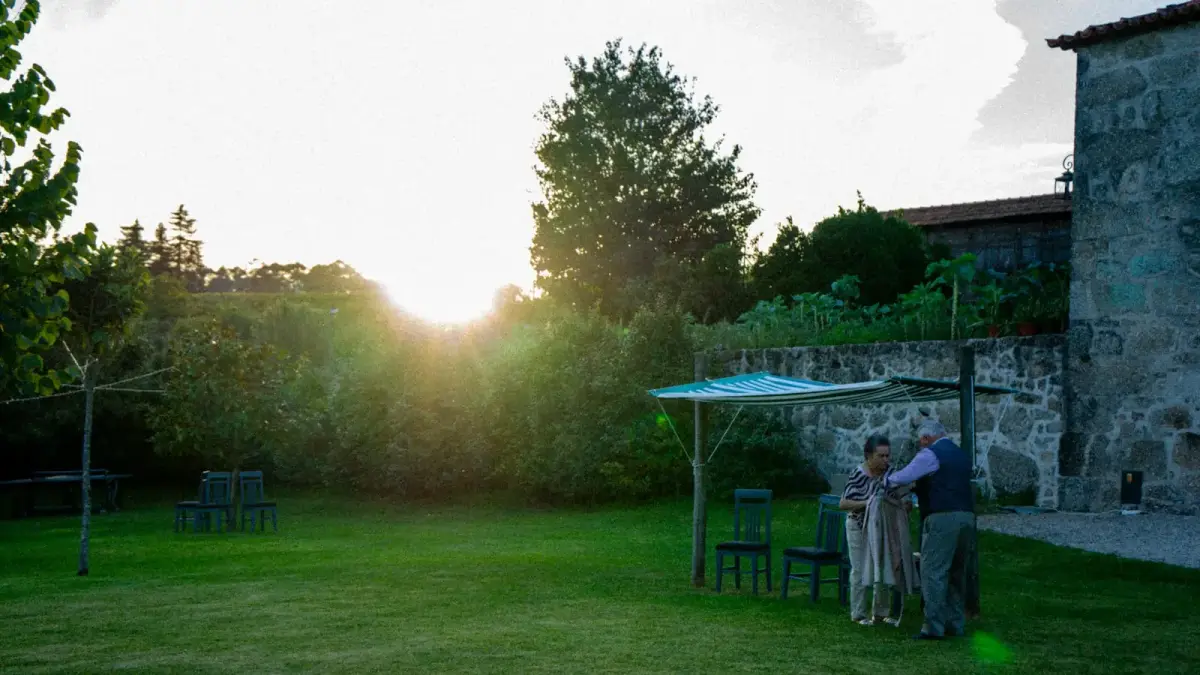
I watched my father leave a family dinner last Thanksgiving before anyone had cut the pie. He put his plate in the kitchen, kissed my mother on the side of her head, and walked to the back porch without a word. No excuse. No explanation. No apology for not wanting to sit through three more hours of noise.
My sister looked at me across the table with the face she makes when she thinks someone is being difficult. I looked back at her and said nothing, because I had started to understand what she had not yet learned. He was not being difficult. He was being honest in the only way he knew how, which was with his feet instead of his words.
He is sixty-three. He worked thirty-seven years in a lumber mill. He raised four children, buried his own father without taking a single day off, and spent the better part of his forties driving my mother to chemotherapy on his lunch breaks. He has earned the right to leave a room without filing paperwork about it.
And he is not alone in this. There is an entire generation of people quietly doing the same thing. Leaving early. Turning off the phone. Choosing the porch over the living room. And the people who love them keep reading it as a problem. As depression. As distance. As something that needs to be fixed.
It is not a problem. It is the opposite of a problem. It is what it looks like when someone finally arrives at a place they have been walking toward their entire life.
The long audition nobody talks about
There is something that happens in the first fifty years of a person’s life that rarely gets named for what it is. You spend those decades performing. Not on stage. Not in any dramatic sense. But in the slow, grinding, daily performance of being acceptable to the rooms you are in.
You learn to laugh at the joke that is not funny. You learn to stay two hours past the point your body told you to leave. You learn to answer the phone when you are exhausted, because not answering means you are rude or cold or checked out. You learn to explain yourself constantly - why you are tired, why you do not want to go, why you need a minute, why you are the way you are.
And you do this because you were taught, very early, that belonging requires explanation. That your presence must be justified. That your absence is an offense that demands a reason.
A 2018 study published in the Journal of Personality and Social Psychology found that people over fifty reported significantly higher levels of what the researchers called “authentic self-expression” - the ability to behave in ways consistent with their internal experience rather than social expectations. The study also found that this shift was not gradual. It tended to arrive in a cluster, often triggered by a loss, an illness, or a period of enforced solitude. People did not slowly become more themselves. They crossed a threshold, and on the other side, the performance stopped.
The researchers called it emotional selectivity. But that is the clinical name. The lived name is simpler. It is the day you stop auditioning.
What the audition cost
You cannot understand the relief of stopping until you understand what the performance took out of you.
Think about the last time you stayed at something - a dinner, a phone call, a weekend visit - long past the point you wanted to leave. Think about what your body was doing. The restlessness in your legs. The slight headache that appeared from nowhere. The exhaustion that hit you the moment you finally got in the car to drive home.
That exhaustion is not laziness. It is the metabolic cost of suppressing your own instincts for the comfort of other people. Your nervous system was working overtime, burning through its reserves to keep you seated and smiling in a room your body had already tried to leave.
Now multiply that by forty years.
Every holiday dinner where you stayed three hours past your limit. Every phone call you answered at nine-thirty when you had been falling asleep. Every weekend plan you agreed to because saying no felt like a betrayal. Every explanation you offered for a preference that should never have required one.
The people who stop explaining themselves at fifty-five or sixty are not becoming antisocial. They are recovering from decades of chronic over-explanation. They are doing, for the first time, what their body has been asking them to do since they were thirty.
The ones who stop explaining
I think about my aunt Diane, who is sixty-one and lives alone in a small house outside Portland. She gardens. She reads. She has three friends she sees once a month, always at the same restaurant, always at five-thirty, always home by seven-fifteen.
Her sister, my other aunt, calls this sad. She uses the word “isolated” the way you would use the word “sick.” She talks about Diane the way people talk about someone who needs an intervention.
But I have been to Diane’s house. I have sat on her porch with her at six in the morning while she drank coffee and watched the birds come to the feeder she built herself. And I have never, in my life, been in the presence of someone so thoroughly at peace.
She does not explain why she goes to bed at eight-thirty. She does not explain why she does not have a television. She does not explain why she turns her phone off on Sundays. She simply does these things, and the absence of explanation is the most striking thing about her. It is not a wall. It is not hostility. It is something closer to what you feel when you walk into a room that has been well-organized by someone who knows exactly what they need.
Laura Carstensen, the Stanford psychologist who developed socioemotional selectivity theory, has spent decades studying this exact pattern. Her research, published across multiple papers in journals including Psychological Science, shows that as people age and their sense of remaining time shifts, they do not become less social. They become more selective. They prune their social world down to the relationships and experiences that actually produce emotional meaning, and they stop investing in the ones that do not.
This is not withdrawal. It is curation. And it is one of the most psychologically healthy things a person can do.
The guilt that has to be walked through
The hard part is not the stopping. The hard part is the guilt that comes with it.
Because the world does not make it easy to stop explaining yourself. People notice. They comment. They say things like “you used to be so social” and “I just worry about you” and “are you okay?” And those questions, even when they come from love, carry an implicit message: your current choices are concerning. The way you are living requires justification. Please explain yourself so we can decide if your boundaries are acceptable.
And the people I am talking about - the ones who have crossed that threshold - they hear those questions and something in them does not flinch anymore. Not because they do not care. But because they have already done the math. They have already weighed the cost of explanation against the cost of silence, and silence won.
It won not because they are cold. It won because they realized, somewhere in their fifties or sixties, that no explanation they have ever given has changed anyone’s opinion. The people who understand do not need the explanation. The people who do not understand will not be persuaded by one.
That is a brutal piece of self-knowledge. And it only comes from experience. You cannot read your way to it. You cannot therapy your way to it. You can only live enough years of explaining yourself to people who nod and then continue thinking what they were already thinking, and eventually you stop.
It is not coldness - it is arrival
There is a particular quality to the people who have reached this place. You can feel it when you are around them. It is not warmth exactly, though many of them are warm. It is not detachment, though they can seem detached to people who are used to being managed.
It is something more like settledness. The feeling of someone who is no longer negotiating with the world about who they are.
My father, on that porch at Thanksgiving, was not rejecting his family. He was choosing himself for possibly the first time in a very long time. And the thing that surprised me was how little drama it contained. He did not slam a door. He did not make a speech. He just left. Quietly. The way you leave a room when you are not performing your exit for anyone.
A 2021 study in Frontiers in Psychology found that adults over sixty who reported high levels of what the researchers called “autonomous motivation” - doing things because they genuinely wanted to, not because of external pressure - showed significantly lower rates of depression, anxiety, and loneliness than peers who maintained larger but less authentic social networks. The people who had smaller lives by choice were, by every psychological measure, doing better than the people who had bigger lives by obligation.
Read that again. The people with fewer friends, fewer commitments, and fewer explanations were healthier. Not despite the smallness of their world, but because of the honesty of it.
The quiet that follows
There is a specific silence that belongs to these people, and it is unlike any other silence I know.
It is not the silence of loneliness, which has a hollow quality, a ringing absence. It is not the silence of depression, which is heavy and flat and tastes like metal. It is not the silence of anger, which vibrates.
It is the silence of a house at six in the morning when the coffee is ready and the newspaper is on the table and nobody needs anything from you and you need nothing from anyone. It is the silence of having arrived.
My father drinks his coffee black. He sits on the porch in a chair he bought at a garage sale fifteen years ago. He watches the road. Sometimes a truck goes by. Sometimes a deer crosses the yard. He does not narrate what he sees. He does not take a photo. He does not share it. He just watches, and the watching is enough.
I used to think he was lonely out there. I used to think I should go sit with him, fill the silence, make sure he was okay.
Now I understand that the porch is not where he goes to be alone. It is where he goes to finally be himself. And the reason he does not explain it is not that he cannot find the words. It is that the right people already understand, and the explanation was never for him. It was always for everyone else.
If you are someone who has started doing this - leaving early, saying less, needing fewer people and smaller rooms and quieter mornings - I want you to know something.
You are not becoming difficult. You are not pulling away. You are not broken, or cold, or past your prime.
You are arriving. Slowly, and without ceremony, and probably without anyone noticing. But arriving all the same. At the place where your life finally fits the shape you actually are, instead of the shape you spent fifty years trying to fold yourself into.
And if nobody has said this to you yet, let me be the one. You do not owe anyone an explanation. Not for the early exit. Not for the quiet morning. Not for the small life you chose on purpose.
The silence is not empty. It is full of you. And that, after all this time, is more than enough.