People who remember the exact weather on the day something important happened to them - not the date, not what anyone was wearing, but that it was raining, or that the heat was thick enough to feel through the parking lot - often have a nervous system that learned in childhood to encode environment before event, scene before sentence, because the conditions were the only part they could track
I don’t remember the year my father moved out. I couldn’t tell you the month with any certainty, and if you asked me what day of the week it was, I’d have nothing for you.
But I remember the weather.
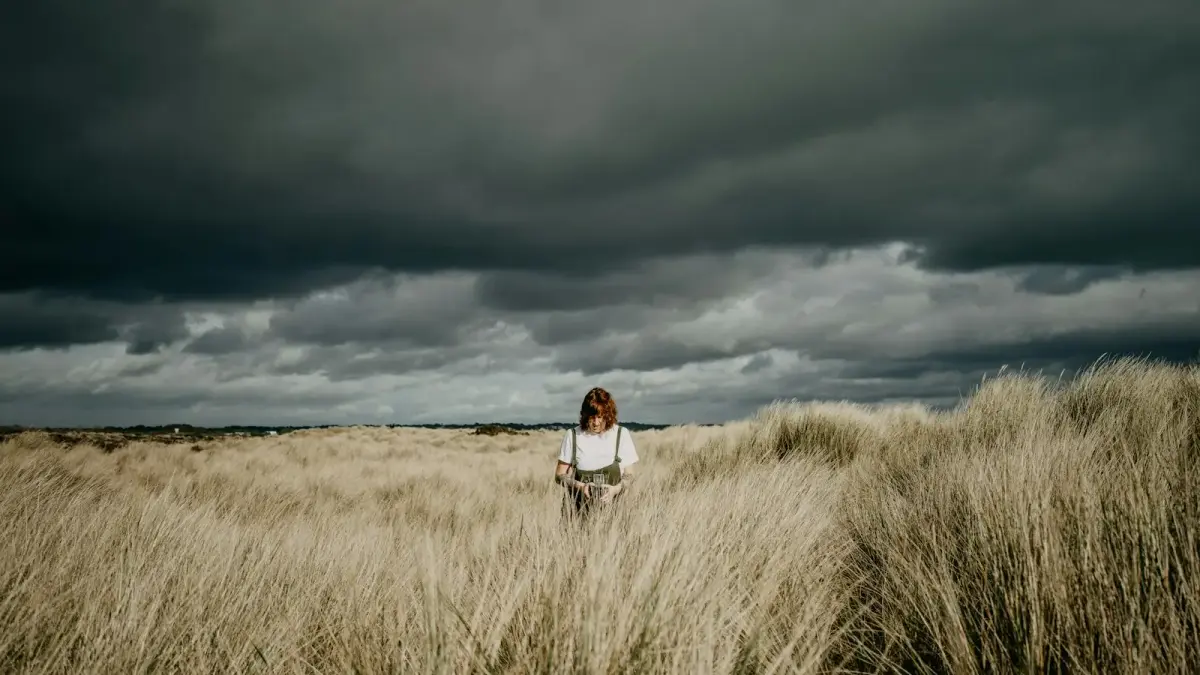
I remember that it had rained earlier that morning and stopped by noon, and that the sidewalk was still dark in patches where the water hadn’t dried yet. I remember the particular weight of the air - that thick, post-rain humidity that makes everything feel closer than it is. The neighbor’s sprinkler was running even though it had just rained, which struck me as wasteful even at nine years old, and the light coming through the kitchen window had that pale, washed-out quality that happens when the clouds are starting to thin but haven’t committed to clearing.
I remember all of that. I don’t remember a single word anyone said.
For years I thought this was a flaw in my memory - that I had somehow stored the wrong information, kept the frame and lost the photograph. It took me a long time to understand that my nervous system hadn’t made an error. It had made a choice. And that choice was made long before I was old enough to understand what it meant.
The camera that preserves what nobody was looking at
There is a particular kind of remembering that doesn’t organize itself around events. It organizes itself around atmosphere.
You don’t recall the conversation. You recall that the kitchen smelled like coffee that had been sitting on the burner too long, and that the linoleum was cold under your bare feet, and that someone had left the back door open just enough to let in a thread of October air.
You don’t remember the year your parents separated. You remember the specific silence of a Saturday afternoon when the sprinklers were the only sound on the block and the light had that late-August quality where everything looks slightly overexposed - like a photograph left in a window too long.
This kind of memory feels almost cinematic. Wide shots instead of close-ups. Soundscapes instead of dialogue. And the people who carry this kind of memory often share something in common: they grew up in homes where the emotional weather changed without warning.
A 1975 study by psychologists Alan Baddeley and Duncan Godden demonstrated something remarkable about how memory is encoded. Divers who learned information underwater recalled it better underwater. Information learned on land was retrieved more easily on land. The context in which something is stored becomes part of how it’s stored. The environment isn’t background. It’s architecture.
For most people, this is a mild effect - a faint sense that a particular song brings back a particular afternoon. But for people who grew up scanning their environments for threat, context doesn’t just influence memory. Context becomes memory.
Reading the room by reading the air
A child in an unpredictable household develops a skill that no one teaches and no one asks for. She learns to read conditions.
Not words. Not faces, necessarily - those can lie. But the quality of the silence when she walks through the front door. The temperature of the house, which tells her whether her mother has been moving through rooms or sitting in one place for hours. The particular heaviness that settles into a space where someone has been crying but stopped before anyone could see.
She becomes a barometer. Not of what people say, but of what the air feels like around them.
This is hypervigilance, and it gets pathologized often enough that the word has started to sound like a diagnosis. But at its root, hypervigilance is just a nervous system doing exactly what it was designed to do - scanning for changes in the environment that might signal danger. In a stable home, this system can afford to run quietly in the background. In an unstable one, it moves to the foreground and stays there.
Bessel van der Kolk’s research on trauma and the body has shown that traumatic experiences are often stored not as coherent narratives but as sensory fragments - sounds, smells, temperatures, textures. The body doesn’t file these memories in a timeline. It files them in the nervous system, where they live as felt experiences rather than told ones. The adult who remembers the exact humidity on the day her mother left isn’t being sentimental. She’s accessing the file the way it was stored - in the body, through the senses, as atmosphere.
The day the wind changed
I once asked a friend what she remembered about the day her grandmother died. She thought for a moment and said, “It was windy. Really windy. The kind of wind that makes you feel like something is about to happen even when nothing is.”
She didn’t mention the hospital. She didn’t mention the phone call. She mentioned the wind.
And when she said it, I understood her completely - not because I remembered the same day, but because I recognized the filing system. Important moments stored not by what happened but by what the world felt like while it was happening.
Roger Brown and James Kulik coined the term “flashbulb memory” in 1977 to describe the unusually vivid, detailed memories people form around shocking or emotionally significant events. Their theory suggested that the brain has a special mechanism for preserving these moments - a kind of neural photograph that captures everything in the frame, including the peripheral details that have nothing to do with the event itself.
But here’s what I find more interesting than the theory itself: not everyone’s flashbulb captures the same things. Some people remember the words. Some people remember faces. And some people - the ones who grew up calibrating themselves to atmospheric shifts - remember the weather, the light, the exact quality of the quiet.
It isn’t random. It’s a record of what the nervous system was paying attention to in the moment the world shifted. And what it was paying attention to reveals what it had learned, long ago, to watch for.
The girl who learned to read the conditions
Think about what it means to be a child in a house where the emotional climate is unpredictable. You can’t control what adults do. You can’t prevent the argument, the departure, the silence that descends like weather. You’re too small, too young, too dependent.
But you can learn to read the conditions under which things change.
You can learn that the particular quality of quiet that fills the house on a Sunday morning means something different from the quiet on a Tuesday evening. You can learn that the way the light falls through the curtains at a certain hour carries information - not literally, but associatively, because the last time the light looked like that, everything came apart.
A 2019 study published in Psychological Science found that individuals with early life stress showed heightened encoding of contextual information during emotional experiences. Their brains didn’t just record the event - they recorded the entire sensory environment surrounding the event with unusual precision. The researchers described this as an adaptive response: when you can’t predict what will happen, you learn to encode everything, because you don’t yet know which details will turn out to matter.
This is the girl who remembers the weather. Not because she’s poetic. Not because she has an unusually good memory. But because her nervous system learned early that the background is where the information lives.
The foreground - the words, the explanations, the reasons adults gave for why everything was changing - those were unreliable. They shifted. They contradicted themselves. They arrived too late to be useful.
But the rain was real. The heat was measurable. The direction of the wind was something she could verify with her own body. And so her memory learned to anchor itself there - in the sensory data that didn’t lie, that couldn’t be revised after the fact, that stayed exactly as it was.
What it looks like now
The adult version of this is quieter than people expect.
It’s the woman who can tell you exactly what the weather was doing on the afternoon she got the job offer, the morning she found out she was pregnant, the evening she realized her marriage was over. She’ll pause and look slightly past you when she accesses the memory, because she’s not searching for words. She’s feeling for the atmosphere.
It’s the man who says, “I don’t remember much about that year, but I remember it was an unusually cold spring.” And when you press, it turns out that cold spring was when his mother got sick, and the temperature became a container for everything he couldn’t say.
It’s the way certain weather conditions can trigger a feeling before a thought - a sudden heaviness on an overcast afternoon, a restlessness when the wind picks up, a sense of something impending when the air goes still. Not because the weather is causing the feeling, but because the nervous system filed the feeling under those exact conditions decades ago, and the body doesn’t distinguish between remembering and reliving.
This isn’t a disorder. It’s an orientation. A way of being in the world that privileges atmosphere over narrative, conditions over content, the container over the thing contained.
What nobody tells the girl who reads the air
Here is what I wish someone had told me when I was nine years old, standing on that damp sidewalk, storing the humidity instead of the goodbye:
There is nothing wrong with how you remember.
You are not missing the important details. You are carrying a different kind of important - the kind that lives in the body instead of the biography, the kind that says this is what the world felt like when everything changed, and you are allowed to trust that record even if it doesn’t look like anyone else’s.
The weather you remember isn’t trivial. It’s the most honest record you have. It’s the data your nervous system trusted when it couldn’t trust the words, and it’s still doing its job - still reading the air, still noticing when the pressure drops, still tracking the conditions under which the world might shift.
You were never storing the wrong information. You were storing the only information that felt safe enough to keep.
And if you still notice the weather before you notice the words - if you walk into a room and feel the temperature before you hear the conversation, if you remember the light better than the language - that’s not a flaw in your attention.
That’s the girl who learned to read the room the only way she could. And she read it beautifully.