Psychology says men over 55 who have started going to bed earlier and earlier each year are not losing energy - they are the first generation of men quietly allowing themselves the one form of rest that does not require an excuse, because a man who spent forty years being the last to sit down and the first to stand up never learned a way to say 'I am done for today' that did not sound like giving up
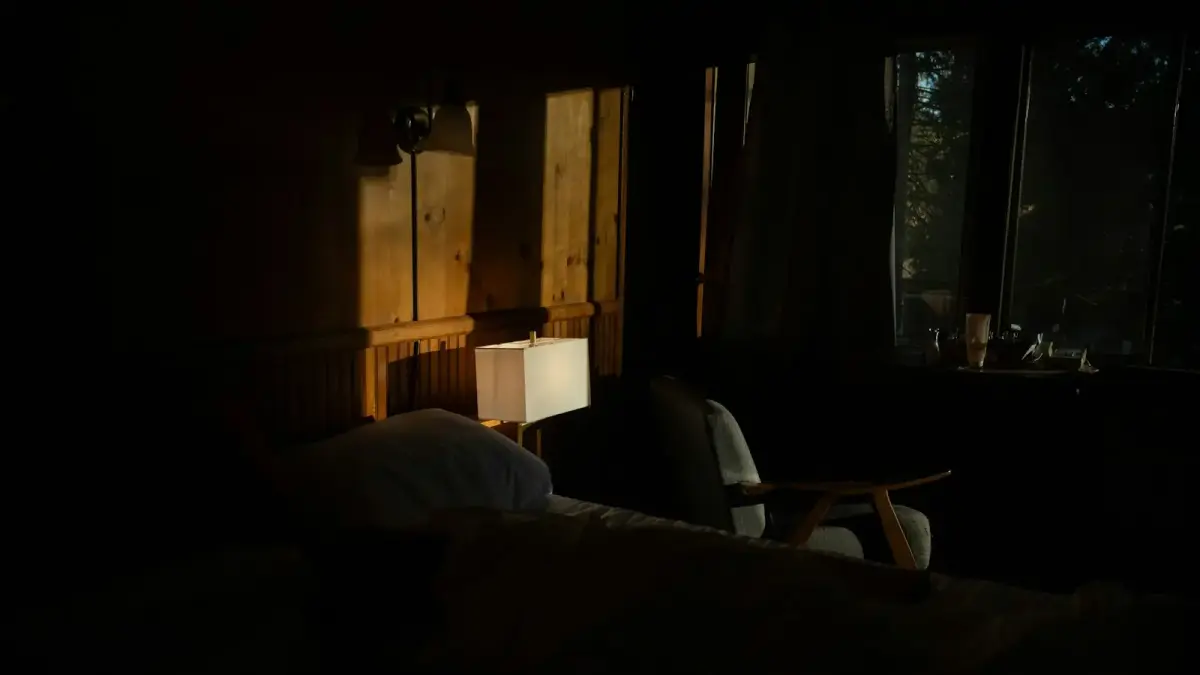
My father used to fall asleep on the couch at 8:15. We’d find him there with the television still on, his reading glasses halfway down his nose, a book open on his chest like a small tent over his heart.
We joked about it. “Dad’s out again.” We said it the way you say someone’s lost a step. Like his body was betraying him. Like the man who used to stay up past midnight checking locks and balancing the checkbook was slowly being replaced by someone softer, someone fading.
But I’m 58 now. And last Tuesday I was in bed by 8:40, not because I was exhausted in the way I used to be exhausted - that grinding, bone-deep depletion that follows a fourteen-hour day. I was in bed because something in me said “enough” and for the first time in forty years, I listened.
I didn’t set an alarm for it. I didn’t announce it. I just let my body walk me to the bedroom the way water finds the lowest ground.
And I realized my father wasn’t fading. He was arriving.
The Exhaustion Contract Nobody Signed But Every Man Honored
There’s a deal men of my generation made without ever being asked. The terms were simple: you don’t stop until the house is quiet, the yard is done, the car is fixed, the bills are paid, and everyone else is settled. Then - and only then - you’re allowed to sit.
But here’s the trick. The house is never fully quiet. The yard always needs something. There’s always one more thing between you and permission to rest.
So you never rest. You just eventually collapse.
A 2019 study published in the Journal of Health Psychology examined what researchers call “masculine role strain” in men over 50. They found that men who adhered most strongly to traditional provider-protector roles showed significantly higher rates of sleep disruption, chronic fatigue, and delayed help-seeking behavior. Not because their bodies were failing faster - but because they’d spent decades ignoring every signal their bodies sent.
These men weren’t tired because they were old. They were tired because they’d been tired for thirty years and never once admitted it.
The “I’m Fine” Generation
My father never called in sick. Not once in forty-three years of work. He said it like a badge. We repeated it at his retirement party like it was an achievement.
And maybe it was. But it was also a confession. A man who never calls in sick is a man who never gives himself permission to not be okay.
Terry Real writes about this - the way men are trained to disconnect from their own internal states so thoroughly that they lose the language for fatigue, for need, for “I’ve had enough.” The feeling doesn’t disappear. It just goes underground. It becomes back pain. It becomes silence at dinner. It becomes falling asleep at 8:15 on a Tuesday because your body finally overrides the part of your brain that keeps saying “not yet.”
I think about all those years my father stayed up. Not because he wanted to. Not because he was enjoying himself. But because going to bed meant admitting the day had beaten him. And a man like my father - a man like me, if I’m honest - doesn’t get beaten by a Tuesday.
So he’d stay up until 11, watching television he didn’t care about, because 11 was an acceptable time for a man to go to bed. 8:15 was not. 8:15 was for children and the elderly and people who’d given up.
Until one year, he stopped caring about what 8:15 meant.
The Pillow as Permission Slip
Here’s what I’ve come to understand about my own early bedtimes, and about my father’s before me: the act of going to bed early isn’t about sleep. It’s about the first boundary a man sets that doesn’t require justification.
Think about it. A man can say no to overtime if he has a doctor’s appointment. He can skip the neighborhood barbecue if his back is acting up. He can sit down in the middle of the afternoon if he’s recovering from surgery.
But can he just… stop? Can he say “I’m done for today” at 7:45 on a Wednesday without a reason?
For most men I know - men my age, men my father’s age - the answer was always no. Rest required a permission structure. An excuse. A medical note from the universe saying you’ve earned the right to close your eyes.
The early bedtime dismantles that. It says: I’m going to bed now. Not because I’m sick. Not because I’m broken. Not because tomorrow requires it. But because today was enough.
That’s radical for a man who spent four decades being the last to sit down.
What The Science Actually Says About Men and Sleep After 55
There’s a convenient narrative that men go to bed earlier as they age because of circadian rhythm shifts - and that’s partially true. Research in sleep medicine confirms that the suprachiasmatic nucleus, which regulates our internal clock, does shift forward with age. Melatonin production begins earlier. The body’s natural sleep pressure accumulates faster.
But a 2021 study published in Frontiers in Psychology found something more interesting. Among men over 55, the ones who resisted their natural circadian shift - who forced themselves to stay up later despite their body’s signals - showed higher cortisol levels, more inflammatory markers, and reported lower life satisfaction than men who simply… went to bed when they were tired.
The men who listened to their bodies were healthier. Not because early sleep is magic. But because the act of listening - of honoring what your body is telling you instead of overriding it - represents a fundamental shift in how these men relate to themselves.
For many of them, it’s the first act of self-attunement they’ve performed in decades.
A 2022 paper in the Journal of Research in Personality connected this to what they called “late-life authenticity” - the phenomenon where men in their late 50s and 60s begin, often unconsciously, to shed the performative aspects of masculinity that no longer serve them. Going to bed early. Crying at commercials. Telling their adult children they love them without occasion.
These aren’t signs of decline. They’re signs of arrival.
The Quiet Revolution Happening in Living Rooms Everywhere
My father’s father - my grandfather - worked until he physically couldn’t. There was no retirement plan. No gentle transition. He went from sixty-hour weeks to a hospital bed and then he was gone. He never had an early bedtime because he never had a period of life where rest was available to him without catastrophe attached.
My father did something his father never could. He went to bed at 8:15 because he wanted to. Not because he was dying. Not because he’d been ordered to. But because some quiet part of him finally said “you’ve done enough today” and he believed it.
That’s not a small thing. For a man raised in a world where your worth was measured by your availability, choosing to be unavailable - even just to consciousness - is an act of defiance so small it looks like nothing.
It looks like an old man falling asleep on the couch.
But it’s a man choosing himself. Maybe for the first time. Maybe for the first time without guilt.
I see it in my friends now too. Men who used to close the bar, who now drift toward home by 7. Men who used to pride themselves on five hours of sleep, now in bed with a book and a lamp by 8:30. They joke about it the way we jooked about our fathers. “Getting old,” they say. Because that’s the only language they have for it.
But I don’t think that’s what’s happening. I think they’re learning something their fathers tried to teach them by example - that the day doesn’t need your permission to end. That you can put yourself down gently, the way you’d put down a child. That rest doesn’t have to be earned through collapse.
He’s Not Fading
I think about my father on that couch. Eyes closed. Book rising and falling on his chest with each breath. The lamp making everything golden.
We saw a man losing his edge. A man whose body was giving out on him earlier each year, like a clock winding down.
But I see it differently now. I see a man who spent forty years being the first one up and the last one down, who poured coffee at 5 AM and locked the doors at midnight, who never once said “I need to stop” because he didn’t know men were allowed to stop.
And then one year, something in him softened. Some wall came down that he didn’t even know he’d built. And he let himself drift off at 8:15 without apology.
He wasn’t fading. He was finally allowing himself to arrive somewhere gentle. Somewhere he’d been walking toward his whole life but never had permission to reach.
If you’re the man whose bedtime keeps creeping earlier - if you’re the one they joke about at family dinners - I want you to know something.
You’re not losing anything. You’re finding the one small, quiet, daily act of choosing yourself that you were never taught how to perform. And your body is doing it for you because your mind never learned the words.
That’s not decline. That’s grace.