Psychology says men who lie awake at 3am running through the family finances in their head aren't worriers - they were taught that carrying the weight quietly was their form of love, and by the time they learn that worry was never the same as devotion, their bodies have already spent thirty years bracing for a crisis that never came
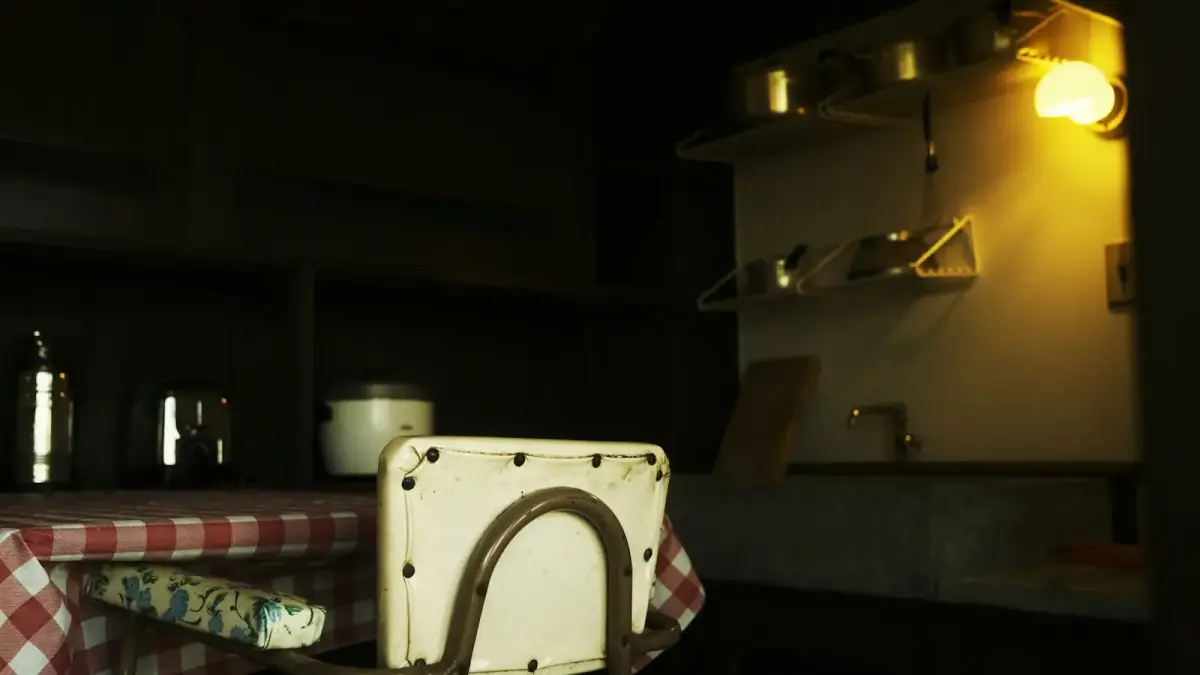
I remember the sound of my father’s chair.
Not his voice, not his laugh - the chair. The soft creak of him lowering himself into the kitchen seat at 2 or 3 in the morning, a legal pad in front of him, a pen he chewed on the cap of, and the yellow lamp over the table that he never turned off until dawn.
I was maybe nine. I’d get up for water and see him there, head in one hand, adding columns. He’d smile at me like I’d caught him doing something embarrassing, and he’d say, “Go back to bed, buddy. I’m just thinking.”
He wasn’t thinking. He was praying, in the only language he knew.
It took me forty years to understand that, and another five to understand that I had become him. That my own 3am was a kitchen table with no lamp, just the ceiling, just the ledger of the mortgage and the property taxes and the cost of the kid’s braces running in a loop behind my eyes. That the chair creaking under him back then was the same sound my own jaw made when it clenched in the dark.
If you’re a man who wakes at 3am doing math you’ve already done, this isn’t an essay about anxiety. It’s an essay about inheritance. And I want to tell you what nobody told me.
The ledger review is not a symptom. It’s a ritual.
There’s a specific kind of wakefulness that belongs to men like us. It doesn’t feel like panic. It doesn’t announce itself with a racing heart or a sense of doom.
It’s quieter. More dutiful. It feels, honestly, like responsibility.
You open your eyes at some hour that shouldn’t exist. You don’t reach for your phone. You just lie there and begin the count. The checking account. The savings. What’s due on the fifteenth. What the furnace might cost if it finally gives out. How long the job would have to hold if something happened.
And here’s the part I want you to hear: it doesn’t feel bad while you’re doing it. It feels like love.
That’s the piece the therapists and the sleep specialists miss when they diagnose this as insomnia or generalized anxiety. For men raised a certain way, in a certain kind of house, the 3am ledger review isn’t a malfunction of the mind. It’s a ritual. And rituals come from somewhere.
We inherited a job description nobody wrote down
My father grew up in a house where his own father sat at a similar table. His grandfather probably did too. Three generations of men doing math in the dark while the women and children slept, and not one of them ever said out loud, “This is how I love you.”
They couldn’t say it. The words didn’t exist for them. Love, for the men who raised the men who raised us, was never a sentence. It was a posture.
It was the shoulders that carried. It was the jaw that stayed shut. It was the wallet that somehow always had enough, even when it didn’t. And it was the lamp at the kitchen table at 2am, burning on behalf of people who would never know it was burning.
You didn’t learn to love by being told you were loved. You learned to love by watching your father refuse to let you see him scared.
The body keeps the receipts
Here is where it gets painful, and I need you to stay with me.
Robert Sapolsky, the Stanford neurobiologist who has spent decades studying stress, describes a mechanism where the body’s cortisol response, designed for acute threats, becomes catastrophic when it runs on a low, steady drip for years. Your system was built to sprint from a lion. It was not built to lie awake for three decades balancing a checkbook in your head.
A 2017 study published in Psychoneuroendocrinology found that chronic financial stress is associated with sustained elevations in evening cortisol levels, the exact window when your body is supposed to be powering down. Your nervous system, in other words, was asked to stand guard during the hours it was supposed to rest.
Thirty years of that has a cost. Compressed sleep. A resting heart rate that never quite settles. The low-grade dread that sits in your sternum like a coin you swallowed in 1994 and never passed.
You aren’t imagining the tiredness. You aren’t weak for feeling it. You are a man whose body did exactly what it was told to do, for exactly as long as it was told to do it, by a voice you never questioned because it sounded like your father’s.
The loneliness nobody warned you about
There is a particular flavor of solitude that belongs only to the man who is awake while his house sleeps.
It isn’t lonely in the obvious way. Your wife is five feet from you. Your kids, even if they’re grown now, are somewhere in the world breathing. The house is full. And yet you are, in that hour, the only person in your own life.
A 2019 study in the Journal of Family Psychology described something researchers called “provider isolation” - the tendency of men who identify strongly with the breadwinner role to experience their financial stress as a burden they cannot share without feeling like they have failed at carrying it. The study found these men were significantly less likely to tell their partners when they were worried about money, even when their partners explicitly invited the conversation.
Read that again. They didn’t stay silent because their wives wouldn’t listen. They stayed silent because speaking would have broken the one rule they were taught love required.
The silence, for men like us, is not withholding. It is protection. And it is the loneliest work a person can do.
Worry was never the same as devotion. But nobody told you that.
This is the sentence I want you to sit with.
Worry was never the same as devotion. You believed it was because you were never shown any other way to be devoted. The man who raised you couldn’t hug you the way a father should because he was holding up the sky. You watched him hold it up, and you concluded, reasonably, that holding up the sky was what fathers did.
So you held it up too. At your own kitchen table. In your own dark hour. For your own family who, like you once were, was asleep down the hall and had no idea.
Here is the reframe, and I want to be gentle with it, because it cost me years of my life to find.
Devotion is what you do with your hands and your time and your attention when people are awake to receive it. Worry is what happens when devotion has no outlet and starts eating the body that made it. They feel the same from the inside. They are not the same.
A 2020 paper in the Journal of Personality and Social Psychology looked at what researchers called “felt love” in long-term relationships. The finding was quiet but devastating for men like us: partners did not feel loved by their husband’s financial anxiety. They felt loved by small, concrete, present-moment attention. A hand on the back. A question about their day. A presence at the dinner table that wasn’t calculating anything.
Your wife did not need you to balance the checkbook at 3am. She needed you to come to bed.
You are not your father, but you were shaped by his silence
I want to be careful here, because this is not about blaming the men who raised us. My father did the best he knew how. His father did the best he knew how. The chain of silent men stretches back so far that blaming one of them is like blaming a single link for the weight of the whole chain.
But you are allowed to be the link that bends.
You are allowed to wake up tonight at 3am, notice the ledger starting to scroll, and say to yourself, out loud if you have to: “This was how I was taught to love them. It was not the only way. And it was never the best way.”
Brene Brown writes about vulnerability as the birthplace of connection, and I used to roll my eyes at that sentence because it sounded like something you’d cross-stitch onto a pillow. Then I tried it once. I woke my wife up and told her I was scared about money. I expected her to look at me like I had failed.
She held my hand. She told me she had been waiting twenty years for me to say that. And I cried in a way I hadn’t cried since I was a boy watching my father at his kitchen table, understanding nothing, understanding everything.
What your body is asking for now
If you have been doing the 3am math for decades, your body is not asking you to stop being a good man. It is asking you to redefine what a good man is.
It is asking you for sleep. It is asking you for the small, unglamorous admission that you are tired. It is asking you to let the people you love carry a little bit of the weight with you, not because they owe it to you, but because shared weight is lighter, and lightness is its own kind of love.
You don’t have to fix this tonight. You don’t have to stop waking up at 3am by Friday. You don’t have to become a different kind of man by the end of this essay.
You just have to know, for the first time in your life, that the worry was not the love. It was the love’s shadow, cast by a lamp your father never turned off because nobody ever told him he was allowed to.
You’re allowed to turn the lamp off. The people you love are still there in the dark. They always were. And they have been waiting, all these years, for you to come to bed.