Psychology says people who always carry cash even though they never use it are not old-fashioned but carrying a nervous system that learned the only money you could truly rely on was the money you could see and touch and count with your own hands, because a child who watched a card get declined or a check bounce or a bank account emptied without warning never stopped believing that money you cannot physically hold is money that can disappear
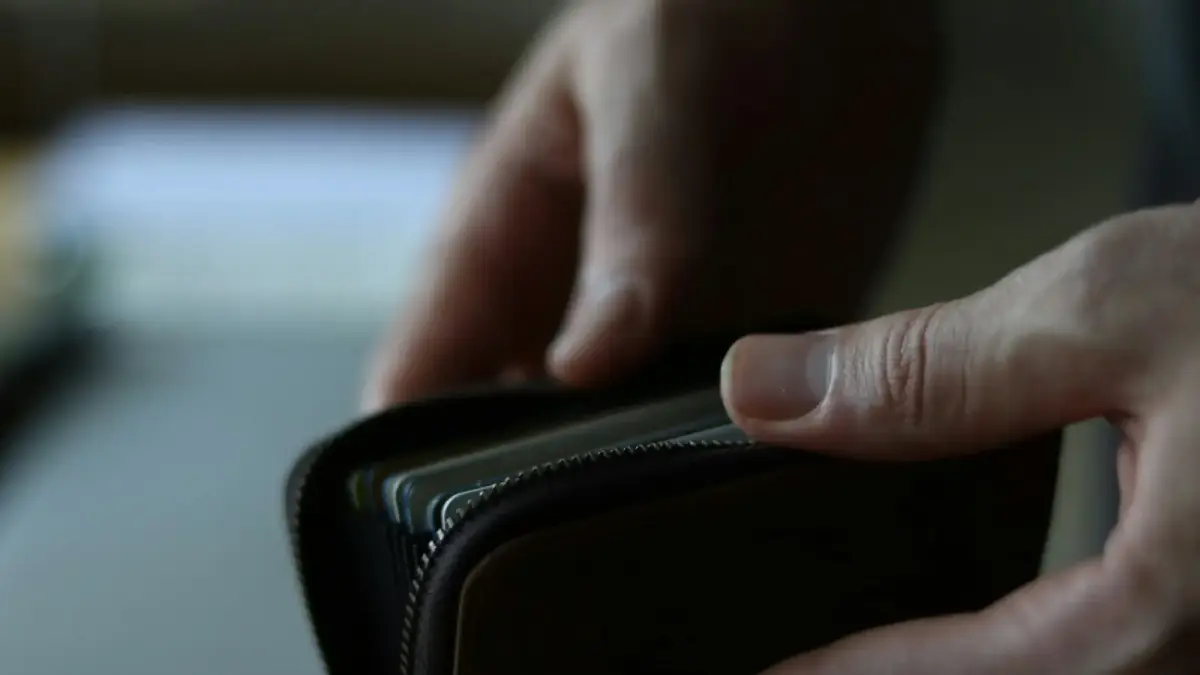
I have forty dollars in my wallet right now. Two twenties, folded once, tucked behind my driver’s license where I can feel them when I reach for my card. I haven’t paid for anything with cash in weeks. Maybe months.
But if I reached into my bag and they weren’t there, something in my chest would tighten. Not a thought. Something lower than that, older than that - a feeling in my body that says you are not safe.
I used to think this was a quirk. A generational thing. Something my parents passed along like their taste in music or their habit of saving twist ties. But I’ve spent years studying how early financial environments wire the nervous system, and I can tell you now that what I carry in my wallet is not a preference. It’s a memory my body refuses to let go of.
If you are someone who keeps cash on hand even though you live in a world of tap-to-pay and Venmo and automatic transfers, I want you to hear something clearly: you are not being irrational. You are not stuck in the past. Your body learned something about money when you were young, and it learned it so deeply that no amount of financial stability has been enough to overwrite the lesson.
The nervous system doesn’t care about your bank balance
Here is what most financial advice gets wrong about people like us. It assumes that money behavior is rational. That if you have enough in your account, you should feel like you have enough. That checking your balance every morning when there’s plenty in there is “unnecessary worry.” That carrying cash you never spend is a holdover from a less convenient era.
But the nervous system doesn’t operate on logic. It operates on pattern recognition built from your earliest experiences.
A 2019 study published in Psychological Science found that adults who experienced financial instability in childhood showed heightened physiological stress responses to economic uncertainty - even when their current financial situation was objectively secure. Their cortisol levels spiked. Their heart rates increased. Their bodies responded to the possibility of financial threat as though the threat were already happening.
This is not anxiety in the way most people use that word. This is your body doing exactly what it was designed to do - scanning for a danger it learned was real.
And for those of us who grew up watching money appear and vanish without explanation, the danger was this: the money you cannot see is the money you cannot trust.
What the child actually learned
Think about what it means to be seven years old and watch a debit card get declined at the grocery store. You don’t understand banking. You don’t understand overdraft fees or pay cycles or the difference between pending and posted transactions. What you understand is this: the card was supposed to work, and it didn’t, and your parent’s face changed in a way that made your stomach drop.
Or maybe it wasn’t a declined card. Maybe it was a check that bounced. A bank account that somehow had less in it than it was supposed to. A conversation between your parents that you overheard - something about an automatic withdrawal they didn’t expect, money taken from an account while they slept.
What the child learns from these moments is not a financial lesson. It is a body-level truth: money that exists somewhere you cannot see it is money that can betray you.
Cash doesn’t do that. Cash sits in your hand. You can count it. You can feel its weight. It doesn’t change overnight. Nobody can move it while you’re sleeping. Nobody can decline it, reverse it, or tell you it was never there.
Dr. Gabor Mate has written extensively about how the body stores survival information from childhood - not as conscious memory but as automatic responses that persist long after the original environment has changed. The child who grew up in financial instability doesn’t decide to be anxious about money as an adult. Their body simply never received the signal that the danger has passed.
The grocery store arithmetic
There’s a specific behavior that almost everyone who grew up with financial scarcity shares, and nobody talks about it because it feels too ordinary to mention.
You add up the groceries in your head as you shop. Item by item. A running mental total that adjusts with every thing you place in the cart.
You might make good money now. You might not need to do this anymore. But your hands still reach for the store brand. Your eyes still flick to the per-unit price. And somewhere in the back of your mind, a number is always running - not because you can’t afford the groceries, but because your body remembers what it felt like to stand at the register and not know if there would be enough.
A 2021 study in the Journal of Personality and Social Psychology found that people who experienced childhood poverty engaged in what researchers called “economic vigilance” - a persistent monitoring of financial resources that continued regardless of current income level. This wasn’t a conscious choice. Brain imaging showed that financial cues activated threat-detection regions in participants who had experienced early scarcity, even when the cues were neutral or positive.
Your body is doing math that your mind finished years ago. Not because you’re bad with money. Because you were taught, by experience, that the moment you stop counting is the moment it runs out.
The morning balance check
Here is another one nobody mentions. You check your bank account first thing in the morning.
Before coffee. Before your feet hit the floor, sometimes. You open the app, you look at the number, and only then does something in your chest release just enough to let the day begin.
You know, intellectually, that the money is still there. Nothing happened at 3 a.m. to change your balance. But your body doesn’t know that. Your body remembers a version of reality where accounts could empty between dinner and breakfast, where the number you saw yesterday was not the number that existed today.
This is what psychologists call a “safety behavior” - an action that temporarily reduces anxiety by providing evidence that the feared outcome hasn’t occurred. The clinical framing makes it sound like a problem. But I think that misses something important.
The morning balance check is not a sign that you’re broken. It’s a sign that your nervous system is still doing the job it was given as a child - making sure the ground under your feet is solid before you take a step.
The problem was never that you’re too careful. The problem was that you grew up on ground that actually moved.
Why this looks different by class
One of the most painful parts of carrying these behaviors into adulthood is that the people around you often don’t recognize them for what they are.
Your partner, if they grew up with financial stability, might say you’re being “paranoid” when you check the account again. Your friends might tease you about the cash in your wallet. A financial advisor might tell you that keeping money in a savings account earning minimal interest is “leaving money on the table” and suggest you invest it.
And all of these people mean well. But they are speaking from a nervous system that was never taught to distrust money it couldn’t see.
Research by economists Sendhil Mullainathan and Eldar Shafir, published in their landmark work on scarcity, found that financial precarity doesn’t just create stress - it fundamentally alters cognitive processing. People operating under financial scarcity devote enormous mental bandwidth to resource monitoring, not because they lack intelligence or discipline but because their brains have correctly identified resource management as a survival priority.
The class dimension of this is crucial and almost never discussed. Carrying cash, checking balances, calculating grocery totals - these are class-coded behaviors. They mark you as someone who came from a place where money was not guaranteed. And in a culture that treats financial ease as a personality trait rather than a circumstance, these behaviors can carry shame.
But there is nothing shameful about a body that learned to protect itself.
The reframe your nervous system deserves
I want to be careful here, because I’m not saying these behaviors never cause suffering. If checking your account twelve times a day is interfering with your life, that deserves attention and care. If the anxiety around money has become so loud that you can’t enjoy what you’ve built, that’s worth addressing - gently, with someone who understands where it comes from.
But the behavior itself - the cash in the wallet, the mental math at the store, the morning check, the preference for seeing and touching the money that belongs to you - this is not a disorder. This is not a deficiency. This is not you being “bad with money” or “stuck in a scarcity mindset.”
This is your nervous system honoring what it learned. And what it learned was true. When you were small and the world was unreliable, the only money you could count on was the money you could count.
That lesson kept you safe. It kept your family fed. It made you resourceful and watchful and precise in ways that people who never had to worry will never fully understand.
What knowing this changes
It changes the voice in your head. The one that says you’re being ridiculous for carrying those two twenties. The one that judges you for checking the balance again. The one that whispers that everyone else seems to have a normal relationship with money and you’re the only one still performing these small, private rituals of reassurance.
That voice isn’t yours. It belongs to a culture that doesn’t understand what financial instability writes into the body.
Your voice - the real one, the one beneath the shame - says something different. It says: I know what it feels like when the ground disappears. I am making sure it doesn’t happen again. And I have been making sure, quietly, faithfully, for decades.
You don’t have to stop carrying cash. You don’t have to stop checking. You don’t have to perform a version of financial ease that your body doesn’t believe in.
You just have to know that the person who does these things is not anxious or old-fashioned or broken. They are someone whose body learned to survive, and never forgot how. That is not a flaw. That is the most ordinary kind of strength there is - the kind that doesn’t announce itself, that lives in the small habits no one else can see, that keeps you standing on ground your childhood taught you never to fully trust.
The forty dollars in your wallet are not about money. They are about a child who promised themselves they would never be caught without enough. And every day you carry them, you are keeping that promise.