Psychology says people who always need something in their hands during a conversation - who shred a napkin into strips without noticing, who twist a ring, who peel the label off every bottle they have ever held, who cannot sit through a meeting without a pen to click or a paperclip to bend - are not nervous and are not bored, they are people whose hands learned in childhood that stillness was the thing that got noticed, and the woman at forty-seven tearing a paper coaster into confetti under the table while she listens to her friend talk is not fidgeting but still the girl whose hands are performing the one task that kept them safe - being too occupied to be empty, too busy to be still, too in motion to attract the kind of attention that came when the body stopped moving and became visible
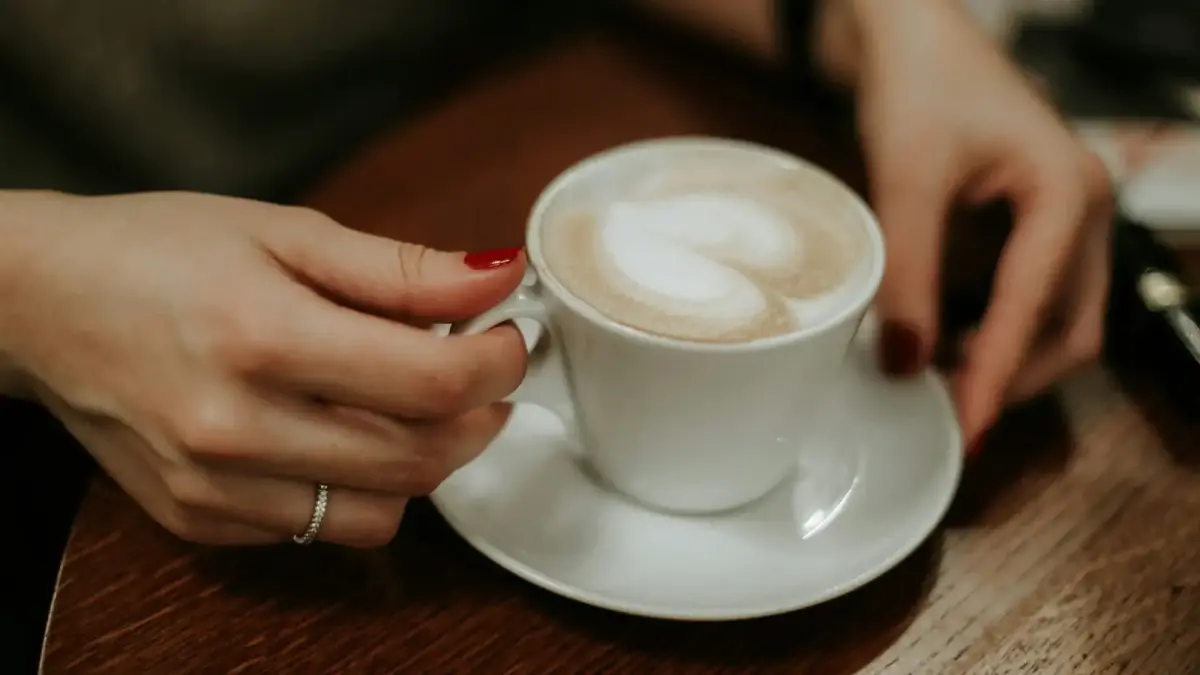
I was sitting across from a friend at a restaurant last month when she reached over, very gently, and put her hand on mine. “You’ve destroyed that napkin,” she said. I looked down. There was a small pile of white confetti in my lap. I had no memory of tearing it.
I laughed it off. Made a joke about needing something to do with my hands. But driving home that night, I kept thinking about the pile. About how my hands had been working the entire meal - quietly, methodically - while the rest of me was engaged in conversation and eye contact and laughter. As though my hands had a job I never assigned them. As though they were running a program I didn’t write.
I’ve spent years studying the psychology of these small, automatic body behaviors. And what I’ve found has changed the way I understand not just fidgeting, but the entire relationship between the body and childhood survival.
The Hands That Never Learned to Rest
You know the person I’m talking about. Maybe you are that person.
The one who peels every label off every bottle at the table. Who folds a straw wrapper into an accordion without looking at it. Who clicks a pen cap on and off through an entire meeting, or bends a paperclip into a shape that doesn’t mean anything.
People around them say things like “You seem nervous” or “Are you even listening?” And every time, the answer is the same quiet frustration: I’m not nervous. I am listening. I just need something in my hands.
What most people don’t understand is that this isn’t a quirk. It’s not caffeine. It’s not ADHD, though it can coexist with it. For many people, this pattern started in childhood - not as a habit, but as a strategy.
A strategy their body adopted before their mind was old enough to name what was happening.
When Stillness Was the Dangerous Thing
Picture a child in a house where the emotional weather changed without warning. Not necessarily a house with violence - sometimes just a house where a parent’s mood could shift, where being noticed for the wrong reason meant a lecture, a look, a withdrawal of warmth.
In that house, the child learns something the body remembers long after the mind forgets: a still child is a visible child.
A child sitting quietly, doing nothing with their hands, is a child who looks idle. And idle, in certain homes, was an invitation. Idle meant you could be assigned a task, interrogated about your attitude, or simply noticed - and being noticed was where the trouble started.
So the hands learned to be busy. Not productive, necessarily. Just occupied. Folding something. Picking at something. Tearing, twisting, pressing, smoothing. The specific activity didn’t matter. What mattered was the appearance of engagement. Of being already in the middle of something. Of being unavailable for whatever came next.
A 2019 study published in Frontiers in Psychology found that self-regulatory touch behaviors - the kind of repetitive, self-directed movements that most people dismiss as fidgeting - are strongly associated with early environments where emotional regulation was not supported by caregivers. The researchers noted that these behaviors often function as a form of self-soothing that originates in childhood and persists into adulthood as an automatic, unconscious process.
The child wasn’t fidgeting. The child was hiding in plain sight. And the hiding place was motion.
The Camouflage of Busy Hands
There’s a specific mechanism at work here, and it’s worth naming precisely because most people get it wrong.
The common explanation is that fidgeting is a sign of anxiety. That the body is expressing what the mind won’t say. That the ring-twisting, the napkin-shredding, the compulsive pen-clicking is excess nervous energy looking for an exit.
But for people who grew up in emotionally unpredictable environments, the fidgeting is not a symptom of anxiety. It is a remnant of a solution that worked.
Think about it from the child’s perspective. When the atmosphere in the house tightened - when a parent’s footsteps changed tempo, when the volume on the television dropped to a dangerous quiet - the child needed to look occupied. Not frozen. Not waiting. Not empty-handed and therefore available.
Hands that were busy communicated something to the scanning adult eye: this child is doing something. This child is engaged. This child does not need to be addressed.
The fidgeting was camouflage. And it was brilliant camouflage, because it worked. The busy hands deflected attention. They made the child look absorbed, purposeful, harmless. Too occupied to be empty. Too in motion to be a target.
Gabor Mate has written extensively about how the body stores adaptive responses from childhood long after the original threat has disappeared. The behavior persists not because the danger persists, but because the body never received the signal that the danger ended. The program keeps running because no one ever told the nervous system it was safe to stop.
The Forty-Seven-Year-Old and the Paper Coaster
She’s sitting in a wine bar with her oldest friend. They’re talking about their kids, about work, about the trip one of them is planning. She’s present. She’s laughing. She’s asking follow-up questions and remembering details from last time.
And under the table, her fingers are tearing a paper coaster into tiny, even pieces. She doesn’t notice she’s doing it until she reaches for another piece and the coaster is gone.
She’s not anxious. She’s not bored. She is forty-seven years old and her hands are still running the program they learned at eight.
The program that says: if your hands are busy, you’re safe. If your hands are still, someone might look at you. If someone looks at you, something might happen. Keep moving. Keep working. Keep the hands occupied so the rest of you can exist without being examined.
A 2021 study in the Journal of Research in Personality explored what researchers call displacement behaviors - small, seemingly purposeless physical actions that occur during social interaction. They found that individuals with histories of childhood emotional neglect showed significantly higher rates of these behaviors, and that the behaviors were not correlated with present-moment anxiety but with early attachment patterns. The fidgeting wasn’t about what was happening in the room. It was about what had happened in a room decades earlier.
This is the part that most people miss. They see the napkin confetti and think present tense. They think this person is nervous right now. But the hands are not responding to now. The hands are responding to then - and they never stopped.
What the Body Remembers When the Mind Moves On
One of the most striking things about this pattern is how invisible it is to the person doing it.
You don’t decide to shred the napkin. You don’t consciously choose to peel the label. You look down and it’s already happened. The hands have already done their work while your attention was somewhere else entirely.
This is because the behavior lives below conscious thought. It’s stored in what psychologists call procedural memory - the same system that lets you ride a bike or type without looking at the keys. It’s not a decision. It’s a reflex. And reflexes don’t ask permission.
Daniel Goleman’s work on emotional intelligence describes how the amygdala - the brain’s threat-detection center - can trigger behavioral responses faster than the conscious mind can process what’s happening. For a child who learned that stillness preceded scrutiny, the amygdala learned to associate still hands with danger. And it responds by activating the hands before the person even registers that they’ve picked up the pen cap, the paperclip, the corner of the page.
Your mind moved on from childhood. Your hands didn’t. They’re still doing the job they were hired for, even though the position was eliminated years ago.
The Tenderness of the Thing That Kept You Safe
I want to be careful here, because it would be easy to turn this into a problem to solve. To offer you five steps to stop fidgeting. To frame the napkin confetti as something you need to overcome.
But I don’t think that’s true.
Because the fidgeting isn’t a flaw. It’s a record. It’s your body’s handwritten note about what it took to survive a particular kind of childhood. And there’s something almost tender about that - about hands that are still, decades later, doing the one thing they knew how to do to keep you safe.
The ring you twist during phone calls. The pen cap you click through every meeting. The straw wrapper you fold into nothing while you wait for your coffee. These aren’t nervous habits. They are the fingerprints of a strategy that worked.
You don’t have to stop. You don’t have to train yourself into stillness. If you want to explore where the behavior came from, therapy - particularly somatic or body-based approaches - can be a gentle way to let the nervous system know that the original danger has passed. But the behavior itself is not a problem to fix.
It Was Never About the Napkin
The next time you look down and find confetti in your lap, or a twisted paperclip on your desk, or a label peeled clean off a bottle you don’t remember touching - you don’t have to feel embarrassed.
You can feel something else instead. Something quieter. Something closer to recognition.
That was your body, taking care of you. The way it’s been taking care of you since you were small enough that keeping your hands busy was the safest thing you knew how to do.
You’re not nervous. You’re not distracted. You’re not broken.
You’re the grown-up version of a child who figured out - with nothing but two small hands and an instinct for survival - how to disappear in a room full of people without ever leaving the chair.
And the fact that your hands still remember? That’s not a flaw worth fixing. That’s loyalty worth honoring.