Psychology says people who flinch when they accidentally drop something - who gasp at a fallen fork, freeze when a glass hits the counter too hard, and feel their whole body brace at any sound they did not plan - are not jumpy or nervous, they are running a sound-activated alarm system a child installed in a house where sudden noise was never just noise but the opening word of a night the body already knew the ending to
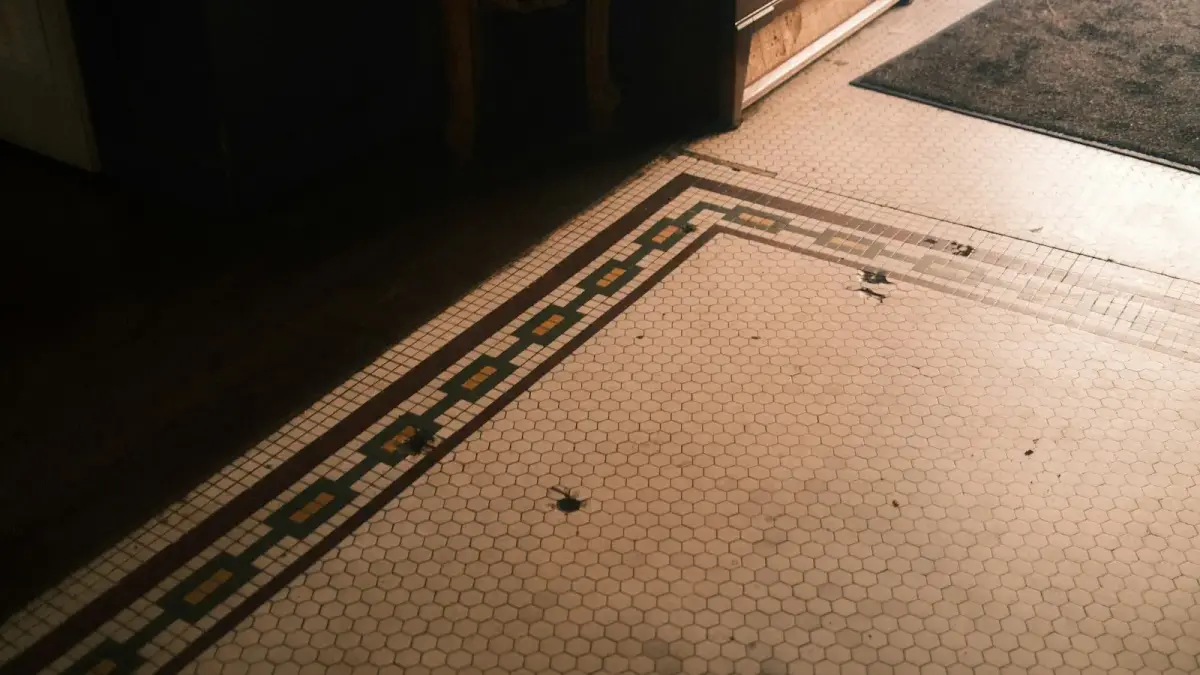
I dropped a spoon last Tuesday. Just a spoon - stainless steel, nothing precious, slipping out of my wet hand and clattering against the tile floor the way spoons do.
And my entire body responded like something terrible had just begun.
Shoulders up. Breath caught. Hands already reaching down before I’d even registered what happened. And then the word, quiet and automatic, spoken to an empty kitchen: “Sorry.”
I said sorry to no one. For a spoon.
If you recognize this - if your body treats every dropped object like the opening scene of something you need to survive - I want you to know that what’s happening inside you is not a flaw. It is not anxiety. It is not you being dramatic or overly sensitive or somehow wired wrong.
It is one of the most sophisticated protection systems a child’s body can build. And the fact that it still runs is not a sign that something is broken. It’s a sign that something worked exactly as it was designed to, in a time when you needed it to work perfectly or else.
The sound was never just a sound
Here is what people who grew up in calm houses do not understand: in certain homes, sound is information.
Not the content of the sound. Not the words that follow. The sound itself - its volume, its sharpness, the way it cuts through a room without warning - tells a child everything they need to know about what comes next.
A fork dropped on tile. A cabinet shut too hard. A glass set down with just slightly too much force. In a safe house, these are nothing. Background noise. Barely noticed.
In a house where sudden noise predicted danger, these sounds were never neutral. They were the first syllable of a sentence the child had already heard enough times to know the ending.
So the body learned to skip ahead. It learned to react to the sound itself - not to wait for context, not to assess, not to reason through whether this particular clatter meant something or nothing. The body learned that waiting was a luxury it could not afford.
What your nervous system actually built
Stephen Porges, the neuroscientist who developed polyvagal theory, introduced a concept he called neuroception - the body’s ability to detect threat without conscious awareness. It is not a thought. It is not a decision. It is your nervous system scanning the environment below the level of your attention and making survival calculations faster than your thinking mind can keep up with.
And sound, Porges found, is one of the primary channels through which neuroception operates.
A 2019 study published in Psychological Science confirmed that individuals with early adverse experiences show heightened auditory startle responses well into adulthood - not because they are more anxious as people, but because their nervous systems learned to weight unexpected sound as a high-priority threat cue. The response is not psychological. It is architectural.
Think about what that means. Your flinch when you drop a mug is not you being nervous. It is your nervous system running a program that was written decades ago, in a kitchen that sounded different from the one you stand in now, by a child who could not afford to be wrong about what a loud sound meant.
That child did something remarkable. Without training, without language for it, without anyone teaching them how - they built an acoustic alarm system tuned to the exact frequency of danger in their specific house. They calibrated it with extraordinary precision. And they installed it so deep in the body’s wiring that it still fires today, instantly, without permission, without your conscious involvement at all.
The physics of a kitchen that echoes
There is a reason kitchens are where this hits hardest.
Kitchens are acoustically unforgiving. Hard surfaces everywhere - tile, granite, steel, glass. Sound does not absorb in a kitchen. It bounces. It amplifies. A single fork hitting a tile floor produces a sharp, high-frequency crack that reverberates off every surface and fills the room with exactly the kind of sound a hypervigilant nervous system was trained to treat as a warning.
And kitchens are where things get dropped. Wet hands. Crowded counters. The simple physics of cooking means objects fall, lids clatter, pans bang against each other. For most people, this is the unremarkable soundtrack of making dinner.
For people running a childhood sound-alarm, every one of those noises lands in the body before the brain has time to say “it’s fine.” The shoulders are already up. The breath is already held. The apology is already forming.
That apology - I want to stay with that for a moment.
The apology that arrives before the thought
You drop something and you say sorry. Immediately. Reflexively. Sometimes before the object has even finished bouncing.
You say it to your partner, to your roommate, to the dog, to the empty room. You say it with a tone that carries more weight than a spoon warrants. You say it the way a child says it - quickly, preemptively, designed to de-escalate something that hasn’t escalated yet.
Because in the original house, the sound of something dropping was not the problem. The problem was what came after - the reaction of someone else in the room. The raised voice. The sharp look. The shift in atmosphere that told the child’s body: this is about to become something.
So the child learned to get ahead of it. Drop something, apologize instantly, fix it before anyone has time to respond. The apology was not about manners. It was a survival strategy - a verbal circuit breaker designed to interrupt the sequence between sound and consequence before the consequence could begin.
Bessel van der Kolk, author of The Body Keeps the Score, describes this as one of the most common legacies of developmental trauma: the body continues to run protective sequences long after the original threat has ended. Not because the person cannot distinguish past from present. But because the body’s alarm system does not consult the calendar. It consults the sound.
You are not jumpy
Let me say this as clearly as I can.
If you flinch when you drop something, you are not a nervous person. You are not fragile. You are not overreacting.
You are a person whose body learned, at an age when you had no other tools available, to treat unexpected sound as a survival-relevant event. And it learned this because, in your specific environment, it was right to do so.
A 2021 study in Frontiers in Psychology found that acoustic startle responses in adults with childhood adversity were not correlated with general anxiety levels. People who flinched at sudden sounds were not more anxious overall - they were more acoustically vigilant. Their nervous systems had developed a specialized sensitivity to auditory surprise, independent of their broader emotional state.
You are not anxious. You are acoustically trained.
Your body built something precise and specific - not a generalized fear response, but a targeted detection system calibrated to one particular channel of sensory input. The fact that it still operates is not a malfunction. It is a testament to how seriously your body took the job of keeping you safe.
What it looks like from inside
People who live with this know the specific texture of it. It is not just the flinch. It is everything that follows.
The way you freeze for a half-second after the sound, scanning the room for a reaction that is not coming. The way your hands move to clean up before your brain has even decided whether something is broken. The way you feel a flush of something - not quite shame, not quite fear, something older than both - rise through your chest when a plate slips.
It is the way you handle dishes more carefully than the dishes require. The way you close cabinets slowly, deliberately, making sure they don’t bang. The way you set glasses down with a precision that looks like carefulness but is actually vigilance.
And it is the exhaustion of it. The low-grade energy cost of monitoring your own sound output all day, every day, in your own home, where you are safe, where no one is going to react, where the danger ended years or decades ago. Your thinking mind knows this. Your body has not received the update.
The reframe you deserve
Here is what I want you to carry away from this.
That flinch is not a weakness. It is a record. It is your body’s documentation of a time when you needed to be alert to survive, and you were. You were so alert, so attuned, so responsive to the acoustic landscape of your childhood that your nervous system built an entire detection infrastructure around it.
You did not choose this. A child does not choose to become hypervigilant. A child’s body simply does what it needs to do to get through, and sometimes what it needs to do is wire itself to respond to sound at a speed that conscious thought cannot match.
The system worked. It kept you safe. And now it keeps running, because nobody ever told it the emergency was over.
You can start telling it now. Not by forcing yourself to stop flinching - that is not how nervous systems update. But by noticing the flinch when it happens, and instead of feeling embarrassed or broken, recognizing it for what it is: a small child inside you, still standing guard, still listening for the sound that means something bad is about to start.
That child was never jumpy. That child was paying attention in a house where paying attention was the only power they had.
And you - the adult who still flinches when a fork hits the floor - you are not nervous. You are carrying the most devoted security system a frightened child could build. The fact that it still works, all these years later, is not something to fix.
It is something to hold gently. To thank. And slowly, at whatever pace your body allows, to let know that the kitchen you stand in now is yours, and the sounds that happen here are just sounds, and the night that used to follow the noise is over.
It ended. You made it through.