Psychology says people who cannot enjoy something good without immediately bracing for it to be taken away are not pessimists and they are not anxious, they are people whose earliest experiences of happiness were followed so reliably by disruption that their nervous system learned to treat joy itself as the warning that something was about to begin
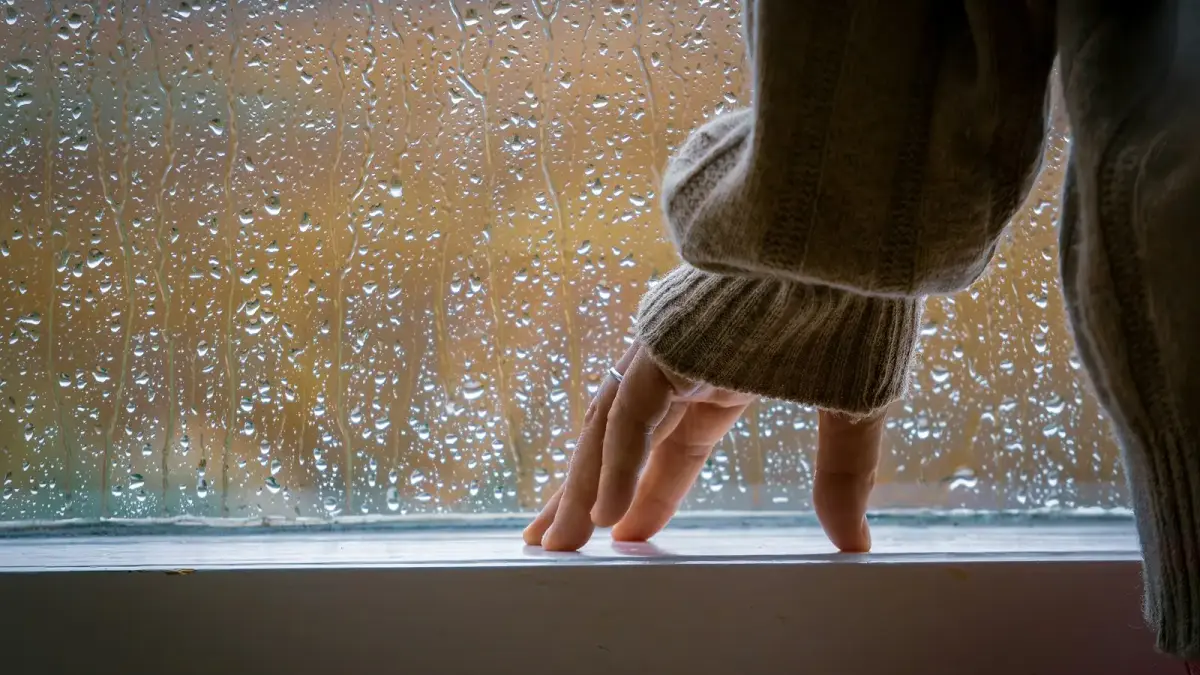
I booked a vacation last spring. Just a small cabin near the coast, four days, nothing extravagant. And within twenty minutes of confirming the reservation, I was already imagining what would go wrong. A family emergency. A work crisis timed perfectly to ruin it. Some vague, nameless catastrophe that would make the whole thing feel foolish in hindsight.
My partner said I was being negative. I understood why he thought that. But he was wrong.
I wasn’t predicting disaster because I’m a pessimist. I was bracing - the way you brace when you’re standing on a dock and you can feel the wood shifting beneath your feet. Not because you think you’ll fall. Because your body remembers what falling feels like, and it never got the memo that the dock was rebuilt.
If you’ve ever found yourself unable to enjoy a perfectly good moment without scanning the horizon for what might take it from you, I want to sit with you inside this for a while. Because what you’re doing isn’t broken thinking. It’s a nervous system running a program it wrote a very long time ago, and the program made perfect sense when it was first installed.
The pattern nobody names
There is a specific kind of childhood experience that doesn’t show up in most psychology textbooks. It’s not abuse, exactly. It’s not neglect in the way we usually picture neglect. It’s subtler than that, and in some ways more disorienting.
It’s the experience of having good things reliably followed by bad things.
A Saturday morning that starts with pancakes and laughter and ends with someone crying behind a locked door. A birthday party that goes beautifully until the car ride home when the silence turns sharp. A compliment from a parent followed, within the hour, by a criticism that seems to come from nowhere.
The individual events might not even register as traumatic. But the sequence does. Your brain - your very young, very pattern-hungry brain - started connecting happiness to what came after it. And what came after it, with enough consistency, was disruption.
A 2018 study published in the Journal of Personality and Social Psychology examined what researchers called “affective forecasting errors” in adults with unpredictable childhood environments. They found that these adults didn’t just expect bad things to happen - they specifically expected bad things to follow good things. Their mental model wasn’t “the world is dangerous.” It was “joy is the trigger.”
That distinction matters enormously. Because it means the problem was never a general negativity. It was a very specific learned association: happiness is the opening note of something painful.
Your body learned to read the weather before you could read words
Children are extraordinary meteorologists. Long before they understand the content of adult conversations, they understand the emotional climate of a room. They feel the barometric pressure drop before the storm hits. They can sense a shift in a parent’s mood from across a house.
And in homes where joy was unstable - where a good mood could turn on a dime, where a parent’s laughter didn’t guarantee their patience would last through dinner - children learned to treat happiness itself as atmospheric data. Not as something to settle into. As something to monitor.
Dr. Gabor Mate has described this as a child’s nervous system becoming “environmentally calibrated” - meaning the body learns to match its internal state to the least stable element in its surroundings. If the most volatile person in the household could shift from warmth to withdrawal in minutes, the child’s system learned to stay alert even during warmth. Especially during warmth.
Because warmth was when you were most exposed. Warmth was when your guard was down. And the moments when your guard was down were the moments that hurt the most.
So your body made a decision - not a conscious one, not a choice - to never fully lower the drawbridge. To keep one sentry posted on the wall even when the kingdom was at peace. Not because peace wasn’t real. Because peace, in your experience, was temporary. And the transition from peace to chaos was where all the damage happened.
Foreboding joy - the tax your nervous system charges
Brene Brown gave this pattern a name that lands like a punch: foreboding joy. That moment when you’re watching your children sleep, or lying next to someone you love in the dark, or sitting in a restaurant with friends laughing - and a dark image flashes through your mind. An accident. A loss. A phone call. Something that would snatch this moment away and prove that you were foolish for trusting it.
Brown’s research, spanning over two decades, found that this pattern was most prevalent not in people with anxiety disorders, but in people who had experienced what she calls “vulnerability hangovers” - moments where they let themselves feel fully happy and then something genuinely did go wrong. Their bodies learned that the emotional cost of an unguarded joy followed by a sudden loss was higher than the cost of simply never feeling the full joy in the first place.
It is, in a sense, an emotional insurance policy. You pay a small premium of worry during every good moment so that if the moment collapses, the fall isn’t as far.
A 2022 study in Psychological Science found that adults who reported chronic “anticipatory distress during positive events” showed distinct patterns of amygdala activation - the brain’s threat-detection center was more active during positive emotional experiences than during neutral ones. Their brains were literally treating happiness as a condition that required monitoring.
Not because they were wired wrong. Because they were wired precisely for the environment they grew up in. An environment where the happier things felt, the closer the disruption was.
What it looks like from the outside versus what it feels like inside
From the outside, this pattern can look like a lot of things. Pessimism. Ingratitude. An inability to be present. A partner might say, “Why can’t you just enjoy this?” A friend might call you a worrier. A therapist might hand you a worksheet about cognitive distortions.
And none of those frames are entirely wrong, but they all miss the essential thing.
From the inside, what this feels like is not negativity. It feels like vigilance. Like standing guard over something precious because you know - you know in your bones, in your muscle memory, in the architecture of your nervous system - that beautiful things attract destruction. That the universe has a pattern of giving and taking in that order. And that the people who get hurt worst are the ones who weren’t paying attention.
You’re not ruining the moment. You’re trying to protect yourself from the specific kind of pain that comes from being fully invested in something when it disappears. You learned that pain young, and your body decided it would never let you feel it at full volume again.
The compliment you can’t accept without scanning for a catch. The quiet evening that feels like the calm before a storm. The promotion that makes you immediately think about what could go wrong at work tomorrow. These aren’t character flaws. They’re the fingerprints of a nervous system that learned to read joy as a weather warning.
The extraordinary sensitivity underneath
Here is what I want you to hear, because I think it gets lost in all the talk about healing and rewiring and cognitive reframing.
The thing that makes you brace during good moments is the same thing that makes you one of the most perceptive people in any room. You learned to read emotional weather systems before you could read words. You can feel a shift in someone’s energy before they’ve said a single thing. You know when a room is about to change temperature. You sense the undercurrent beneath a polite conversation.
A 2020 study published in Frontiers in Psychology found that individuals with heightened emotional vigilance - the kind that develops in unpredictable childhood environments - consistently outperformed control groups on tasks involving emotional perception, empathy accuracy, and social prediction. They were better at reading faces, better at anticipating others’ needs, better at detecting dishonesty.
In other words, the same system that won’t let you enjoy a vacation in peace is the system that makes you extraordinarily good at understanding people. The radar that scans every good moment for incoming threats is the same radar that makes you the person your friends come to when they need someone who truly sees them.
That doesn’t make the pain of it worth it. But it does mean you’re not defective. You’re running an advanced system that was built for a harder world.
Learning to let the other shoe just be a shoe
I won’t pretend there’s a simple fix for this. I won’t give you five steps to stop bracing during beautiful moments. Your nervous system has been running this program for decades, and it’s not going to stop because you read an article on your phone.
But there is something that helps, and it’s smaller and stranger than most advice columns will tell you.
It’s noticing. Just noticing.
The next time you’re in a good moment and you feel the brace - the tightening, the scanning, the dark flash of imagined loss - try not to fight it. Don’t push it away. Don’t scold yourself for ruining things. Just notice it the way you’d notice a weather report from a station that’s still broadcasting from a town you moved away from years ago.
That’s the old channel. That’s the forecast from the kitchen where good mornings turned into hard afternoons. It’s still transmitting. And it may always transmit. But you can learn to hear it without obeying it.
You can let the other shoe just hang there in the air. You don’t have to catch it. You don’t have to track its trajectory. You can just let it be a shoe.
You learned to treat joy as a warning signal. That was brilliant of you. It was the smartest thing a small person in an unpredictable world could have done. But you’re not small anymore. And the world you live in now - imperfect and uncertain as it is - is not the one that taught you to flinch at your own happiness.
You’re allowed to feel the good thing without rehearsing its funeral. You’re allowed to sit in a quiet evening and let it just be quiet. You’re allowed to book the trip and not imagine the disaster.
And if you can’t do that yet - if the brace still comes, if the scan still runs, if your body still treats a peaceful moment like the opening bars of something you’ve heard before - that’s okay too. It means your survival system is still working. It means you’re someone who learned to pay attention when it mattered most.
That’s not a flaw. That’s a record of everything you survived. And it deserves more tenderness than you’ve probably ever given it.