She's 59 and has finally understood that the reason she cannot sit on a beach without a book or enjoy a vacation without planning every hour is not that she loves being busy - it is that a girl who grew up where unstructured time was when the worst things happened never learned that an afternoon with nothing on it could be safe
The Vacation That Made Her Cry
I watched a woman fall apart in a hotel lobby in Crete last summer.
She was traveling with her husband and another couple - a trip they’d planned for over a year. The first two days had been packed with tours, restaurants, a boat excursion. But on the third morning, the others decided to do nothing. Just the pool. Maybe a nap. No itinerary.
She lasted forty minutes.
By noon she’d reorganized her suitcase, researched three restaurants for dinner, mapped out a walking tour of a nearby village nobody had asked to visit, and was sitting in the lobby with her phone in one hand and a guidebook in the other, her leg bouncing, her jaw tight. When her husband came down and said “just come sit by the pool,” she started crying and couldn’t explain why.
She was 59 years old, and she had never once in her adult life spent an unstructured afternoon without feeling like something terrible was about to happen.
I know this woman’s story because I hear versions of it constantly - in my research, in conversations, in the quiet confessions of women who’ve spent decades being praised for their productivity while silently drowning in it. And what I’ve come to understand is that what looks like ambition, what gets labeled “Type A” or “just how she is,” often has nothing to do with loving structure at all.
It has everything to do with what happened when there was no structure.
When Empty Time Was the Dangerous Time
If you grew up in a home where things were predictable, a free afternoon probably felt like a gift. Saturday with nothing to do meant cartoons, or riding your bike, or the pleasant boredom of a long summer day.
But if you grew up in a home where the mood could shift without warning - where a parent’s temper lived on a hair trigger, where the drinking started at unpredictable hours, where silence wasn’t peaceful but was the held breath before something broke - then unstructured time wasn’t a gift. It was a threat.
The scheduled hours were manageable. School had rules. Dinnertime had a script. Even bedtime had a rhythm. You knew what to expect, and knowing what to expect meant you could prepare.
But the open hours - the gaps between the structured things - that’s when the chaos arrived. That’s when the yelling started. That’s when a parent disappeared. That’s when the thing you couldn’t predict or control would come crashing through the door.
A 2019 study published in the Journal of Research in Personality found that adults who reported high levels of childhood unpredictability showed significantly elevated needs for structure and control in adulthood - not because they were inherently rigid people, but because their early environments had wired them to treat ambiguity as danger.
You didn’t learn to love being busy. You learned that busy was safe.
The Girl Who Became the Planner
Think about what a child does when the unstructured hours are the ones that hurt.
She becomes the planner. She becomes the one who suggests activities, who organizes games, who keeps everyone occupied - because occupied people are predictable people. If Dad is helping with homework, he’s not drinking. If Mom is driving to soccer practice, she’s not crying in her bedroom. If everyone has something to do, the terrible unnamed thing that lives in the quiet spaces doesn’t have room to arrive.
This isn’t conscious strategy. A seven-year-old doesn’t sit down and think “I’ll manage the family’s emotional climate through structured activities.” But her nervous system figures it out anyway. It learns the pattern: structure equals safety. Open time equals danger.
And then she grows up.
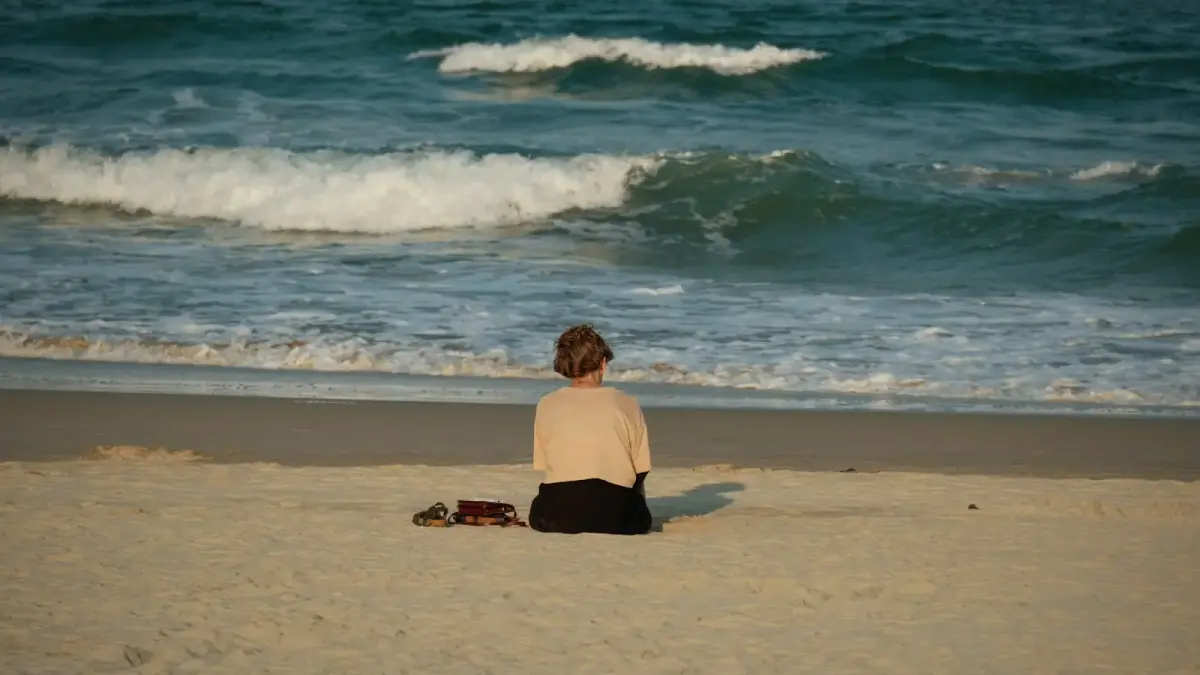
She becomes the woman who plans every vacation down to the half hour. The woman who cannot sit on a beach without a book, a crossword, a podcast - something, anything, to fill the silence. The woman whose Saturdays are packed with errands not because the errands are urgent but because an empty Saturday makes her chest tight and her thoughts race.
Her friends call her organized. Her husband calls her a perfectionist. Her coworker says “I don’t know how you do it all.”
Nobody calls it what it is: a fifty-year-old survival response that never got the memo that the danger passed.
Your Body Still Lives in That House
Here’s what neuroscience tells us about this pattern, and it’s both heartbreaking and clarifying.
When a child grows up in an unpredictable environment, their nervous system calibrates to that environment. The amygdala - the brain’s threat detection center - becomes hyperactive. It learns to scan constantly for signs of danger. And one of the strongest danger signals it learns is the absence of structure, because in that child’s experience, absence of structure was when bad things happened.
Gabor Mate has written extensively about how the body stores these early survival patterns long after the mind has moved on. Your rational brain knows you’re safe. You’re 59, you’re on a beach in Greece, nobody is going to hurt you. But your nervous system doesn’t process time the way your thinking brain does. It doesn’t know the difference between 1974 and now.
So when you sit down with nothing to do, your body floods with the same cortisol it produced when you were eight and the house got quiet and you knew - you just knew - that the quiet meant something was coming.
A 2021 study in Frontiers in Psychology found that adults with adverse childhood experiences showed heightened physiological stress responses during periods of unstructured leisure - their heart rates increased, their cortisol levels rose, and they reported significantly more anxiety during free time than during structured activities. The researchers described it as “the paradox of rest” - the people who most needed to relax were the ones whose bodies made relaxation feel most threatening.
You’re not a control freak. You’re a person whose body is still trying to keep a little girl safe.
The Praise That Kept You Stuck
What makes this pattern so difficult to recognize is that the world rewards it.
Nobody stages an intervention for the woman who’s too productive. Nobody worries about the friend who always has a plan. In a culture that worships busyness, the person who can’t stop moving looks like the person who has it figured out.
You got good grades because sitting still with nothing to do felt unbearable, so you studied. You excelled at work because an empty calendar made your skin crawl, so you filled it. You raised your children with enrichment activities and structured weekends and color-coded family calendars, and everyone said what a wonderful mother you were.
And you were. You are.
But the praise became a lock on the cage. Every compliment about your work ethic, every “I wish I had your energy,” every “you’re so on top of things” reinforced the belief that this is just who you are. That you’re a busy person. A productive person. A person who likes to have a plan.
It never occurred to you that you might be a person who is terrified of what happens when the plan runs out.
Brene Brown has talked about how we use productivity as a form of armor - a way to outrun vulnerability. But for those who grew up in chaotic homes, it’s more than armor. It’s the original survival strategy, the first thing that worked, the behavior that literally kept you safe when nothing else could. Letting go of it doesn’t feel like relaxation. It feels like removing the locks from the door while the wolves are still outside.
Even though the wolves have been gone for forty years.
The Moment She Understood
The woman in Crete - the one who cried in the lobby - later told me something I haven’t forgotten.
She said she’d spent her entire adult life believing she was a person who loved structure. It was part of her identity. She was the organized one, the prepared one, the one who always had a contingency plan. She wore it like a badge.
But sitting by that pool, watching her friends do nothing with such ease, something cracked. She realized she wasn’t choosing structure. She was fleeing formlessness. And those are two completely different things.
“I thought being busy was my personality,” she said. “But my personality was built to survive a house where doing nothing meant something awful was about to happen.”
That distinction matters more than it might seem. Because when you think busyness is your identity, you have no reason to question it. But when you see it as a response to something that happened to you, you can finally hold it gently. You can start to notice it. And noticing is the first step toward something different.
Learning That Nothing Can Be Safe
I want to be careful here, because I’m not going to tell you to just relax. If your nervous system has spent decades treating open time as a threat, you cannot think your way out of that with a positive affirmation and a bubble bath.
But you can start to teach your body - slowly, gently, in small doses - that an afternoon with nothing on it is not the same as a childhood afternoon with nothing on it.
This is what trauma-informed therapists call building a “window of tolerance” - gradually expanding the amount of unstructured time your nervous system can handle without flooding. It might start with five minutes of sitting without a task. Then ten. Then a Saturday morning with one open hour. Not forcing stillness, but offering it - and letting your body learn, in its own time, that the stillness is safe now.
A 2022 study in Psychological Science found that adults who engaged in gradual, supported exposure to unstructured leisure time showed measurable decreases in cortisol reactivity over a twelve-week period. Their bodies literally learned, through repeated experience, that open time no longer predicted danger.
You taught yourself to fill every gap because you had to. That was intelligence, not dysfunction. That was a little girl doing the best she could with what she had.
But you’re not in that house anymore.
What the Beach Is Trying to Tell You
If you recognized yourself in this article - if your chest got a little tight reading about the woman in the lobby - I want you to know something.
The reason you can’t sit still has nothing to do with your character. It has nothing to do with discipline, or ambition, or being “Type A.” It is the echo of a home where you learned, with your whole body, that unoccupied time was dangerous time.
And the fact that you’re reading this, the fact that something in you is starting to name it, means the pattern is already beginning to soften.
You don’t have to throw away your planner or cancel your Saturday errands. You don’t have to force yourself to do nothing. You just have to know - really know, in the part of you that still watches the door when the house gets quiet - that the afternoon is safe now. That nothing bad is coming. That the open hours are no longer the dangerous ones.
That a beach with nothing on it is just a beach.
And the girl who needed the plan can finally, gently, set it down.