Psychology says people who always clean before the cleaner arrives - who scrub the kitchen before a guest comes, who tidy every visible surface before the repairman knocks, who cannot let another human being see the real state of anything they are responsible for - are not embarrassed or controlling, they are children who learned that the state of the house was a direct measurement of their mother's worth, and the cleaning before the cleaning at fifty-one is not perfectionism but a girl still protecting a reputation that stopped needing protection thirty years ago
The Thirty-Minute Warning
I was forty-six the first time a plumber came to my house without notice.
A pipe burst under the kitchen sink on a Tuesday afternoon. Water pooling on linoleum. I called the emergency line, and they said someone could be there in twenty minutes. And the first thing I felt - before relief, before gratitude - was panic. Not about the pipe. About the breakfast dishes still stacked by the stove.
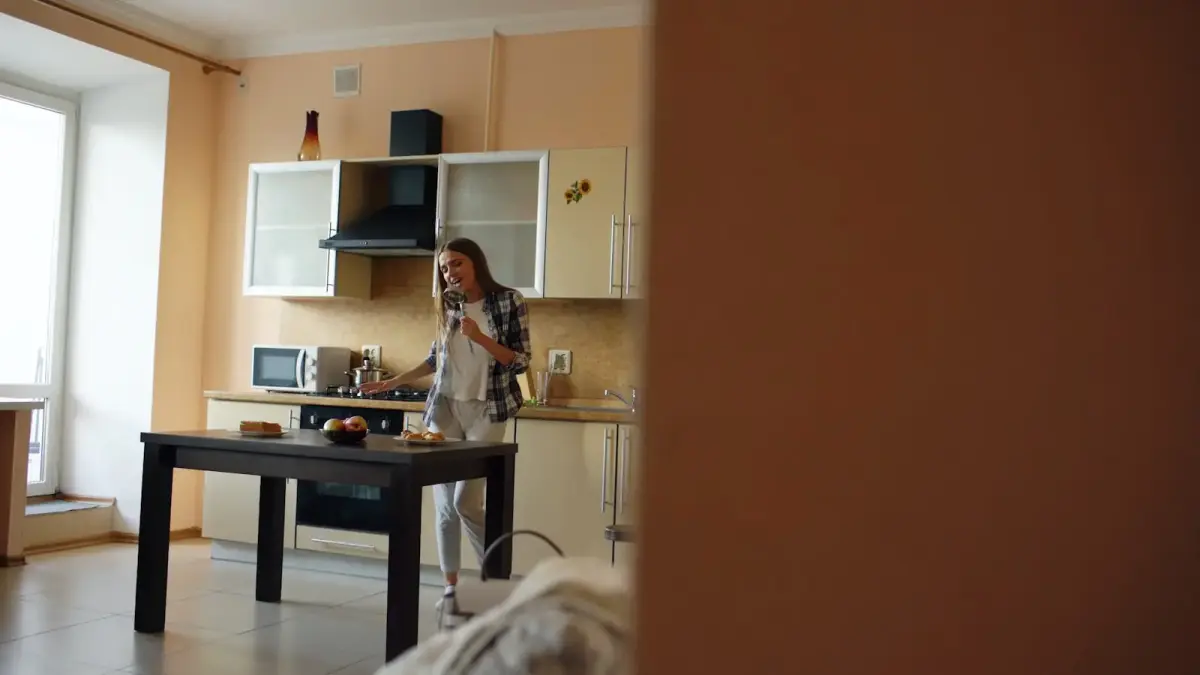
I spent those twenty minutes in a blur. Wiping counters. Shoving mail into a drawer. Folding the throw blanket on the couch that no one would walk past. Hiding the evidence of a life being lived in by a person who had been living it.
The plumber never looked at my kitchen. He went straight to the pipe, fixed it, and left. He could not have cared less about the cereal bowl I had shoved into the oven.
But I cared. Something in me could not allow another human being to see the real state of things. Not because I thought the plumber would judge me. I knew he wouldn’t. I cleaned anyway - the way you flinch at a sound even when you know it is harmless. My body remembered something my mind had stopped keeping track of decades ago.
The Sprint Before the Doorbell
You know this behavior. You might be doing it right now, reading this with one eye while wiping down a counter because someone is coming over in an hour.
You clean before the cleaner arrives. You tidy before the guest sees the entryway. You make the bed before the electrician walks through the bedroom to get to the outlet. You know it makes no logical sense. The cleaner is literally paid to clean. The guest is your sister. The electrician will not be filing a report on the state of your nightstand.
And yet you do it. Every time. With a speed and a focus that you cannot seem to summon for anything else in your life.
People joke about it. They post about it online as if it is a quirky personality trait, a funny little glitch in their operating system. Something to laugh at over brunch.
But it is not a glitch. And it is not funny - not once you understand where it started.
The House as a Public Document
There was a time - and for many families, it never fully ended - when the state of a woman’s home was the state of her character.
A clean house meant she was capable. A messy one meant she had failed at the one thing the world had decided to measure her by. This was not a vague cultural pressure. It was specific, daily, and ruthless. Neighbors noticed. Mothers-in-law commented. Other women - the ones who were also being measured - kept score.
A 2019 study published in the Journal of Family Issues found that women still carry a disproportionate share of what researchers call “household management responsibility” - not just doing the tasks, but anticipating them, tracking them, and bearing the social consequences when they are undone. The study confirmed what most women already knew in their bones: the house is still her report card, even when she also works fifty hours a week.
Your mother knew this. She may not have articulated it, but she lived inside it. And you watched her. You absorbed every frantic sprint before the doorbell rang. Every hissed instruction to pick up your shoes, wipe the table, make it look like we live like this all the time.
You were not being taught to clean. You were being taught that the real state of things was dangerous. That being seen unprepared was the same as being seen as less than.
What You Were Really Learning
Children do not process parental anxiety as abstract information. They process it as survival data.
When your mother’s mood shifted the moment unexpected company pulled into the driveway - when her voice tightened and her hands moved faster and the whole energy of the house reorganized itself around the threat of being seen - you learned something that no amount of adult rationality has been able to fully overwrite.
You learned that the visible state of your environment is a direct measurement of your worth. That surfaces tell the truth about you. That if someone sees the counter the way it really looks at two in the afternoon on a Wednesday, they will know something about you that you have been working very hard to keep hidden.
Psychologist Donald Winnicott wrote extensively about what he called the “false self” - the version of a person constructed entirely to manage the expectations of others. He observed that children raised in environments where authentic expression felt unsafe would develop elaborate systems of presentation, performing competence and control even when they felt neither. The false self is not a lie, exactly. It is a shelter. Built by a child who needed one.
The pre-cleaning is your false self doing what it was designed to do. Presenting the managed version. Making sure the seams do not show.
The Inheritance of Domestic Shame
Here is what nobody talks about when they joke about cleaning before the cleaner comes: this behavior has a class structure.
Working-class and middle-class families carried a particular version of this pressure. The house was not just a home - it was proof that you were keeping up. Proof that poverty had not touched you, or that it had and you were handling it with dignity. A clean house in a modest neighborhood was a declaration: we may not have much, but we have standards.
And the person responsible for maintaining that declaration was almost always a woman.
A 2022 study in Frontiers in Psychology explored the concept of “domestic perfectionism” and found that it was most strongly predicted not by personality traits like conscientiousness, but by early family environments where household order was tied to parental approval and social standing. In other words, the people most likely to scrub the sink before a visitor arrived were not naturally perfectionistic. They had been trained to associate domestic order with emotional safety.
Your mother was not neurotic. She was navigating a world that would judge her - and by extension, her children, her marriage, her entire interior life - by whether or not there were dishes in the sink when the neighbor stopped by.
And you, watching from the hallway, absorbed every bit of it. Not the logic. The feeling. The urgency. The quiet, wordless understanding that being seen in a state of disorder was a kind of exposure that could not be risked.
It Is Not Perfectionism
Let me say this plainly, because I think you need to hear it.
The thing you do - the wiping and straightening and tucking away before anyone sees - is not a flaw in your personality. It is not evidence that you are too rigid or too controlling or too concerned with appearances.
It is loyalty.
It is the last surviving behavior of a child who watched her mother try to hold the whole world together with a dish towel and a fifteen-minute warning. A child who understood, without anyone ever explaining it, that her mother’s dignity was somehow at stake in the shine of the kitchen floor. And who decided, without words, that she would help carry that weight.
You are not protecting your house. You are protecting her. You are still protecting her. Every time you hear the doorbell and your hands start moving before your brain catches up, you are running the same rescue mission you learned at seven, at ten, at thirteen. Making sure nobody sees. Making sure nobody knows.
The fact that your mother is perhaps no longer alive, or no longer living in that house, or no longer anxious about the neighbors - none of that matters to the part of you that learned this. That part does not update. It just keeps working.
The Permission You Were Never Given
The psychologist Susan David, who studies emotional agility, has written about how inherited emotional patterns persist not because we are weak, but because they once served a genuine purpose. The child who learned to manage appearances was doing something intelligent. She was reading her environment accurately and responding in the way most likely to keep things stable.
The problem is not that you learned it. The problem is that no one ever told you it was okay to stop.
No one sat you down at twenty-five, or thirty-eight, or fifty-one, and said: you can let the plumber see the dishes. You can let the guest walk into the real version of your Tuesday afternoon. You can let the house look like what it is - a place where a human being lives, eats, rests, and sometimes leaves a coffee mug on the counter for three days because she was tired and it did not matter.
No one gave you that permission. So here it is.
The house does not have to perform for anyone. And neither do you.
What the Clean Counter Really Means
I still clean before people come over. I want to be honest about that. I do not think this essay is going to cure me of a pattern that has been running in the background for four decades.
But something has shifted since I started understanding where it comes from. The cleaning feels different now. Less urgent. Less like survival. More like a habit I can watch with some gentleness instead of being driven by it.
I think of my mother sometimes when I am wiping down the counter before a friend arrives. Not with sadness, exactly. With recognition. I see her hands in my hands. I see her urgency in my urgency. And I understand that what looks like a strange, irrational behavior is actually one of the most faithful things about me.
I am still that girl in the hallway, watching her mother move through the house like a woman trying to outrun a verdict. I am still trying to make sure the verdict comes back clean.
The difference now is that I know the trial ended a long time ago. The jury left. The courtroom is empty. And the house - my house, her house, your house - was never the evidence anyone should have been collecting in the first place.
You are not too much. You are not irrational. You are not broken.
You are a person who loved someone enough to carry their worry into your own body, your own hands, your own Tuesday afternoons. And that is not a flaw worth fixing. That is a loyalty worth understanding.