Psychology says people who always place their phone face-down on every surface - the restaurant table, the kitchen counter, their own nightstand when nobody else is home - are not hiding anything and are not protecting secrets, they are people whose childhood taught them that information arriving through a screen was never neutral, that a ringing phone at dinnertime changed the temperature of the entire house, and the face-down phone at forty-eight is not privacy but a child's hand still trying to control which news enters the room and when
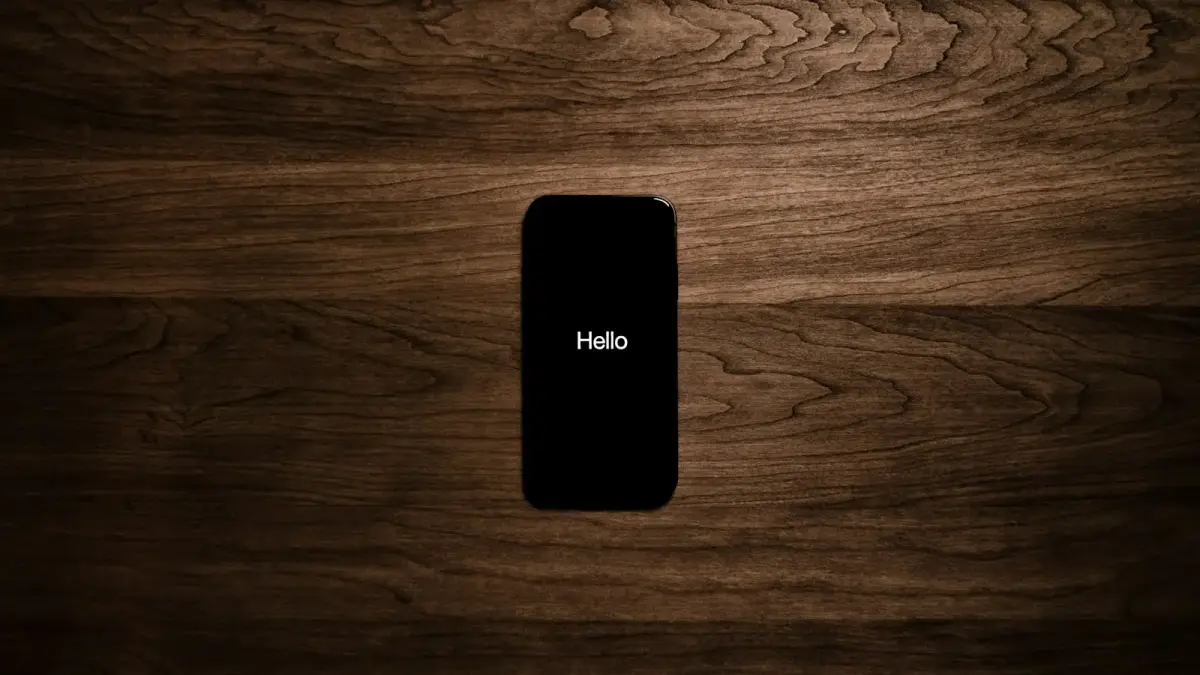
I do it every single time. I sit down at a restaurant, take my phone from my pocket, and place it face-down on the table before I even look at the menu. I do it at my own kitchen counter while I’m cooking alone on a Tuesday night. I do it on my nightstand before bed, even though nobody is going to walk into my bedroom and glance at the screen.
For years I assumed this was just a preference. A small, meaningless habit - like the way some people always park in the same spot or fold their towels a certain way.
Then a friend pointed it out. “You always do that,” she said, nodding at my phone pressed flat against the tablecloth. “What are you hiding?”
I laughed. But the question sat with me for weeks. Because I wasn’t hiding anything. I had nothing on that screen I needed to protect. And yet the thought of leaving it face-up - of letting its glow announce itself into the room whenever it wanted to - made something in my chest tighten in a way I couldn’t explain.
It took me a long time to understand what that tightness actually was. It wasn’t secrecy. It wasn’t shame. It was something much older, much quieter, and much sadder than that.
The house where information was never just information
Some of us grew up in homes where a ringing phone was not a neutral event. It was a weather system. The phone would ring during dinner and every child at the table would freeze - not because they were told to be quiet, but because they had learned, through dozens of repetitions, that whoever was on the other end of that call had the power to change the entire evening.
Maybe it was a parent’s boss calling with bad news. Maybe it was a relative stirring conflict. Maybe it was a creditor, and the phone ringing meant the next two hours would be spent listening to muffled arguments behind a closed door.
In homes like these, incoming information is never just information. It arrives loaded. It arrives with consequences.
A 2019 study published in the Journal of Research in Personality found that children raised in unpredictable home environments develop heightened sensitivity to environmental cues - what researchers call “shift-and-persist” strategies. These children learn to constantly monitor their surroundings for signs of change, adjusting their behavior before the change even fully arrives.
The phone ringing. The mail arriving. The car pulling into the driveway at an unexpected hour. These were not ordinary moments. They were checkpoints. And every child in those homes became, without anyone teaching them, a tiny security guard standing between the outside world and the fragile peace of the household.
What vigilance looks like when it grows up
Here is the thing about childhood vigilance: it doesn’t announce itself. It doesn’t show up as anxiety in any way you’d recognize on a checklist. It shows up as habits so small and so automatic that you mistake them for personality.
You place your phone face-down. You mute group chats before you even read them. You check your email at specific times rather than letting notifications arrive whenever they please. You feel a strange irritation - almost physical - when someone else’s phone buzzes loudly in a quiet room.
None of this looks like a trauma response. It looks like being organized. It looks like being considerate. It looks like having good phone etiquette.
But underneath every one of these habits is the same old instruction, written into your nervous system before you were old enough to name it: control when the information arrives. Because if you don’t control when it arrives, it will control you. It will control the room. It will control everything.
Gabor Mate has written extensively about how the body stores unresolved stress from childhood, and how that stress resurfaces not as dramatic flashbacks but as quiet, persistent patterns of self-regulation. The face-down phone is one of those patterns. It is not a conscious choice. It is a reflex - one that was installed so early that it feels less like a behavior and more like a fundamental part of who you are.
The myth that it means you’re hiding something
Let’s talk about the accusation, because you’ve probably heard it. Someone sees your phone face-down and raises an eyebrow. “What are you hiding?” they ask, half-joking but not really joking at all.
And you feel a flash of something - not guilt, because there’s nothing to feel guilty about, but a frustration that sits close to sadness. Because the truth is so much less interesting and so much more tender than an affair or a secret conversation.
You’re not hiding your screen from other people. You’re hiding it from yourself.
You are managing the flow of information into your own nervous system the way you learned to manage it when you were nine years old and the phone ringing at seven p.m. meant your father was going to drink tonight, or your mother was going to cry, or the entire plan for the weekend was about to collapse.
A 2021 study in Frontiers in Psychology found that adults who experienced childhood household instability showed persistent patterns of information avoidance - a tendency to delay or control their exposure to new information, even when that information was likely to be positive. The researchers noted that this wasn’t avoidance born from disinterest. It was avoidance born from a deeply conditioned association between new information and emotional upheaval.
Your phone face-down on the nightstand is not about the person lying next to you. It is about the child who once lay in bed listening for the sound of a car door, a raised voice, a phone ringing in the hallway - and learned that peace only lasted until the next piece of news arrived.
The knock at the door and the letter in the mailbox
It’s worth noticing that the phone is not the only place this pattern shows up. If you recognize yourself in any of this, I want you to think about your relationship with other forms of incoming information.
Do you feel a small spike of dread when someone knocks on your door unexpectedly? Not fear exactly, but a narrowing - a sense that whatever is on the other side of that door is going to require something from you that you weren’t prepared to give.
Do you let mail sit unopened for days, not because you’re lazy, but because the act of opening an envelope feels like it carries weight?
Do you mute your work notifications on weekends - not because you have healthy boundaries, but because the thought of a Sunday afternoon being interrupted by a message from your boss makes your stomach drop in a way that seems disproportionate to the actual stakes?
These are all the same reflex. They are all the child at the dinner table, watching the phone ring, reading the room, calculating whether this particular interruption is going to be safe or whether it is going to rearrange everything.
Daniel Goleman’s work on emotional intelligence describes this kind of pattern recognition as a hallmark of people who grew up needing to be emotionally fluent far earlier than most children. You learned to read the weather of a room before anyone told you it was storming. And that skill - that exhausting, remarkable skill - didn’t disappear when you grew up. It just found new objects to practice on.
The tenderness of the reflex
I want to be careful here, because I’m not writing this to make you feel broken. I’m writing this because I think there is something deeply tender about the face-down phone, and I think it deserves to be seen for what it actually is.
It is a form of care. Misdirected, maybe. Outdated, certainly. But care nonetheless.
The child who learned to monitor every incoming signal was a child who was trying to protect something. Maybe they were trying to protect a parent from tipping into sadness. Maybe they were trying to protect a sibling from hearing something they shouldn’t. Maybe they were just trying to protect the twenty minutes of quiet that existed between dinner and bedtime - the only twenty minutes where the house felt like a house and not like a waiting room.
That instinct to protect stillness - to guard the room against whatever might arrive uninvited through a screen or a ringing or a knock - is not dysfunction. It is loyalty to a peace that was never guaranteed.
And the fact that you still do it, decades later, in your own home where the phone ringing is just your friend confirming brunch plans - that’s not something to fix. That’s something to recognize. To hold gently. To thank, even, before you slowly teach your nervous system that the news arriving tonight is probably not going to change the temperature of anything.
Letting the phone stay where it lands
You don’t have to force yourself to leave your phone face-up. You don’t have to perform comfort you don’t feel.
But if you’ve read this far and felt a quiet recognition - a sense that this small habit carries more history than you realized - then something has already shifted. Because awareness is its own form of healing. Not the dramatic kind. Not the kind that looks like a breakthrough in a therapist’s office. The kind that happens at your own kitchen counter on an ordinary evening when you set your phone down, notice the way your hand automatically turns it over, and think: I know why I do that.
A 2022 study in Psychological Science found that simply naming the emotional origin of an automatic behavior reduced its physiological intensity over time. The researchers called it “affect labeling” - and they found that the act of connecting a present-moment habit to its emotional source gave participants a greater sense of agency over whether to continue the behavior or let it go.
You were a child who tried to manage an unmanageable world by controlling the flow of information into your home. That was not paranoia. That was not secrecy. That was intelligence. That was love, expressed in the only language a child has - which is the language of small, careful, quiet actions that nobody notices.
The phone face-down on the restaurant table is one of those actions. It has been keeping watch for you for a very long time.
You can let it rest now, whenever you’re ready. And if you’re not ready yet, that’s fine too. It has been doing its job faithfully for decades. It can keep going a little longer while you figure out that the room is safe, the news can wait, and you are no longer the only person standing between the world and the silence you needed so badly as a child.