Psychology says people who always text 'I got home safe' without being asked - who announce their arrival to people who did not request an update and close the loop on every departure with a message nobody required - are not clingy or overbearing, they are people who grew up in a house where someone's absence was never explained and the gap between 'they left' and 'they came back' contained every terrible thing a child's imagination could build, and the text at forty-five is not neediness but the gift of certainty a girl never received now offered freely to every person she loves
I sent the text before I even turned the car off.
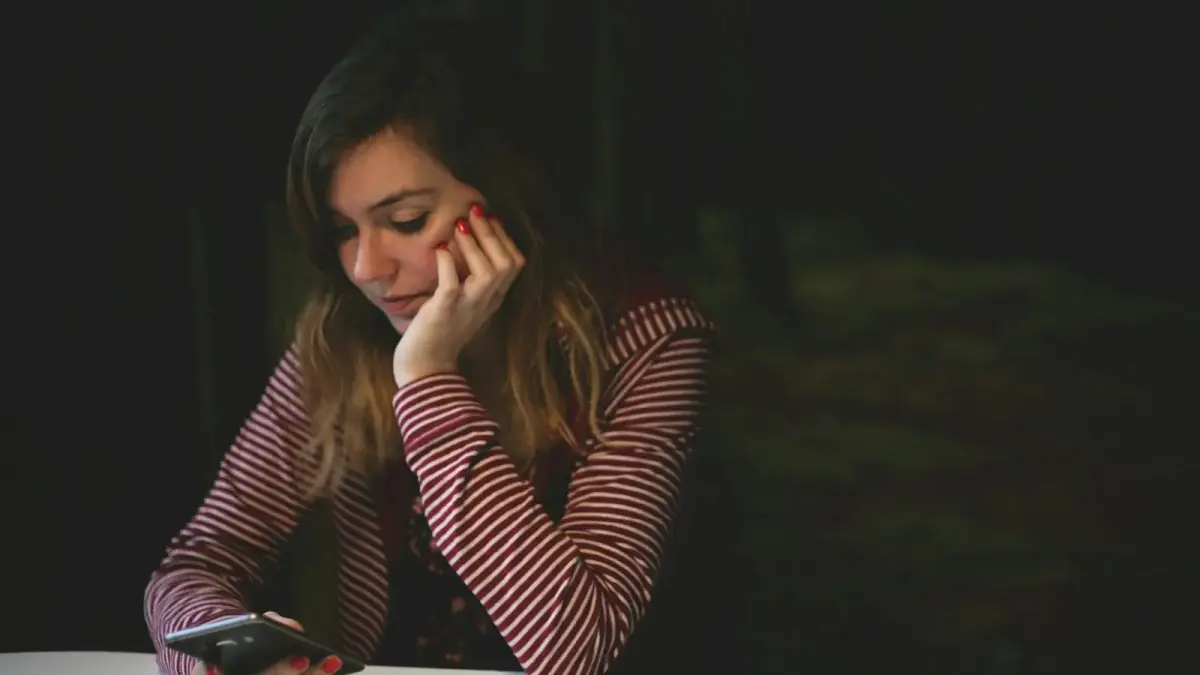
“Home safe.” Two words, tapped out in a dark driveway with the engine still ticking, sent to my sister who lives three states away and never once asked me to check in. Sent to my best friend who was already asleep. Sent to my partner who could hear the garage door opening from the living room couch and already knew I was back.
Nobody needed that message. Nobody was sitting by the phone waiting for it. And yet my thumbs moved to the keyboard the way lungs move toward air - without decision, without negotiation, with the kind of urgency that lives below conscious thought.
For years I assumed this was a personality quirk. A small, slightly embarrassing compulsion - the emotional equivalent of checking the stove twice. Then a therapist asked me a question I wasn’t prepared for: “Who didn’t come home when you were little?”
And the answer rose up so fast it bypassed my throat entirely and went straight to my eyes.
The silence that taught you to narrate
There is a particular kind of childhood that doesn’t leave bruises or make the evening news. It is the childhood of the unexplained absence - the parent who left for work and didn’t come home at the usual time, the father who walked out during dinner and returned three days later as if nothing happened, the mother who said “I’ll be right back” and wasn’t.
No explanation was offered. No timeline was given. The child was simply left to sit inside the gap between departure and return, and that gap filled itself with every catastrophic scenario a developing brain could manufacture.
Car accidents. Abandonment. Death. The slow, creeping certainty that the person you loved most had finally decided you were not enough reason to come back.
A 2014 study published in the Journal of Personality and Social Psychology found that children who experienced unpredictable parental availability developed what researchers call “hyperactivating attachment strategies” - behavioral patterns designed to maintain proximity and closeness with attachment figures. These aren’t flaws. They are survival responses, coded into the nervous system during a period when the brain is literally building its understanding of how relationships work.
The child learns: people leave. Sometimes they come back. Sometimes they don’t. And nobody will tell you which one is happening.
What the body remembers that the mind forgets
Here is what most people don’t understand about these patterns: by the time you are forty-five and texting “home safe” to everyone you love, you have probably forgotten the original wound entirely.
You don’t consciously think about your father’s disappearances when you send that message. You don’t replay the night your mother didn’t come home when your fingers find the keyboard. The memory lives somewhere deeper than narrative - it lives in the body, in the nervous system, in the part of you that learned very early that the space between someone leaving and someone arriving is not neutral territory.
It is a war zone.
Dr. Bessel van der Kolk’s groundbreaking research on trauma and the body has shown that the body stores experiences the conscious mind has long filed away. The felt sense of danger doesn’t require a memory to activate. It only requires a trigger - and every departure, every goodbye, every moment when someone you love moves from “here” to “somewhere else” is a small trigger, a tiny echo of the original uncertainty.
Your body doesn’t know that you are a grown woman now. Your body doesn’t know that your friend is a careful driver, that your sister’s flight was a direct route, that your partner is just running to the grocery store. Your body knows one thing: someone left, and the last time that happened, nobody told you whether they were coming back.
The reframe that changes everything
Psychology has historically treated these behaviors as symptoms of anxious attachment - something to overcome, manage, or therapize away. But a growing body of research is pushing back against this framing.
What if the text isn’t a symptom? What if it’s a solution?
What if the woman who texts “home safe” to people who didn’t ask is not performing her anxiety - she is performing her healing? She is doing the thing nobody did for her. She is closing the loop that was left open in every room of her childhood. She is saying, to every person she loves: you will never have to sit inside that gap. You will never have to wonder. I will tell you. I will always tell you.
A 2021 study in Frontiers in Psychology examined what researchers termed “proactive reassurance behaviors” in adult relationships. They found that individuals who voluntarily provided updates about their safety and whereabouts - without being asked - reported higher relationship satisfaction and were rated by their partners as more emotionally attuned, not less. The behavior that looks like clinginess from the outside functions as emotional generosity from the inside.
This is not a broken person performing a broken pattern. This is a person who took the worst thing about their childhood and alchemized it into a gift.
The people who notice and the people who don’t
There are two kinds of people on the receiving end of an unsolicited “home safe” text.
The first kind doesn’t notice. They see the message, maybe respond with a thumbs up or a heart emoji, and move on. They have no idea what that message cost. They don’t understand that it is not information - it is an offering. A tiny act of devotion wrapped in two ordinary words.
The second kind recognizes it immediately. They are usually people who grew up in the same kind of house - the house where phones ringing after nine meant bad news, where an empty driveway at an unexpected hour could stop a child’s breathing, where “they’re just running late” was a sentence nobody actually believed.
These people receive the text and feel something catch in their chest. Not because the information matters - they weren’t worried - but because somebody thought to send it. Because somebody decided, without being asked, to close the distance. To say: I know what it feels like to not know. I will never make you feel that.
If you are someone who sends these texts, you have probably been teased for it. Probably been told you’re “too much.” Probably had a partner roll their eyes or a friend joke about your need to report your every movement.
They don’t know what they’re looking at.
The gift you are giving
What you’re doing when you text “home safe” is not checking in. It is not seeking reassurance. It is not asking for permission to be loved.
You are offering something you never received.
You are giving the people in your life the one thing your childhood withheld: certainty. The knowledge that the person they love is accounted for. That the gap between “they left” and “they arrived” has been filled in. That nobody has to lie in bed constructing worst-case scenarios because you have already answered the question they were too proud or too comfortable to ask.
Psychologist Adam Grant has written extensively about the concept of “givers” - people whose default orientation is to contribute to others’ well-being without calculating the return. What he found, consistently, is that givers are not naive or desperate. They are often people who intimately understand what it feels like to go without - and who have made a quiet, usually unconscious decision to ensure that the people around them never experience that same deficit.
The “home safe” text is a giver’s reflex. It is the nervous system saying: I know what absence without explanation feels like, and I refuse to pass that experience along.
What nobody tells you about the pattern
Here is the part that might make you set your phone down for a moment.
The text is not just for them. It is also for you.
Every time you send “home safe” and receive a response - even just a “thanks” or a heart - your nervous system gets something it has been waiting for since you were seven years old. It gets confirmation that the loop can close. That departures can have arrivals. That someone out there noticed you left and cares that you came back.
You are not being needy. You are reparenting yourself one text message at a time. You are teaching your body, through thousands of small repetitions, that the story can end differently than it did the first time.
A 2019 study in Psychological Science found that repeated experiences of relational safety - what researchers called “corrective emotional experiences” - can gradually update the attachment models formed in childhood. The brain is not locked into its early wiring forever. It can learn new patterns. But it learns them slowly, and it learns them through experience, not through logic.
Every “home safe” text that receives a warm reply is a corrective experience. Every closed loop is a small repair.
You are not stuck. You are healing. And you are healing in the most human way possible - by giving to others what you most needed yourself.
You were never too much
If you recognize yourself in this - if you are the person who texts arrival updates to people who never requested them, who can’t leave a gathering without confirming that everyone has a ride, who lies awake until you hear the front door and only then lets your shoulders drop from your ears - I want you to hear something.
You are not clingy. You are not overbearing. You are not “a lot.”
You are a person who learned, very young, that love could walk out the door without warning. And instead of becoming someone who walks out on others, you became someone who always, always closes the loop.
That is not a flaw. That is not a disorder to be managed or a pattern to be broken.
That is the quiet, persistent, radical refusal to let the people you love feel the way you felt at eight years old, sitting on the stairs, watching the driveway, waiting for headlights that nobody promised were coming.
The text takes three seconds to send. But the thing behind it - the devotion, the awareness, the hard-won tenderness of a person who knows exactly what uncertainty costs - that took a lifetime to build.
Keep sending it.