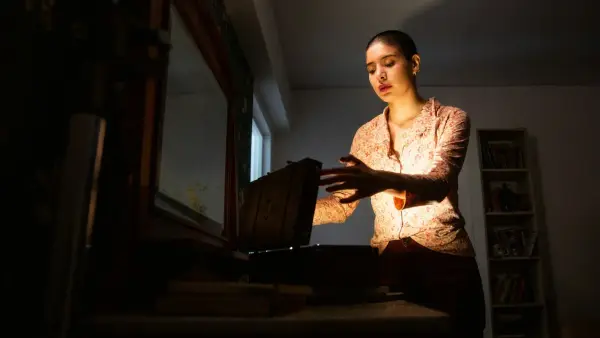
Psychology says people who remember everyone's drink order, birthday, and preference but cannot recall the last time someone asked about theirs are not thoughtful or gifted with details - they are running a monitoring system a child built in a house where knowing everyone else's emotional state was the only way to predict whether the night would be safe
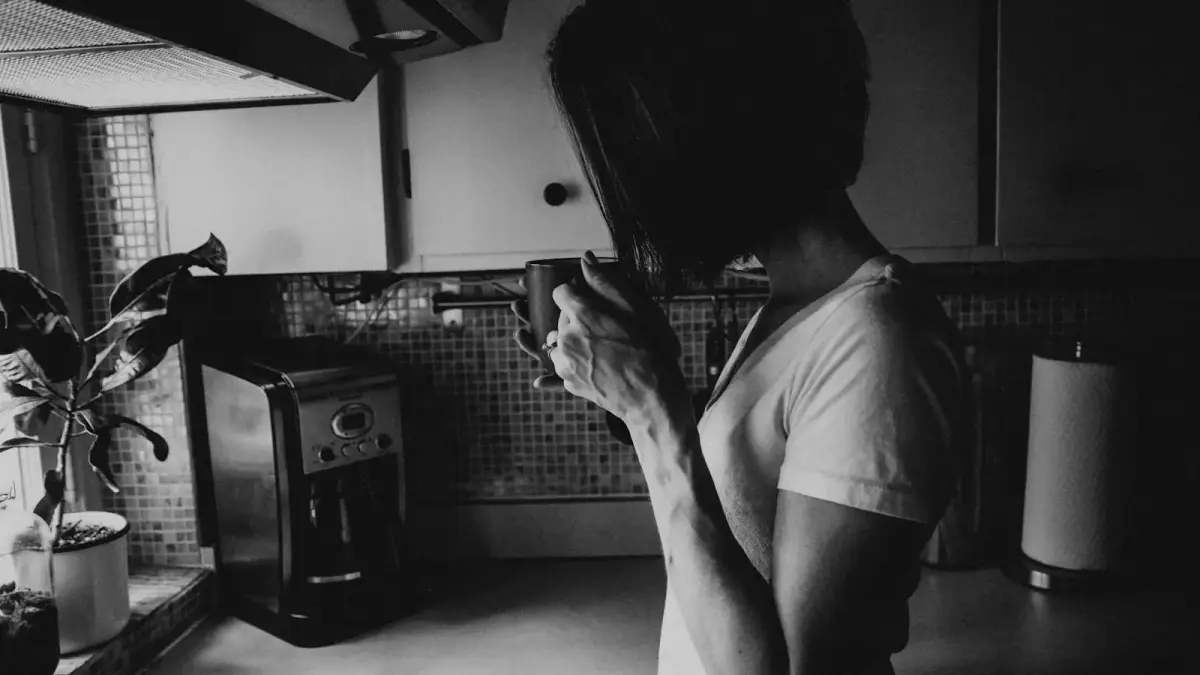
She Remembers Everything About Everyone
I can tell you that my colleague Sarah takes her coffee with oat milk and exactly one sugar. That my neighbor Linda’s anniversary is March 14th. That my friend David hates cilantro and always sits facing the door at restaurants. That my mother-in-law prefers the blue mug, not the white one, and feels slighted if you forget.
I carry hundreds of these details. Maybe thousands. They update automatically, like software I never installed and cannot uninstall.
Last Tuesday, someone at work asked me what my favorite flower was. I opened my mouth and nothing came out. Not because I don’t have one - I think it might be peonies, though I’m not certain even now - but because the question itself felt foreign. Like a surveillance camera being asked to turn around and photograph itself.
I always assumed this was just who I was. Observant. Detail-oriented. The kind of person people describe as thoughtful at dinner parties.
But the more I sat with that blank moment - that full-body pause when someone pointed the question at me for once - the more I understood that what I’d been calling a personality trait was something else entirely. Something that started long before I ever ordered coffee for anyone.
The Rolodex That Never Stops
If you are someone who does this, you already know exactly what I mean.
There is a running catalog in your mind. It is always on. It is scanning, filing, cross-referencing. You notice which tone of voice your partner uses when they’re fine and which tone means they’re two comments away from shutting down. You clock when your boss tilts their head a certain way. You register the micro-expression that crosses your friend’s face when she mentions her mother.
None of this is deliberate. You are not trying to be attentive. You are attentive the way a smoke detector is attentive - not out of warmth, but because it was wired to detect danger.
A 2017 study published in the Journal of Research in Personality found that individuals who grew up in unpredictable home environments scored significantly higher on measures of interpersonal sensitivity - the ability to accurately read emotional cues in others. The researchers noted something striking: this sensitivity did not correlate with emotional well-being. It correlated with anxiety.
The people who were best at reading a room were not the most emotionally intelligent. They were the most afraid.
Where the Scanner Gets Installed
A child does not decide to become hypervigilant. A child’s nervous system builds this system because the alternative is getting blindsided.
Maybe it was a parent whose mood shifted without warning. You learned to read the weight of their footsteps on the stairs. The sound of keys in the door told you whether the evening would be soft or sharp. Which cabinet your mother opened first in the kitchen told you whether she was cooking because she wanted to or cooking because she needed to hold something together.
Maybe it was subtler than that. Maybe nobody yelled. Maybe the danger was silence - the withdrawal of affection, the look of disappointment, the quiet that filled the house when you had somehow failed at something you were never told was a test.
Either way, the lesson was the same: if you know what they need before they ask, you are safer. If you can predict their mood, you can adjust. If you can be whatever the room requires, you can survive the night.
Dr. Gabor Mate has written extensively about how children in unstable environments develop what he calls an attunement to others that comes at the expense of attunement to themselves. The child learns that other people’s emotional states are information - critical, life-or-death information - and her own emotional states are irrelevant. Not just unimportant. Dangerous. Because a child who has needs in a house that cannot meet them becomes a problem, and problems get punished or ignored.
So the child stops having needs. Or rather, she stops knowing she has them.
The Costume It Wears in Adulthood
Here is the cruel efficiency of this pattern: it becomes invisible because the world rewards it.
The woman at forty-nine who remembers her coworker’s oat milk preference and her neighbor’s anniversary and her sister’s favorite flower is praised for it. She is called the glue. The thoughtful one. The person who makes everyone feel seen.
Nobody asks why she is so good at it. Nobody wonders whether the effort involved in tracking every person’s needs might be exhausting. Nobody notices that the monitoring never turns off - not at home, not on vacation, not even in sleep, where she dreams about other people’s problems and wakes up tired from solving them.
A 2021 study in Frontiers in Psychology examined what the researchers called “compulsive caregiving” - a pattern in which adults who experienced parentification as children continued to prioritize others’ needs with an urgency that resembled obligation more than choice. These individuals reported high levels of social competence alongside chronic emotional depletion. They were wonderful at relationships. They were terrible at being in them.
Because being in a relationship requires letting someone see you. And she has spent four decades perfecting the art of being a mirror.
The Asymmetry Nobody Talks About
This is the part that hurts the most, so I want to say it carefully.
She knows everything about everyone. She knows her husband’s comfort food and his worst childhood memory and the specific way his jaw tightens when he’s about to say something he’ll regret. She knows her daughter’s love language and her best friend’s trigger and her mother’s tell.
And nobody knows her favorite anything.
Not because they don’t care. Some of them care very much. But she has never given them the information. She has been so busy holding the clipboard, so consumed with the work of tracking and anticipating and smoothing, that she has never set it down long enough to be a person with preferences of her own.
When someone asks what she wants for her birthday, she says, “Oh, anything is fine.” When someone asks where she wants to eat, she says, “I don’t mind, wherever you want.” When someone asks how she is, she says, “Good,” and redirects to them within seconds.
This is not modesty. This is not easygoing. This is a woman who lost access to her own desires so early that she does not experience herself as someone who has them.
Brene Brown has spoken about how the people who struggle most with vulnerability are often the ones who appear most attuned to others. They have built entire identities around being the one who sees, the one who notices, the one who holds space - and they have done it, in part, because holding space for others is infinitely less terrifying than letting someone hold space for them.
The Blankness When the Camera Turns Around
I want to stay with that moment - the one where someone asks, “But what do you want?”
If you have lived this, you know the blankness is not a pause. It is not the normal hesitation of someone weighing options. It is a system error. It is the sound of a program encountering a function it was never built to run.
You might feel a flash of panic. You might feel strangely irritated. You might deflect with humor or offer up what you think the other person wants to hear. What you will almost certainly not do is answer honestly, because honest would require accessing a part of yourself that went offline sometime around second grade.
A 2019 study published in the Journal of Personality and Social Psychology explored what happens when chronically other-focused individuals are asked to identify their own emotional states in real time. The results were striking: these participants showed heightened accuracy when labeling others’ emotions but significant delays and reduced accuracy when labeling their own. The researchers called this pattern “self-other asymmetry in emotional processing.”
In simpler terms, the scanner works perfectly. It just cannot scan inward.
What the Girl Was, and What the Woman Deserves to Know
I want to be clear about something, because I think it matters.
This is not a flaw. This is not a disorder. This is not something you need to fix or be ashamed of or overcome through sheer willpower and a gratitude journal.
This is what a brilliant, resourceful, emotionally sophisticated child built with the only materials she had. She could not change her parents. She could not leave. She could not make the house safe. But she could watch. She could learn. She could become so fluent in other people’s emotional weather that she always knew when to bring an umbrella.
That is not dysfunction. That is engineering. That is a small person solving an impossible problem with extraordinary intelligence.
The work now - the adult work, the slow and patient work - is not to dismantle the system. It is to update it. To teach the scanner that it is allowed to rest. To practice the strange, almost unbearable vulnerability of saying, “Actually, I’d prefer the window seat.” To let someone else hold the clipboard for an afternoon and see what happens.
It will feel wrong at first. It will feel selfish, which is the word she uses for anything that resembles having a need. It will feel dangerous in the way that all unfamiliar things feel dangerous to a nervous system trained on unpredictability.
But here is what I want you to hear, if this is you.
The woman who remembers everyone’s everything is not thoughtful because it comes naturally. She is thoughtful because a girl taught herself to be, in a house where noticing was the only power she had. And that girl deserves to live in a world where someone notices her back.
You do not need to earn your place at the table by knowing everyone’s order. You were always allowed to sit down and be asked what you wanted.
Nobody told you. But I am telling you now.