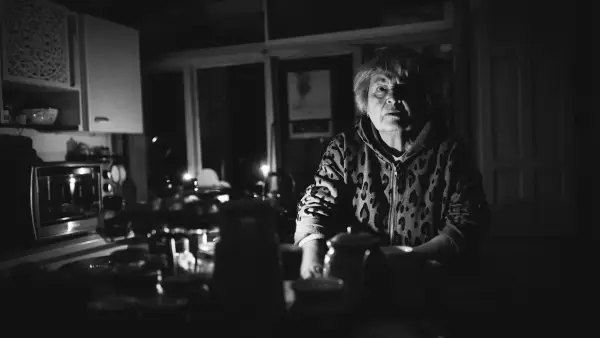
She is 53 and has quietly realized that her mother calls her three times a week needing help with things she used to do alone, and her daughter calls three times a week needing help with things she has not yet learned to do alone, and she is the only person in the family that nobody ever calls just to ask how she is doing - because somewhere between being someone's child and being someone's mother she became the wall that everyone leans against and nobody thinks to check
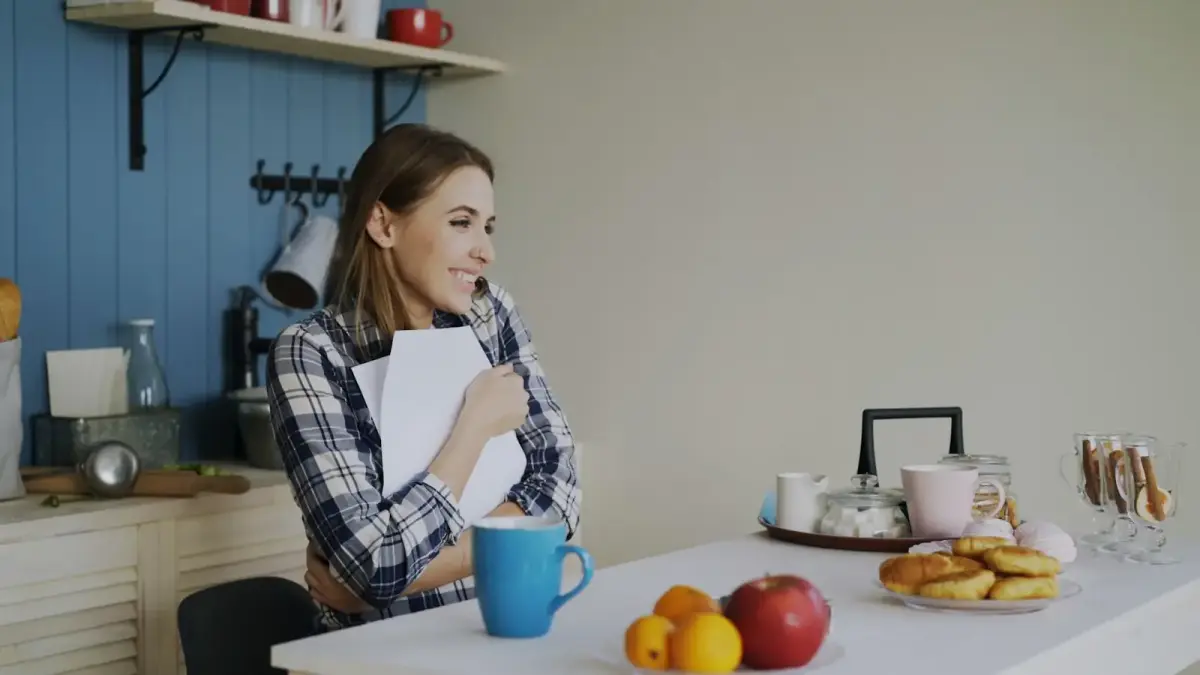
The phone rings at 7:14 AM and she already knows
I want to tell you about a Tuesday morning. Not a crisis morning. Not a hospital morning. Just a regular Tuesday where a woman I know - let’s call her the woman I see in the mirror - sat in her kitchen at 6:45 AM with coffee that was still too hot to drink, and felt the weight of the day before it even started.
Her phone buzzed at 7:14. Her mother, asking if she could come by after work to help sort out the internet bill that used to be simple but isn’t anymore. Then at 7:22, her daughter texted from across town asking if she could walk her through how to handle a landlord who won’t return a deposit. Two people who love her, reaching toward her before the sun had fully risen.
And I sat there thinking about the last time someone called me first thing in the morning just to say - how are you? How did you sleep? Is there anything you need today?
I couldn’t remember.
When being needed becomes your only address
There’s a particular kind of tiredness that doesn’t come from doing too much. It comes from being the answer to everyone else’s questions while never getting to be the question yourself.
At 53, I have become fluent in a language I never consciously learned. It’s the language of anticipation - knowing what my mother will need before she asks, knowing what my daughter hasn’t yet figured out, and filling those gaps so seamlessly that nobody notices the filling is happening at all.
My mother is 79. She is sharp and proud and funny, and she is also slowly handing me the tasks she used to manage without thinking. The doctors’ appointments she needs driven to. The prescriptions that need refilling. The technology that changes faster than she can adapt.
My daughter is 22. She is bright and ambitious and figuring it out, and she is also still building the scaffolding that holds an adult life together. The lease negotiations. The insurance questions. The emotional math of early relationships.
Both of them reach toward me with complete confidence that I will be there. And I am. I always am. But somewhere in the arithmetic of all this reaching, something doesn’t add up. Everyone in my family has someone to call when things get hard. Everyone except me.
The sandwich generation is not a phase - it is a structural position
Researchers gave it a name in the 1980s - the sandwich generation. The term sounds almost lighthearted, like something you could put on a greeting card. But living inside it feels nothing like a name that neat.
A 2022 study published in the Journal of Women and Aging found that women in midlife caregiving roles reported significantly higher rates of emotional exhaustion than men in similar positions - not because they did more tasks, but because they carried what the researchers called “anticipatory care labor.” The constant mental calculus of who needs what and when, running like background software you can never fully close.
That phrase stopped me. Anticipatory care labor. It means the work isn’t just the doing. It’s the knowing. It’s waking up already calculating whether today your mother will need you more or your daughter will need you more, and knowing the real answer is both, and knowing there is only one of you.
I think about the women I know in this same position. We find each other at school events, in parking lots, over quick lunches that always get cut short. And we share this particular look - a half-smile that says I see you and I know and I’m tired too. But we never say it out loud. Because saying it out loud might make us sound ungrateful for being needed. And being needed is supposed to be enough.
The exhaustion that disguises itself as purpose
Here is what nobody tells you about being the load-bearing wall: the wall doesn’t get to say it’s tired. The wall doesn’t get to crack. Everyone who leans against it assumes it was built for exactly this - that holding things up is not labor but nature.
I noticed it first in small ways. The way my husband would say “you’re so good at handling everything” and mean it as a compliment while I heard it as a life sentence. The way my mother would say “I don’t know what I’d do without you” with a warmth that was genuine but also heavy. The way my daughter would say “you always know what to do” as though my competence were a gift I was born with rather than a muscle I’d torn building.
Being needed feels like purpose. It fills the hours and gives your days a shape. But there’s a version of being needed that isn’t reciprocal - where the needing only flows in one direction, toward you, always toward you, and never back out again.
A 2019 study in Psychological Science found that people who occupy central caregiving roles often report high levels of meaning in life alongside high levels of loneliness. Those two things existing together. Purpose and isolation. The packed calendar and the empty well.
That was the study that made me cry in my car in a parking lot. Not because it was sad, but because it was true, and I had never seen it written down before.
Nobody checks the wall for cracks
I want to be careful here. I am not saying my mother is selfish. She is not. She is a woman who spent decades being the wall herself and now, in her late seventies, she has finally been allowed to lean. I do not begrudge her that rest. She earned every minute of it.
And I am not saying my daughter is thoughtless. She is 22. She is supposed to be reaching toward the people who came before her. That’s what growing up looks like. She is doing exactly what she should be doing.
What I am saying is that there is a structural problem in the way families work. There is a middle position - usually occupied by a woman, usually in her forties or fifties - where you become the person everyone turns toward and nobody turns around for.
It is not that people don’t love you. They do. It’s that love and attention are not the same thing. You can be profoundly loved and profoundly unseen at the same time. You can be the center of everyone’s gravity and still feel like you’re floating alone.
Carol Gilligan wrote about this decades ago - the way women’s moral development gets organized around care for others until the self becomes the last priority, the optional extra, the thing you’ll get to once everyone else is sorted. But everyone else is never sorted. There’s always another call at 7:14 AM.
The moment I let myself say it out loud
Last March, my friend Diane - who is 56 and holds up her own family like a cathedral holds up a ceiling - said something over dinner that cracked me open. She said, “I realized I haven’t been asked how I’m doing in so long that I’ve forgotten what I would even say.”
I laughed. Then I didn’t laugh. Then I sat with it for three days.
Because she was right. If someone called me tomorrow - not to ask for help, not to process their thing, not to need me in some specific utilitarian way, but just to ask how I am doing - I genuinely don’t know what I would say. I have been so long in the answering position that I’ve lost the shape of my own answer.
This isn’t self-pity. I want to be clear about that. This is recognition. There is a difference between feeling sorry for yourself and finally naming a pattern that has been running your life without your permission.
Being needed and being seen are not the same thing
I think the hardest part of this realization - the one that sits in my chest like a stone I can’t quite swallow - is that I built this. Not alone, not entirely, but I participated. I made myself indispensable because indispensability felt like safety. If everyone needs me, I matter. If I am the wall, I cannot be removed.
But the cost of being unremovable is being unquestioned. Nobody asks the wall how it’s holding up because the wall holding up is the baseline assumption. The wall does not get days off. The wall does not get to crumble temporarily and then rebuild. The wall is either standing or it’s a catastrophe, and there is no space in between.
A 2021 study in the Journal of Family Psychology found that midlife women who identified as primary caregivers for both aging parents and adult children reported the lowest levels of “felt visibility” - the sense that others see and respond to their internal states. Not the lowest life satisfaction. Not the lowest happiness, even. The lowest visibility. The feeling of being looked through rather than looked at.
That distinction matters. You can be content and invisible. You can love your life and still feel like a ghost inside it.
What the wall needs
I don’t have a solution that fits in a paragraph. I’m not going to tell you to set boundaries and watch everything transform, because we both know it’s more complicated than that. The people who need you won’t stop needing you just because you’ve had an epiphany.
But I will tell you what I’ve started doing, in small and imperfect ways.
I’ve started answering honestly when someone asks how I am - even when they’re asking on their way to asking for something else. I say, “I’m actually tired today,” instead of “I’m fine, what do you need?”
I’ve started calling Diane on Thursdays. Not to process, not to fix anything, just to be asked and to ask back. It’s such a small thing. Twenty minutes. But it’s twenty minutes where I exist as a person with an interior life, not just a function.
And I’ve started letting myself feel the weight without apologizing for it. The weight is real. It is not ingratitude. It is not weakness. It is the honest cost of holding up the people you love from a position where nobody is positioned to hold you.
You are not the wall
If you are reading this and you recognize yourself - if you are the one whose phone rings from both directions and never from the middle - I want you to know something.
You are not the wall. You are a person who has been standing so long in the wall’s position that everyone - including you - forgot you were something else first. You were someone with needs of your own. Someone who deserved to be asked. Someone whose tiredness mattered before it became inconvenient.
Being needed is not the same as being seen. And you deserve both.
You are allowed to be tired. You are allowed to need things. You are allowed to be the question instead of always being the answer.
And if nobody has called just to ask - I’m asking now. How are you? Not what do you need to do today. Not who needs you. Just - how are you, right now, in this body, in this life, at this age, carrying what you carry?
You don’t have to answer perfectly. You just have to let yourself hear the question.