She's 59 and has finally admitted to herself that the thing her mother always called "being a good girl" - the patience, the cheerful compliance, the way she never once made a scene even when she had every right to - was never a personality trait at all, it was a performance she began at four years old because her mother's mood was the weather, and the woman everyone has always called "such a delight" has spent fifty-five years performing a little girl nobody remembers asking her to become
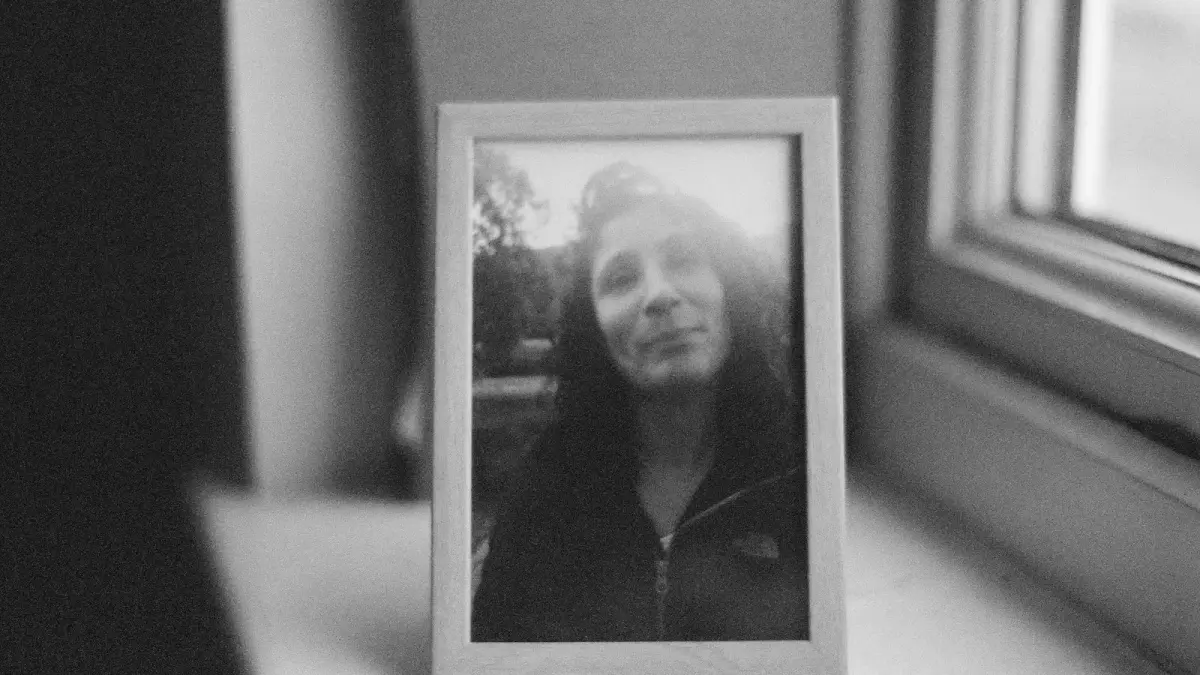
She held the photograph in her lap for a long time before she said anything. It was a small square print, the kind with the white border, and in it she was four years old, sitting on a kitchen chair with her ankles crossed and her hands folded so neatly in her lap that they almost looked posed.
But what she noticed, for the first time in fifty-five years, was the smile.
It was not a four-year-old smile. It was not the wild, gap-toothed, sticky-fingered grin of a child who has just been told to say cheese. It was a smaller smile. A careful one. The smile of someone who has already learned that her face is the first room people walk into, and that the room must be tidy.
“I was already doing it,” she said to me, her voice so quiet I almost missed it. “Look at my shoulders. They’re already small.”
I looked. She was right. Her shoulders, in that photograph, were drawn in toward her chest in the particular way a child’s shoulders draw in when she is trying not to take up too much air in a room where the air belongs to someone else.
She was 59 years old, and she had just seen, for the first time, the little girl who had been running her entire life.
The phrase her mother used for fifty years
Her mother had a word for her, and she used it for half a century. The word was “good.”
“Such a good girl.” It was said at birthday parties when she did not ask for a second slice of cake. It was said at the dinner table when she swallowed a reaction she was not allowed to have. It was said at funerals and Christmases and in line at the post office, to strangers, with a proud little nod in her direction. “She’s always been such a good girl.”
For fifty years, she believed this was a description of who she was. A personality trait, the way some children are bookish and some are funny and some are loud. She happened to be good. It was simply what she had been given.
It took until 59 for her to see the truth, which is that “good” was never a trait. It was a job title. And she had been hired for it at four.
Her mother’s mood was the weather
Here is the part people misunderstand about this kind of childhood. It is almost never dramatic. There is often no single scene you can point to and say, that is the wound. That is the thing that broke me.
Her mother did not hit her. Her mother did not scream. Her mother was not, by any definition a social worker would recognize, an unsafe parent. Her mother was simply unpredictable in the way that weather is unpredictable - sunny on Tuesday, overcast by Wednesday afternoon, a quiet electrical storm rolling in by Thursday for reasons nobody in the house could name.
And so, like any child in any house, she learned to watch the sky.
She learned the particular set of her mother’s mouth that meant the morning was going to be a good one. She learned the tone of the kettle being set down too hard. She learned that the sound of the front door closing at a certain weight meant she needed to be already in her room, already reading, already not making any sound at all. By the time she was four, she could read her mother’s nervous system the way a farmer reads the horizon.
Children who grow up under emotional weather do not become meteorologists because they are gifted. They become meteorologists because they have to eat.
The reward system nobody sees
What makes this adaptation so hard to see, even decades later, is that it was rewarded constantly and quietly. Every single time she swallowed a reaction she was entitled to have, a voice in the kitchen said, “Such a good girl.” Every single time she made herself a little smaller, a little easier, a little less, someone touched the top of her head approvingly.
The reward was love. Or something that felt close enough to love that a four-year-old could not tell the difference.
Alice Miller wrote about this exact child in The Drama of the Gifted Child, and the thing she understood, long before most of the field caught up, was that the “good” child is almost never the happy one. The “good” child is the one who has correctly identified what her caregiver needs and has decided, at a developmental stage far too early for this to be a choice, to provide it. Miller called this a gift, and she meant it with great tenderness, and also with great sorrow, because the gift is purchased with the child’s actual self.
Bessel van der Kolk, writing much later, would describe compliance of this kind not as virtue but as a nervous system state. When fight and flight are not available to a small body - because fighting a parent is unthinkable and fleeing a parent is impossible - the body often chooses a third option, which looks like cooperation but is actually a kind of freeze. The smile becomes a shield. The softness becomes a strategy. You do not realize you are not choosing, because the not-choosing is happening below the place where your thinking lives.
A 2019 study published in Development and Psychopathology found that children who grew up managing an unpredictable caregiver’s emotional state showed, as adults, measurable difficulty with self-advocacy and with naming their own needs in close relationships. The researchers were careful about their language, but what they were describing, in the end, was a group of grown women who could not ask for a glass of water in their own houses without feeling guilty.
She read the abstract when I sent it to her. She laughed a small, wet laugh and said, “Oh. That’s just me.”
Fifty years of being “such a delight”
Here is what the job cost her.
She was, by every external measure, a woman who had done things right. A long marriage. Grown children. A career in which she had been described, in every performance review for thirty-one years, as “a pleasure to work with” and “reliable” and “always positive.” At the retirement party they threw her at 58, three different people used the same phrase, which was that she had been “such a delight.”
She came home from that party and cried in the bathroom for an hour, and she did not know why.
She knows why now. The delight was real. The warmth was real. The kindness, the patience, the cheerful competence - all of it was real. But underneath the real thing there was something she had never once been allowed to put down, which was the job of making sure nobody in any room she entered ever had to worry about her.
She never once, in her entire marriage, had a fight she started. Not because there was nothing to fight about, but because fighting was not in the language her body had learned to speak. When she was hurt, her hurt came out as over-apology, as preemptive accommodation, as a small laugh that said, never mind, never mind, it was nothing.
She never once asked her boss for a raise she had earned. She never once returned a meal at a restaurant, even when it was wrong. She never once told a friend, “Actually, that hurt me.” Her body apologized before her mouth spoke. It had been doing this since she was four.
The exhaustion, at 59, was the exhaustion of someone who has been doing unpaid emergency weather work for five and a half decades, and who has finally sat down in her own kitchen and noticed that she is tired in a way sleep cannot touch.
The reframe, the one that actually helps
I want to say this gently, because it is the part that matters most.
The woman everyone has always called “such a delight” was never a personality. She was a four-year-old doing emergency weather work in a kitchen that did not feel safe, and she did the work so well that the weather held, and her mother stayed reachable, and the household did not tip over. She saved something. She should be honored for it, not ashamed of it.
But the delight is real. The warmth is real. The kindness is real. None of those things go away when you take the job off.
The smallness was never the gift. The smallness was the price tag stuck on the gift. And you are allowed, at 59, or at 42, or at 71, to peel the price tag off and discover that the gift is still in your hands, that it was never dependent on you disappearing, that it was always yours.
You are allowed to have a preference. You are allowed to not finish the plate. You are allowed to say, “Actually, I’d rather not.” You are allowed to be hurt out loud. You are allowed to occupy the amount of space a full-grown adult woman is entitled to occupy, which is the amount of space her body actually takes up, and not one inch less.
The little girl in the photograph was not choosing. She was surviving. And the woman holding the photograph, fifty-five years later, gets to be the one who tells her she can stop.
The first small “no”
The week after she showed me the photograph, she did something she had never done before. She went to a dinner with old friends, and when the waiter came around with the dessert menu, and everyone started politely insisting they couldn’t possibly, and then everyone ordered something anyway because that was the script, she set the menu down and said, “No thank you. I’m full.”
She told me about it later with a kind of stunned wonder, like a woman who had just watched a building fail to fall down.
“Nothing happened,” she said. “Nobody was upset. The table kept talking. The waiter took the menus away. It was nothing at all.”
And then she said the thing I will not forget.
“I kept waiting for the weather to change. And it just - didn’t.”
If you are reading this, and your shoulders are already small, and you have spent your life being described as a delight, and you are tired in a way sleep does not reach - I want you to know that the little girl you used to be is not asking you to become somebody else. She is asking you to let her put the job down. She has been holding it for both of you for a very long time, and the room will not collapse when she finally rests.
You are allowed. You were always allowed. Nobody remembers asking you to become the person you became at four, because nobody did. You became her to keep someone you loved reachable, and that was brave, and that was generous, and that was a great deal to carry.
You can set it down now. The delight in you is yours. It always was.