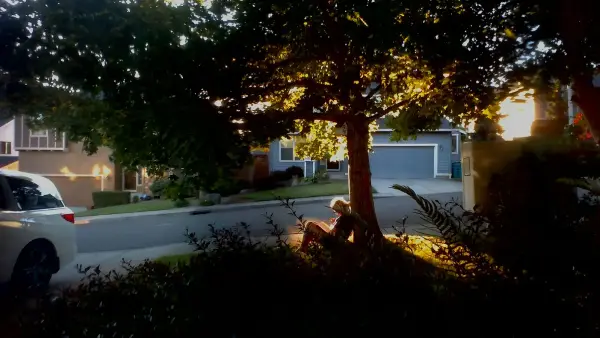
She's 59 and has finally understood why she keeps rearranging the furniture in a house where nothing is actually wrong - it is not restlessness or boredom, it is a woman who spent thirty years arranging every room around other people's comfort and is now, for the first time, trying to build a space that answers only to her, and the rearranging is not the problem, it is the search
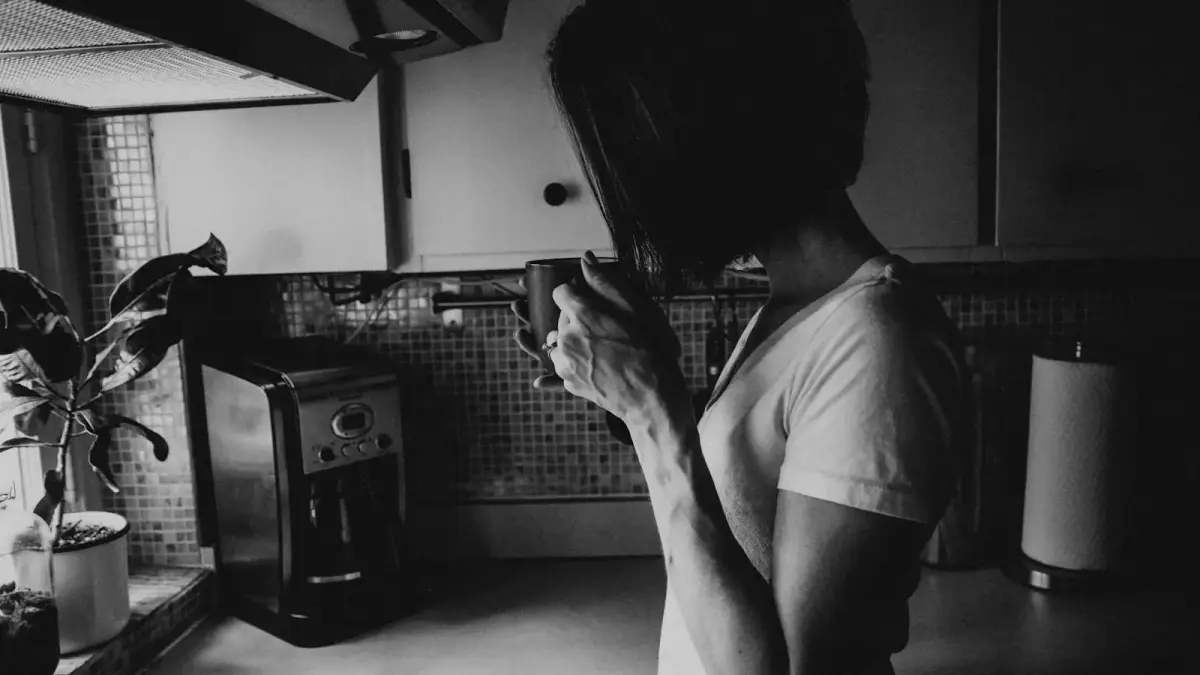
Her husband found her moving the reading chair again on a Saturday morning.
He stood in the doorway with his coffee, watching her drag it toward the window, and he didn’t say anything unkind. He just looked confused. “Didn’t you just move that last week?”
She had. She’d moved it three times that month, actually. Twice by the window, once closer to the bookshelf, and now back again, angled slightly differently this time so the light would fall across her lap instead of behind her shoulder.
“I just wanted it by the window,” she said.
He nodded and went back to the kitchen. And she stood there in the quiet living room with her hands still on the armrests, unable to explain - even to herself - why this mattered so much. Why the placement of a single chair could make her chest feel tight. Why getting it wrong felt like something larger than furniture.
She isn’t losing her mind. She isn’t bored. She isn’t going through some midlife crisis that can be solved with a vacation or a new hobby.
She is doing something she has almost no practice doing. She is arranging a room around herself.
The rooms she built for other people
If you asked her to describe her living room from 1996 to 2020, she could do it with her eyes closed. Not because she loved it, but because every piece of furniture in it had a reason that had nothing to do with her.
The couch faced the television because that’s where David watched football on Sundays. The recliner sat at an angle so his mother could see the screen when she visited, which was often, and always without much warning. The coffee table was round instead of square because the pediatrician said corners were dangerous when the kids were small, and she never changed it back.
The kitchen was arranged so three children could move through it in the morning without colliding. Backpacks went by the door. Shoes went in the bin. The breakfast bar faced the hallway so she could see who was leaving and whether they’d eaten.
The guest room was always ready. Clean sheets, folded towels, a small dish of wrapped mints she refreshed every month whether anyone was coming or not. His parents stayed often. Her own parents did not, but the room was ready for them too, just in case.
Her desk - and she did have one - sat in the corner of the bedroom, tucked against the wall so it wouldn’t take up too much space. She used it to pay bills and schedule appointments. She never thought of it as hers in any meaningful way. It was just where the administrative work happened.
None of this was forced on her. Nobody stood over her with a floor plan and said, “You don’t get a say.” It was subtler than that. It was a slow accumulation of choices that all pointed outward - toward comfort that belonged to someone else, toward function that served someone else’s routine, toward a home that worked beautifully for everyone who lived in it except the person who designed it.
She didn’t notice because it never occurred to her that there was something to notice.
When the rooms went quiet
The youngest left for college in 2019. The house that had always felt too small suddenly felt enormous.
She expected relief. Everyone told her she’d feel relieved. “You’ll finally have time for yourself,” her friends said, as if time were the thing she’d been missing and not something more fundamental.
What she felt instead was disorientation.
She would walk into the living room and it didn’t make sense anymore. The furniture was arranged for a family that no longer gathered there. The couch still faced the television, but nobody watched football in this room on Sundays anymore - David had started watching in the basement den a few years back. The recliner sat in its angle for a mother-in-law who now lived in assisted care.
The kitchen was designed for morning traffic that had stopped. The breakfast bar faced a hallway nobody rushed through.
A 2019 study published in the Journal of Family Psychology found that women who had spent the majority of their adult lives in primary caregiving roles often experienced a period of identity disorientation after their children left home - not depression exactly, but a loss of the organizational framework around which they had built their daily sense of purpose. The researchers called it “role exit without role replacement.”
She wouldn’t have used that language. She just knew the house felt wrong. Like wearing someone else’s glasses - everything was almost clear, but slightly off in a way that gave her a headache she couldn’t locate.
So she started moving things.
The furniture is not the point
It started small. She moved a side table from the hallway to the living room because she wanted somewhere to set her tea while she read. Then she swapped the throw pillows. Then she rearranged the bookshelf by color instead of by category, which felt reckless and wonderful in a way she didn’t fully understand.
Then she moved the reading chair.
And then she moved it again.
Her daughter called and asked how she was doing and she said, “I’ve been rearranging the living room,” and her daughter laughed and said, “Mom, you’ve been rearranging the living room since I was in high school.” And she wanted to say, “No, this is different,” but she didn’t know how to explain the difference.
The difference is this: when she rearranged rooms for thirty years, she was solving other people’s problems. Where should the couch go so David is comfortable? Where should the table go so the kids don’t bump into it? Where should the guest towels go so his mother can find them?
Every arrangement was an answer to someone else’s question.
Now, for the first time, she is trying to answer her own. And the question is so unfamiliar that she keeps getting it wrong - not because she’s bad at decorating, but because she’s out of practice knowing what she wants.
Psychologist Dr. Ruthellen Josselson, whose research on women’s identity development spans decades, has written extensively about how women often construct their sense of self through relationships - not because they lack independence, but because the relational fabric is where they learned to locate themselves. When that fabric shifts - children leave, marriages quiet down, parents decline - the self doesn’t disappear. But it has to find new ground to stand on.
The furniture is not the point. The furniture is the externalization of an internal rearrangement that doesn’t have a manual.
What the rearranging actually means
Here is what I want you to understand, if you are this woman or if you love her.
Each time she moves that chair, she is asking herself a question she was never taught to ask: what do I want here? Not what makes sense. Not what’s practical. Not what everyone else would choose. What do I - just me, just this person standing in this room with no one else’s needs to organize around - actually want?
That is not a small question. For a woman who spent three decades building rooms that answered to everyone else’s preferences, it is an enormous one. It is the kind of question that can make you stand in the middle of your own living room and feel like a stranger.
A 2021 study in Frontiers in Psychology examined how physical environment changes serve as a mechanism for psychological identity reconstruction, particularly in adults navigating major life transitions. The researchers found that rearranging personal spaces - moving furniture, redecorating, changing the function of rooms - was not random behavior. It correlated strongly with periods of active self-concept reorganization. The participants weren’t being restless. They were using their physical environment to externalize an internal process that was too abstract to address directly.
She is not being restless. She is being brave.
She is doing the difficult, disorienting work of figuring out who she is when she is not arranging herself around someone else. And the chair keeps moving because the answer keeps shifting, because she is still learning, because thirty years of self-erasure cannot be undone in a single Saturday morning.
She is, for the first time in a very long time, the client. The room is finally being designed for her. And she doesn’t quite know what she wants yet, and that’s okay. The searching is the point.
The chair by the window
She moved it one more time on a Tuesday afternoon. Nobody was home. Nobody was watching.
She put it by the east-facing window, angled so the morning light would land across her shoulders. She placed a small table beside it - the one she’d bought herself, not inherited from a relative, not chosen to match someone else’s taste. Just a table she liked because the wood was warm and the legs were simple.
She set her book on it. Her reading glasses. A cup of tea that was still hot.
And she sat down.
The light came in the way she’d imagined it would. The cushion held her weight in the right places. The window framed the garden she’d planted last spring - also for herself, also new, also a little uncertain.
Nobody told her to put the chair there. Nobody needed her to move it. Nobody was going to walk through the door and need the room rearranged to accommodate their evening, their preferences, their version of comfort.
The room was hers. The chair was hers. The morning was hers.
It wasn’t a revolution. It wasn’t dramatic. It was a woman sitting in a chair she’d chosen, in a spot she’d picked, in a room she was slowly - imperfectly, bravely - learning to build around the shape of her own life.
If you are this woman - if you keep moving the furniture and you can’t explain why, if you feel a little foolish about it, if someone in your life has gently suggested you might be bored or anxious or going through something - I want you to hear this.
You are not restless. You are not broken. You are not losing anything.
You are finding something. Something you set down thirty years ago because other people needed the counter space. Something that has been waiting, patiently, for you to pick it back up.
The chair is by the window now. It faces east. You put it there yourself.
That’s enough. That’s everything.