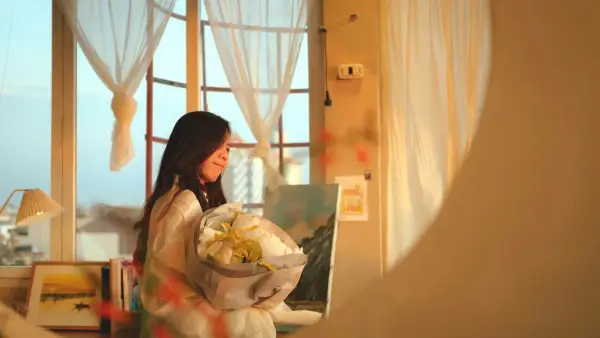
She is 60 and just realized she has read the last page of every book first her entire life - not because she lacks patience or wants to ruin the story but because a girl who grew up in a house where endings always arrived without warning learned that the only bearable surprise is one you already know the shape of, and she has spent fifty years making sure nothing she loves can end in a way she did not see coming
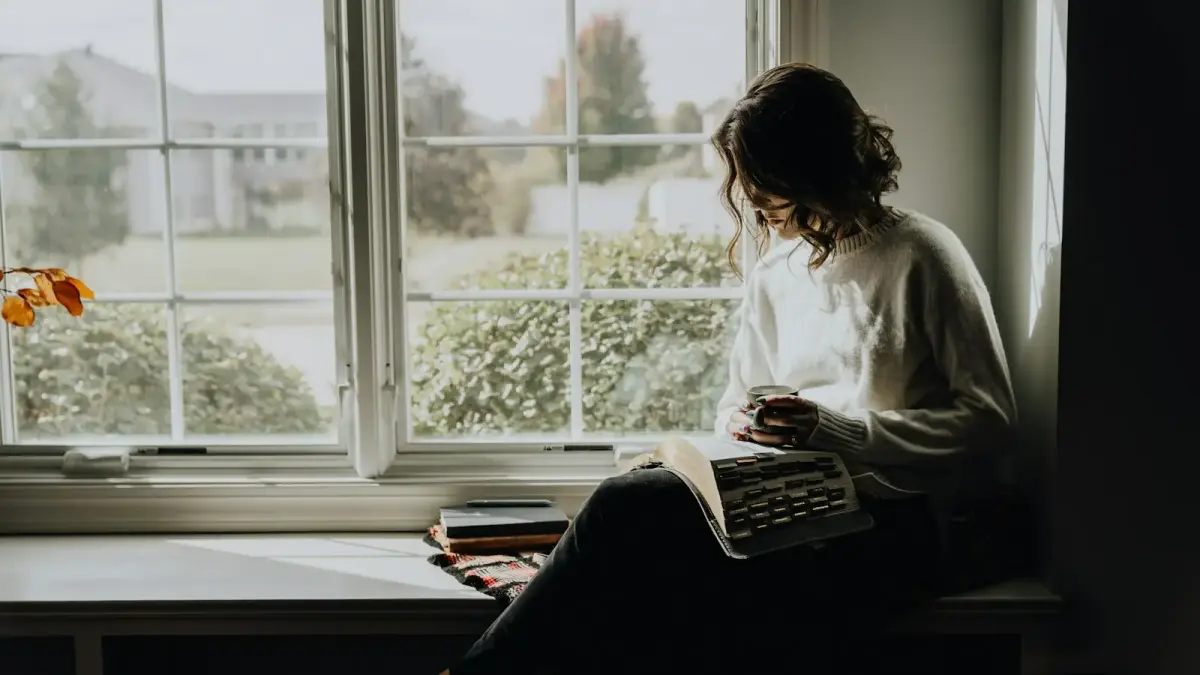
I have a confession that has embarrassed me at every book club I have ever joined. Before I read a single chapter, before I let myself fall in love with any character, I flip to the last page. I read the ending first. Every single time.
For decades I told myself it was a quirk. A personality trait. Something harmless and slightly funny that I could mention at dinner parties, the way other people admit they eat dessert first or watch movies with subtitles on. I was sixty years old, sitting in a quiet house on a Tuesday morning, holding a novel I had just picked up from the library, when I caught myself doing it again - fingers already at the back, eyes scanning the final paragraph - and for the first time I asked myself why.
The answer came fast. Faster than I wanted it to.
I don’t read endings early because I am impatient. I read them because I grew up in a house where endings arrived without announcement, and my body decided a long time ago that the only safe story is one where you already know how it turns out.
The house where nothing stayed
My father left on a Thursday. I know it was a Thursday because my mother had made pot roast, which was a Thursday meal, and I remember looking at his empty chair and thinking the pot roast did not know yet.
There was no argument I heard. No suitcase by the door. No conversation where someone sat me down and explained what was happening. One evening he was there and the next morning he was not, and the adults around me behaved as though I should be able to absorb that transition the way you absorb a change in weather.
But I was eight. And at eight, you do not have the language for what just happened. You only have a feeling - a terrible, electric feeling - that the world contains trapdoors, and you have just fallen through one.
After that, I watched everything for signs of departure. I studied my mother’s face at breakfast for clues about whether today would be normal or whether today would be another Thursday. I memorized people’s moods the way other children memorized multiplication tables. I became an expert at predicting what was going to happen next, because the cost of being surprised had been too high.
When control looks like preference
Here is the thing nobody tells you about growing up in an unpredictable home: the coping mechanisms you develop do not look like coping mechanisms. They look like preferences.
You do not say, “I need to know how things end because my nervous system cannot tolerate ambiguity.” You say, “I just like to read the last page first.” You do not say, “I research every restaurant obsessively before I go because uncontrolled environments make me feel unsafe.” You say, “I am particular about where I eat.”
A 2016 study published in the Journal of Personality and Social Psychology found that adults who experienced unpredictable environments in childhood develop what researchers call a heightened need for cognitive closure - a deep, almost physical discomfort with uncertainty that follows them into every corner of their adult lives. It does not stay in the places where it started. It spreads. It gets into your reading habits and your travel plans and the way you love people.
I did not just read the last page of books first. I Googled the endings of movies before watching them. I asked friends who had already seen a show whether everything turned out okay before I would commit to the first episode. I needed the shape of every story before I could relax enough to be inside it.
And the cruelest part is that I thought I was just a person with a preference.
Fifty years of quiet rehearsal
What I was actually doing - what I have been doing since I was eight years old - was rehearsing. Every ending I read in advance was a rehearsal for an ending I was afraid of arriving unannounced.
If I already knew that the main character survives, I could enjoy the middle of the book. If I already knew the couple stays together at the end of the film, I could laugh at their arguments without my chest tightening. If I already knew how the trip was going to go, I could sit in the passenger seat without scanning the horizon for disaster.
Gabor Mate has written extensively about how early childhood experiences wire our nervous systems for particular patterns of response - how the body keeps running programs that were installed decades ago, long after the original threat has passed. That is exactly what was happening every time I turned to the last page. My body was running an old program. The program was: if you do not know what is coming, you are not safe.
And it was not just books.
I planned vacations down to the hour. I could not leave the house without knowing exactly when I would return. I asked my husband, early in our marriage, to tell me when he was upset with me before I could feel it on my own, because the gap between sensing something was wrong and having it confirmed was the most unbearable space I knew.
He thought I was controlling. For a while, I thought so too.
The difference between controlling and terrified
There is a version of me that a stranger might look at and see someone rigid. Someone who needs everything her way. Someone who cannot go with the flow.
But going with the flow requires a body that trusts the current. And mine never learned that.
A 2019 study in Frontiers in Psychology found that individuals who experienced parental unpredictability - not necessarily abuse or neglect, but simple unpredictability, the not-knowing-what-comes-next quality of a household - showed elevated cortisol responses to ambiguous situations well into adulthood. Their stress systems activated not at danger, but at uncertainty itself. The unknown was the threat.
That is me. That has always been me.
I do not need to control things because I enjoy control. I need to control things because the alternative is a kind of free fall that my eight-year-old body memorized and my sixty-year-old body still cannot distinguish from real danger.
When I read the last page of a book, I am not ruining the story. I am making the story safe enough to enter.
The things I have missed by knowing the ending
Last year my daughter gave me a novel for my birthday. She said, “Mom, please - just this once - try reading it without skipping to the end.”
I tried. I made it to page forty before the tension became unbearable. Not the tension of the plot. The tension of not knowing. Of being inside a story whose ending I could not see. My hands actually started to shake, which sounds dramatic, but that is what happens when you ask a nervous system to do the thing it has spent fifty years refusing to do.
I flipped to the back. I read the last page. And then I could breathe again.
But here is what I have been sitting with since that morning: what have I missed? Not just in books - in life. How many experiences have I flattened by needing to know their shape before I entered them? How many relationships did I keep at arm’s length because I could not preview how they would end? How many beautiful, unscripted moments did I miss because I was too busy scanning the last page of every situation for proof that everything would be okay?
Susan Cain has written about how the traits we pathologize in ourselves are often the traits that protected us at our most vulnerable. And she is right. Reading the last page first kept me functional. It kept me calm. It let me participate in stories and relationships and plans that might otherwise have paralyzed me.
But it also meant I have never once experienced the full weight of a surprise ending. I have never felt that gasp - that beautiful, destabilizing gasp - of something you did not see coming turning out better than anything you could have planned.
What the last page cannot give you
I am not writing this because I have fixed it. I still read the last page first. I probably always will.
But I understand it now. And understanding changes the weight of a thing, even when it does not change the thing itself.
What I know at sixty that I did not know at eight is this: the girl who started reading endings first was doing the smartest thing she could do with the information she had. She was not broken. She was brilliant, actually - building a system that let her stay engaged with the world when the world had given her every reason to withdraw from it entirely.
The reading habit was never about books. It was about making sure that nothing she loved could leave without her seeing it coming.
And if you recognize yourself in any of this - if you Google restaurants before you go, if you need the itinerary before you can enjoy the trip, if you have ever asked someone to just tell you what is going to happen so you can stop bracing for it - I want you to know something.
You are not rigid. You are not controlling. You are not difficult.
You are a person whose body learned very early that the space between not knowing and finding out is a dangerous place to stand. And you have spent your whole life building bridges over that gap so you could keep moving forward.
That is not a flaw. That is one of the most creative acts of survival I have ever seen.
And maybe - just maybe - the next book can wait. Maybe you can sit with page one and breathe. Not because the ending does not matter, but because you have already survived every ending that ever came without warning.
You are still here. That is the last page. And you already know how it reads.