She's 60 and just realized she still carries a twenty-dollar bill folded inside a zipper pocket of her purse even though she hasn't paid for anything with cash in years, not because she forgot it was there but because her grandmother kept an emergency bill folded inside a handkerchief in her coat pocket and told her once that a woman who depends entirely on a card that someone else can cancel has already agreed to ask permission for her next meal
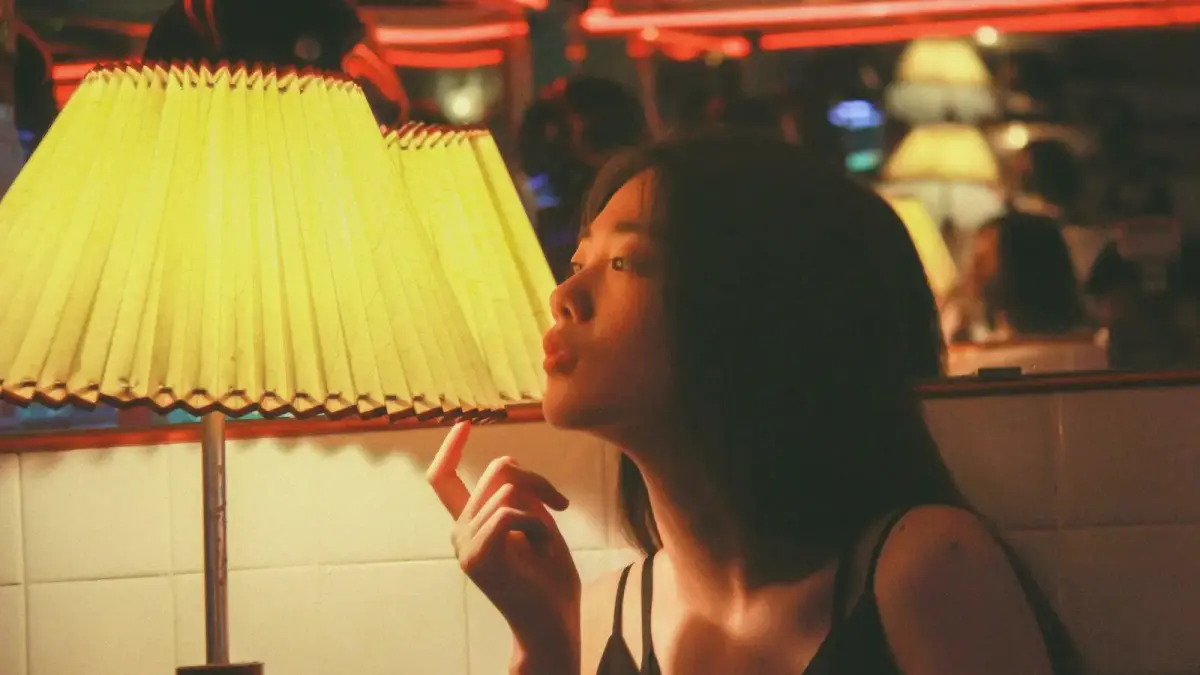
I was standing in line at a pharmacy last Tuesday when the woman in front of me - silver hair, reading glasses pushed up on her head, reusable bag already open - reached into her purse to pay and her hand paused at a small zipper compartment on the side. She didn’t open it. She just touched it. Pressed her thumb against the fabric for half a second, the way you might touch a locket or press your palm flat against a door you’re not going to open.
Then she pulled out her debit card and tapped it against the reader and that was that.
But I saw that pause. I recognized it because I do it too.
There is a twenty-dollar bill in the inner zipper pocket of every purse I’ve owned for the last thirty-five years. I have never spent it. I have transferred it from bag to bag like a ritual I stopped questioning decades ago. And until recently, I could not have told you why - only that removing it would feel like unplugging something important, like taking the batteries out of a smoke detector because the house has never caught fire.
Then my niece watched me do the transfer when I switched purses before a trip, and she asked, “What’s that for?”
And I heard myself say my grandmother’s words before I even knew I remembered them.
The handkerchief in the coat pocket
My grandmother was a woman who ironed pillowcases and reused aluminum foil and could feed six people with a chicken thigh and some rice if she had to. She was not poor by the time I knew her. But she had been. And the distance between those two facts shaped everything she touched.
She kept a twenty-dollar bill folded into a cotton handkerchief inside the inner pocket of her winter coat. Not her purse - her coat. Because a purse can be stolen, she said. A purse can be left behind. But you don’t leave without your coat.
I was maybe nine or ten when I first asked about it.
She unfolded the handkerchief slowly, the way you’d unwrap something fragile, and showed me the bill. It was crisp. It looked like it had never been used, though I suspect she replaced it periodically.
“This is my getting-home money,” she said.
I didn’t understand. We were home.
She explained it to me the way she explained most things - plainly, without softening. A woman who depends entirely on a card that someone else can cancel has already agreed to ask permission for her next meal. A woman with cash in her coat can buy gas, buy bread, make a phone call, catch a bus. She can leave. She can stay. The point is that the choice is hers.
I didn’t fully understand it then. But the weight of it landed somewhere in my body and stayed.
What twenty dollars really means
It would be easy to dismiss this as a quirk of a generation that grew up without debit cards. A leftover habit from a time before Venmo and Apple Pay and contactless everything. And maybe for some people, that’s all it is.
But for women who grew up in families where money was controlled - where someone else decided how much was enough, where the checking account had one name on it, where asking for grocery money meant explaining what you needed and why - cash was never just currency.
It was autonomy you could fold up and hide.
A 2021 study published in the Journal of Financial Planning found that women who experienced financial dependence in early relationships were significantly more likely to maintain hidden personal savings throughout their lives, even decades after achieving financial independence. The researchers called it “financial self-preservation behavior.” My grandmother would have called it common sense.
The twenty-dollar bill in the zipper pocket is not twenty dollars. It is the smallest possible unit of freedom. It is proof that you can feed yourself and get yourself home without asking anyone, without a functioning network, without a charged phone, without a working card reader. It is analog independence in a digital world.
And the women who carry it know exactly what it means, even if they’ve never said it out loud.
The gas station lesson
Every woman I know who carries emergency cash has a story about the moment the lesson landed. Mine happened at a gas station when I was twelve.
We were driving back from visiting my aunt - my grandmother, my mother, and me. The gas gauge was low and my grandmother pulled into a station off the highway. This was the early eighties. My mother handed over a credit card and the attendant tried to run it and the machine wouldn’t take it.
Something about the magnetic strip. Something about the system being down. I don’t remember the details. I remember my mother’s face - the flush of embarrassment, the way her voice got tight and polite the way it did when she felt small.
My grandmother didn’t say a word. She reached into her coat, unfolded the handkerchief, and handed the attendant a twenty.
In the car afterward, she looked at me in the rearview mirror and said, “This is why.”
That was it. No lecture. No speech about financial literacy or women’s empowerment. Just two words and a look that said, You saw what just happened. You saw who had to ask and who already had the answer in her pocket.
I started carrying my own twenty the following year.
The objects we inherit
Here is what I’ve come to understand about class and memory: working-class wisdom doesn’t get passed down in books or speeches. It gets passed down in objects.
The drawer full of plastic grocery bags. The instruction manuals for appliances you sold ten years ago. The birthday cards you can’t throw away because someone spent money on them. The good wrapping paper, smoothed flat and folded, saved for next time. The rubber bands. The twist ties. The margarine containers full of soup in the freezer.
These are not hoarding behaviors. They are preservation rituals.
They say: I know what it feels like to need something and not have it. I will not be caught without.
Research from a 2019 study in Psychological Science found that people who experienced economic scarcity in childhood maintained resource-conservation behaviors for the rest of their lives, regardless of their current financial status. The neural pathways formed during scarcity don’t dissolve when the scarcity ends. They become permanent features of how you move through the world.
My grandmother’s twenty-dollar bill was her version of this. But it was also something more specific - something gendered and something generational. Because for women of her era, economic scarcity wasn’t just about class. It was about control. About whose name was on the account. About who earned it and who spent it and who got to decide the difference.
The cash in the coat wasn’t about poverty. It was about power.
A woman who can leave is a woman who can stay
There’s a phrase that gets used a lot in financial therapy circles now. They call it “walkaway money.” It means having enough set aside that if everything falls apart - the marriage, the job, the living situation - you can get yourself out.
My grandmother never used that phrase. She would have found it dramatic. But the twenty in the handkerchief was exactly that, scaled down to its most essential form. Not a savings account. Not an investment portfolio. Just enough to eat today and get home tonight.
And here is the part that matters: she never had to use it.
She was married to my grandfather for fifty-two years. He was a decent man. She was not in danger. She was not planning an escape.
But she carried it anyway. Because the point of walkaway money - whether it’s twenty dollars or twenty thousand - is not that you plan to leave. It’s that you know you could. And that knowledge changes how you stand in a room. It changes how you answer a question. It changes whether you say yes because you mean it or because you’re afraid of what happens when you say no.
A 2023 article in the Journal of Family and Economic Issues found that women who maintained independent financial resources - even small, symbolic ones - reported higher levels of relational satisfaction and personal agency. Not because the money itself solved anything, but because the act of keeping it was an act of self-trust.
My grandmother trusted herself. The twenty was just the proof.
The transfer
Every time I buy a new purse - which is not often, because that’s another inherited habit - I do the same thing. Before I move my wallet and my keys and my phone, I unzip the inner pocket of the old bag and pull out the twenty.
It’s always slightly warm from being pressed against the lining. Sometimes it’s a little soft from years of being folded. I unfold it, look at it, fold it again, and zip it into the new bag.
I have done this maybe fifteen times in my adult life. Each time, I think of her.
I think of her hands, which were always dry and always warm. I think of the cotton handkerchief with the tiny blue flowers along the border. I think of the gas station and the way she didn’t hesitate, the way the bill appeared as if she’d been waiting for exactly this moment to teach me something without saying she was teaching me.
My niece, the one who asked about the twenty, is twenty-four. She pays for everything with her phone. She splits dinners over apps. She has never written a check.
I didn’t lecture her. I didn’t give a speech about financial independence or the importance of cash or the history of women and money.
I just handed her a twenty, folded it into her palm, and said, “Keep this somewhere. You’ll know why later.”
She looked at me the way I once looked at my grandmother - not understanding, but storing it somewhere deep enough that it would surface when she needed it.
What you’re really checking
If you’re a woman reading this and you just thought about where your emergency cash is - if your mind flickered to a zipper pocket, a coat lining, a wallet compartment, the back of a phone case - then you already know everything I’m trying to say.
You’re not checking your money. You never were.
You’re checking that a promise is still there. A promise you made to yourself, or a promise someone made to you, that you would never be stranded. That you would always have a way home. That no system failure, no frozen account, no power outage, no argument in a parking lot at eleven at night could take away your ability to feed yourself and get where you need to go.
That twenty dollars is not about twenty dollars.
It’s about a grandmother who loved you enough to teach you something she wished she’d never had to learn. It’s about a world that has gotten faster and more digital and more convenient and still hasn’t solved the oldest problem, which is that depending entirely on systems you don’t control is a kind of vulnerability that some women feel in their bones.
You’re not outdated for carrying cash. You’re not paranoid. You’re not stuck in the past.
You’re carrying a small, folded piece of someone’s love for you. And every time you touch that zipper pocket without opening it, you’re saying thank you to a woman who made sure you’d never be caught without.
That’s not a quirk. That’s an inheritance.