She's 61 and just realized she keeps the good china behind the everyday plates - the set her mother received as a wedding gift and touched exactly twice in forty years, once for her own mother's visit and once for a dinner that felt important enough - because a girl who watched a woman save her most beautiful things for an occasion that never quite arrived learned that the things you treasure most are the things you are least permitted to enjoy, and the cabinet became a museum of permission that was never given
I was rearranging the kitchen cabinets last month when my daughter asked me a question I still haven’t recovered from.
She pointed at the top shelf - the one I need a step stool to reach - and said, “Mom, what are those even for?”
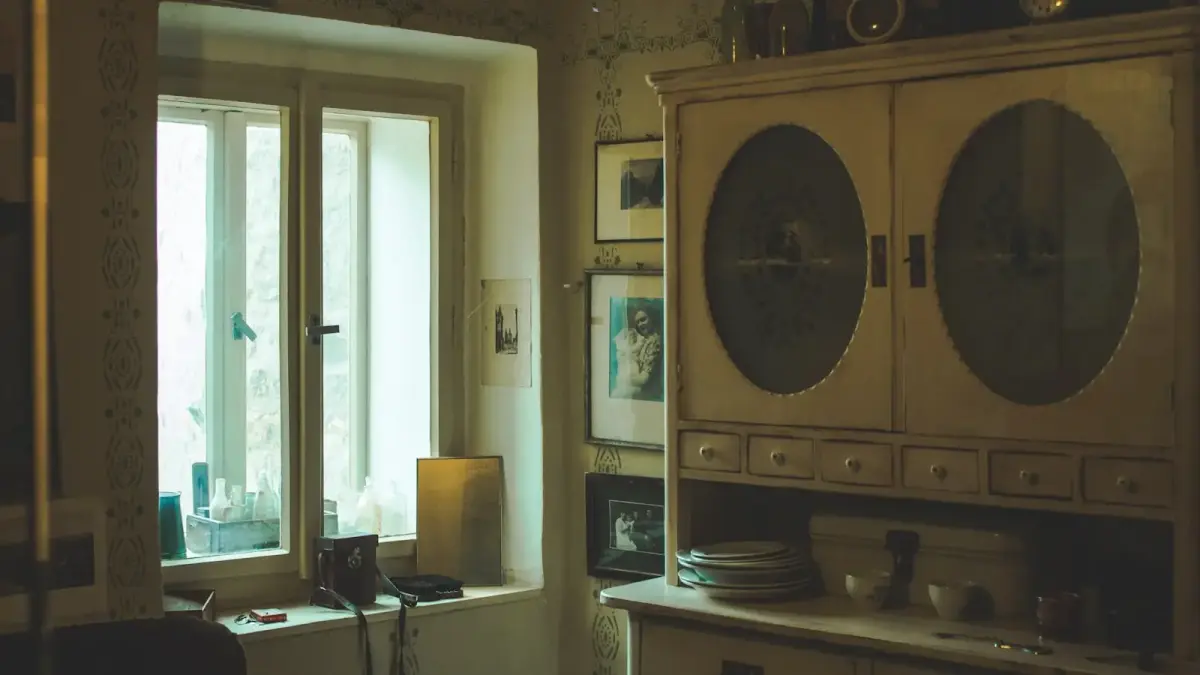
She meant the china. My mother’s wedding china. Twelve place settings of Noritake with a pale green border and tiny gold flowers that catch the light in a way that still makes my chest ache. I stood there with a stack of mismatched Corelle in my hands and realized I didn’t have a good answer. I had a reflex. I had a feeling. But I didn’t have a reason.
Those plates have been in my possession for nineteen years, since my mother died. Before that, they were in her possession for forty-two years. In that combined sixty-one years of existence in our family, they have been used exactly twice. Once when my grandmother visited from out of state. Once for a dinner party my mother threw in 1987 that she talked about for the rest of her life like it was her moon landing.
The rest of the time, they sat behind glass. Visible but untouchable. A shrine to a moment that was always coming and never quite arrived.
The shelf nobody was allowed to reach
If you grew up in a certain kind of household, you know exactly what I’m describing.
There was a room you weren’t supposed to sit in. A tablecloth that stayed folded in the linen closet. Guest towels in the bathroom that guests were quietly discouraged from actually using. Stationery so beautiful your mother wrote grocery lists on the backs of envelopes instead.
There was a hierarchy of objects in the house, and the rule was simple: the more beautiful something was, the less you were allowed to touch it.
This wasn’t about being tidy. It wasn’t about being careful. It was about something much older and much harder to name - a belief that ordinary Tuesday-night life was not important enough to deserve the beautiful things. That beauty required an occasion. That an occasion required permission. And that permission came from somewhere outside the family, from some authority that never quite showed up to say yes, tonight is the night, bring out the china.
A 2019 study published in the Journal of Consumer Psychology found that people from lower socioeconomic backgrounds were significantly more likely to preserve rather than consume valued possessions - not because they lacked access to replacements, but because the psychological cost of loss felt disproportionately high. The researchers called it “precautionary consumption.” I call it the museum inside the cabinet.
What your mother was really protecting
My mother didn’t grow up with beautiful things.
She grew up in a house where everything was functional and nothing was decorative. The dishes were whatever didn’t break. The furniture was whatever someone was getting rid of. Beauty was something you saw in other people’s houses, in magazines, in store windows you walked past on the way to somewhere practical.
When she got married and received that china - twelve perfect, gleaming, untouched place settings in a box lined with tissue paper - it wasn’t just dishes. It was evidence. Proof that her life had crossed some invisible threshold into a world where beautiful things could exist in her kitchen.
And that’s exactly why she couldn’t use them.
Because in the world she came from, beautiful things didn’t last. They broke. They got stained. They got taken. If you used the good china on a regular Wednesday, you were gambling with the only physical evidence that your life had ever contained something fine.
So the china went up on the shelf. And the message filtered down to me without a single word ever being spoken: the things you love most are the things you must protect from your own daily life.
Psychologist Brene Brown has written about how scarcity thinking shapes our relationship with joy - how people who grew up without enough often develop a reflexive need to “dress rehearse tragedy,” bracing for loss even in moments of abundance. The good china is scarcity thinking made porcelain. It’s joy deferred so completely that it becomes joy refused.
The room nobody sat in
Every family I knew growing up had some version of the forbidden room.
In our house, it was the living room. The formal one, with the couch still covered in the plastic it arrived in. The carpet was vacuumed in neat lines, and if you stepped on it, you could see your footprints, and my mother could see your footprints, and you would hear about your footprints.
We lived in the den. We ate in the kitchen. The living room was for company that, looking back, almost never came. And when company did come, everyone still ended up in the kitchen anyway, perched on mismatched chairs, because the living room was too pristine to relax in.
That room wasn’t a room. It was a statement. It said: we have a room we don’t even need to use. We have excess. We are the kind of family that has a room just for looking at.
But underneath that statement was a question the room could never answer: are we enough yet?
A 2021 study in Frontiers in Psychology explored how material possessions function as identity anchors in families experiencing economic uncertainty. Researchers found that certain objects become what they called “symbolic capital” - items whose value lies not in their use but in their role as proof of social belonging. The good china, the untouched living room, the dress still hanging with the tags on. They’re not being saved for later. They’re standing guard against the fear that you don’t really belong in the life you’ve built.
What gets inherited along with the silverware
Here’s the part that took me sixty-one years to understand.
When my mother died and I packed up her house, I didn’t just inherit the china. I inherited the rules. I brought those plates home and put them on the highest shelf without even thinking about it. I arranged the everyday dishes in front of them, exactly the way she had.
I never made a conscious decision to do this. It was gravity. It was muscle memory passed through decades of watching.
My daughter uses her nice things. She drinks coffee from a handmade ceramic mug she bought at a craft fair - every single morning, not just special occasions. She lights candles on Tuesdays. She wears her good jewelry to the grocery store. And something in me flinches every time, some inherited alarm that says she’s wasting it, she’s going to ruin it, she doesn’t understand that beautiful things need to be protected.
But protected from what?
From being enjoyed. From being part of an ordinary life. From the wear and tear of actually being loved and used instead of admired from a distance.
What I was really protecting was a belief system - the belief that my regular, daily, nothing-special life wasn’t a good enough reason to bring out the beautiful things. That I needed to earn the china. That some future version of my life would finally be worthy of gold-rimmed plates, and until then, Corelle would do.
The permission nobody ever gives you
The cruelest part of the good-china inheritance is that the occasion never arrives.
Think about it. Think about all the things your mother saved. The tablecloth for Thanksgiving that got replaced by a plastic one because what if someone spilled. The guest soaps shaped like seashells that dried out in a basket. The dress she bought for “something nice” that hung in the closet until it went out of style. The stationery she never wrote on, the perfume she never wore, the earrings she never put in.
She was waiting for permission. From whom? From the world that told her she was ordinary. From the economy that told her beautiful things were above her station. From the voice in her head - maybe her own mother’s voice - that said you don’t use the good stuff, you save it, because what if there’s nothing good after this.
And the saving became the point. The anticipation replaced the experience. The china behind the glass was more valuable than the china on the table, because on the table it was just dishes, but behind the glass it was possibility. It was the future. It was proof that something wonderful was still ahead.
To use it would be to admit that this - this regular life, this ordinary dinner, this unremarkable evening - was the occasion. And admitting that felt like giving up on the idea that something grander was coming.
What happens when you take the plates down
I took the china down on a Thursday in March.
No occasion. No company. No reason except that my daughter’s question had been rattling around in my head for weeks, and I was tired of not having an answer.
I washed every plate by hand. I set the table for two - just me and my husband, eating leftover soup. The gold flowers caught the overhead light. The pale green borders looked like spring.
My hands shook a little. Not because I was afraid of breaking them. Because I was afraid of what it meant to use them - that this was it. This was the life. Thursday night soup was the occasion I’d been waiting for, and it had been here all along, and my mother never got to know that.
I cried a little, which is embarrassing to admit, but if you’ve ever held something your mother treasured and done the thing she couldn’t bring herself to do, you know exactly why.
I wasn’t just eating off pretty plates. I was breaking a chain. I was saying that this life - this ordinary, nothing-special, Tuesday-and-Thursday life - is beautiful enough. That I don’t need permission to enjoy the things I love. That the museum is closed and the table is set.
The cabinet is not a cabinet
If you recognized your own kitchen in this essay, your own mother’s house, your own high shelf with the things you never touch - I want you to know something.
You are not being practical. You are not being careful. You are carrying a wound that was never yours, a belief about worth that was handed to you by people who were handed it by people who never had enough and learned to hoard beauty the way you hoard bread before a storm.
The china is not china. The guest towels are not towels. The room nobody sits in is not a room. They are all the same question, asked in different materials: am I allowed to have this?
You are. You always were.
Take the plates down. Use the stationery. Sit in the room. Wear the dress. Light the candle on a Monday for no reason except that you are here, and here is enough, and nobody is coming to tell you that. You have to tell yourself.
Your mother couldn’t. But you can. And that’s not a betrayal of her memory. That’s the completion of something she started when she first held those plates in her hands and imagined a life beautiful enough to deserve them.
The life was always beautiful enough. She just never had anyone to say so.