She's 61 and just realized that the way she wraps every leftover in aluminum foil - pressing the edges tight, smoothing the creases flat, folding the top over twice because her mother said cling wrap was a waste of money and a careful woman could make one sheet of foil stretch across three meals - was never about keeping food fresh but about preserving the only definition of love she ever saw practiced in a kitchen where nothing was too small to save and no amount was ever enough to waste
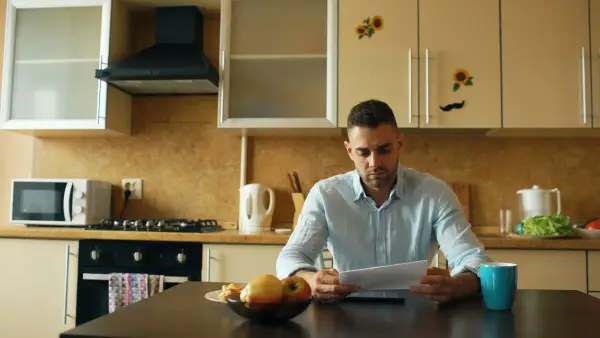
I caught myself doing it last Tuesday. Standing at the counter after dinner, half a chicken breast and a few spoonfuls of rice sitting on the plate, and my hands were already moving. Tear the foil. Lay it flat. Set the plate in the center. Press the edges down. Smooth the creases with the side of my thumb. Fold the top over twice - never once, always twice - and tuck it under.
I have done this ten thousand times. Maybe more.
My daughter was watching from the doorway, holding her phone, and she said something that stopped me mid-fold. “Mom, why don’t you just use a container? You have like forty Tupperware lids in that drawer.”
She wasn’t being unkind. She was genuinely confused. And standing there with my hands pressed flat against a sheet of Reynolds Wrap, I realized I didn’t have an answer that made any practical sense. Because the answer was never practical. The answer was my mother. The answer was 1974, and a kitchen with yellow linoleum, and a woman who believed that cling wrap was for people who didn’t know the value of a dollar.
The Kitchen Where Nothing Was Wasted
My mother wrapped everything in foil. Half an onion. Two tablespoons of gravy. A single bread roll that nobody finished at dinner. She would tear a piece just large enough - never too much, because foil cost money too - and wrap it with a precision that could have passed for surgery.
She smoothed every crease. She pressed every edge. And if you tore the foil getting it off, she would flatten it, fold it into a square, and set it aside to be used again.
I used to think she was being difficult. I used to roll my eyes when she’d rewash a square of foil and drape it over the dish rack like a tiny silver flag of surrender. But she wasn’t surrendering to anything. She was holding the line.
In our house, waste was the enemy. Not in the environmental sense that my grandchildren talk about now. In the survival sense. In the sense that my father drove a bread truck and my mother cleaned other people’s houses three days a week, and there was never a moment when money felt like something we had rather than something we were always almost out of.
Food that went bad in the refrigerator was not just food. It was hours of my father’s route. It was a morning my mother spent on her knees scrubbing someone else’s bathroom floor. Every leftover that spoiled was evidence that we had been careless with something that cost someone their body to earn.
So nothing spoiled. Because my mother would not allow it.
When Frugality Becomes a Love Language
There is a term in psychology called “intergenerational transmission of behavior” - the way habits, values, and emotional patterns pass from parent to child without anyone sitting down to teach them. A 2019 study published in the Journal of Family Psychology found that financial behaviors are among the most reliably transmitted patterns across generations, often persisting even when the original economic conditions no longer apply.
I think about that study sometimes when I am standing in my perfectly nice kitchen, in my perfectly comfortable house, wrapping three bites of casserole in foil like the fate of the household depends on it.
I am not poor. I have not been poor for decades. My husband and I both have retirement accounts. My refrigerator has a water dispenser on the door, which is the kind of detail that would have made my mother laugh and then go very quiet.
But my hands still wrap the foil the way she taught me. And it took me sixty-one years to understand that what she was teaching me was not food storage.
She was teaching me love. Her specific version of it. The version that said: I cannot give you ballet lessons or summer camp or a bedroom that is yours alone. But I can make sure that nothing in this kitchen goes to waste, and in this one small domain, I can keep you fed and keep you safe and prove that someone is paying attention to the details of your life.
Frugality, in homes like ours, was not a budget strategy. It was devotion performed in miniature, repeated daily, never named.
The Rituals We Carry Without Knowing Why
I asked a few friends my age about this. Women I have known for thirty, forty years. Women who grew up in similar households - fathers who worked trades, mothers who stretched everything.
One of them still cuts the mold off cheese and eats what is underneath. She knows she could throw it away. She can afford new cheese. But her hand reaches for the knife every single time, because her mother’s voice is in her ear saying that a little mold never hurt anyone and do you think cheese grows on trees.
Another friend cannot throw away a bread bag. She has a drawer full of them, folded into tight squares, waiting for a purpose that never comes but might. The bread bags are preparedness. They are proof that she was raised by someone who believed you should always be ready for the next small emergency.
These are not quirks. These are inherited ceremonies.
Psychologist Gabor Mate writes about how the body holds what the mind forgets - how patterns of stress, care, and survival embed themselves in our nervous systems long before we have words for them. I think the same is true for our hands. My hands remember what my conscious mind has moved past. My hands are still in that yellow kitchen, watching my mother smooth the foil flat, learning that this is what it looks like when someone loves you and is terrified of losing the small margin that keeps everything from falling apart.
The Class Line No One Talks About
Here is what I have noticed, and I say this carefully because I am not interested in making anyone feel judged.
There is a dividing line in how people relate to leftovers, and it runs along class. People who grew up comfortable tend to treat leftovers as optional. If they eat them, fine. If they forget and the container goes fuzzy in the back of the fridge, that is a mild inconvenience, not a moral failing.
People who grew up the way I did treat leftovers as sacred. Letting food go bad does not feel like forgetfulness. It feels like betrayal. It feels like spitting on the hours your parents spent earning the money that bought the meal that you are now letting rot because you couldn’t be bothered to eat it on Tuesday.
A 2021 study in Frontiers in Psychology examined how socioeconomic background shapes food waste behavior and found that adults who grew up in lower-income households consistently reported stronger emotional responses to food waste - including guilt, anxiety, and a sense of moral transgression - regardless of their current financial status. The researchers described it as an “emotional imprint” that persisted across decades and income levels.
An emotional imprint. That is exactly what it is. It is not a choice I make each evening when I reach for the foil. It is a feeling that rises from somewhere below decision-making, somewhere in the part of me that was built in that kitchen, watching those hands, learning what careful meant.
What We Were Really Preserving
My mother died eleven years ago. She was seventy-eight and she had dementia at the end, and there were long stretches when she did not know my name or where she was or what year it had become.
But she could still wrap a plate.
I am not exaggerating. In the memory care facility, if you set a plate of food in front of her and then handed her a sheet of aluminum foil, she would wrap it. Edges pressed. Creases smoothed. Top folded over twice. Her hands remembered what her mind had released.
The nurses thought it was charming. A little habit. A cute thing the old woman did. But I would stand there and watch her hands move with that familiar precision and I would have to leave the room because I understood what I was seeing.
I was seeing love. The last version of it her body knew how to speak. Every other word had been taken from her, every name, every date, every thread of narrative that connected her to her own life. But this one gesture remained. This one small act of preservation that her hands had practiced so many thousands of times it had become part of her body’s grammar.
She was not wrapping food. She was wrapping everything she had ever felt about keeping her family whole.
The Inheritance We Never Discuss
I still wrap my leftovers in foil. I will probably do it for the rest of my life.
But something shifted after that evening with my daughter. I told her the story. Not the short version - the real one. About the yellow kitchen and the bread truck and the bathroom floors and the foil smoothed flat and used again. About her grandmother’s hands in the memory care facility, still pressing edges tight when everything else was gone.
My daughter cried. And then she said something I was not expecting.
She said, “I do it too. I just didn’t know why.”
She is thirty-four and she makes good money and she has a kitchen full of glass containers with snap-lock lids, and still, when she wraps something for the fridge, she reaches for the foil. She presses the edges. She smooths the creases. She did not learn it from a place of scarcity. She learned it from watching me, the same way I learned it from watching my mother.
The ritual has outlived the reason. The love language has been passed down through three generations of women’s hands, and none of us ever sat down and said this is what we are doing or why.
That is the thing about growing up in a household where money was tight. The lessons do not announce themselves. They just move into your body and stay. They become the way you fold a towel, the way you turn off every light when you leave a room, the way you wrap a plate of leftover chicken at nine o’clock on a Tuesday and feel, without being able to explain it, that you are doing something holy.
My mother could not give me everything. But she gave me foil pressed flat and creases smoothed and edges folded twice, and it turns out that was more than enough. It turns out that was everything.