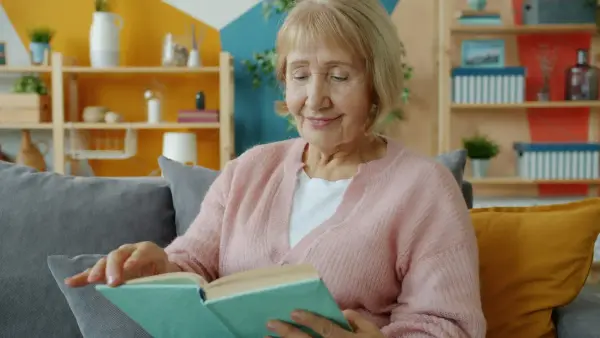
She is 62 and just realized she always wets the toothbrush before adding the paste and then wets it again after - not because the bristles need moisture twice or because the paste requires preparation but because a girl who stood on a step stool watching her mother's morning routine at the bathroom sink learned that care is a sequence you follow exactly, and the woman who still performs this tiny double baptism every morning and every night is not being excessive but repeating the only order her hands were ever taught
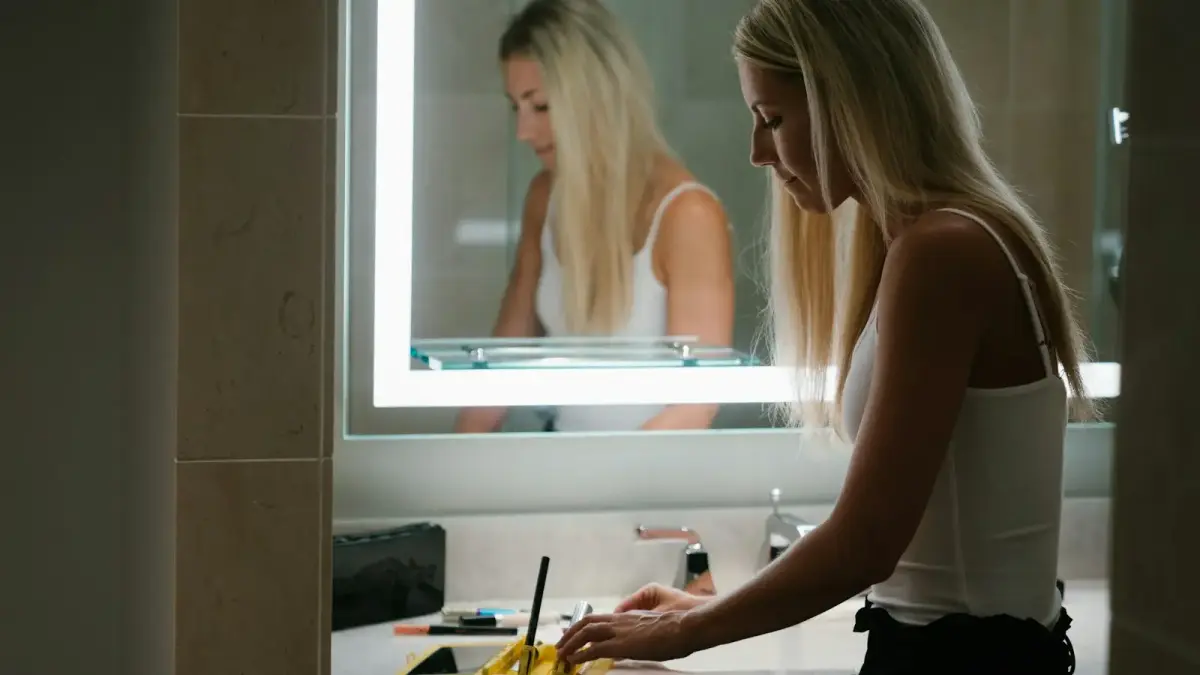
I caught myself doing it last Tuesday. Standing at the bathroom sink at six in the morning, eyes barely open, doing the thing I have done roughly 45,000 times in my life without a single second of conscious thought.
I ran the toothbrush under the water. I squeezed the paste onto the bristles. Then I ran the toothbrush under the water again.
And I stopped. I just stood there, holding the brush under the faucet, watching the paste foam slightly at the edges, and I thought - why do I do that? The bristles were already wet. The paste was already on. What exactly was the second pass accomplishing?
Nothing. It accomplishes absolutely nothing. There is no dental hygiene reason for it. No dentist has ever prescribed a double rinse. No toothpaste tube has ever instructed you to baptize the bristles twice before brushing. It is, by any rational measure, a completely unnecessary step in an otherwise simple process.
And yet my hands would not know how to skip it. My hands have never skipped it. Because my hands learned this sequence from someone else’s hands a very long time ago, and they have been faithful to the choreography ever since.
The step stool and the sink
I was maybe four or five. Our bathroom had pale green tile and a mirror with a chip in the upper corner that my father kept saying he would replace. My mother kept a wooden step stool beside the toilet so I could reach the sink, and every morning and every night, I would climb up beside her while she got ready.
She did everything in order. Always in order.
Face wash, rinse, pat dry with the hand towel - never the bath towel. Then the toothbrush. Water on. Brush under the stream. Paste. Brush under the stream again. Then she would brush, and I would brush beside her, our elbows bumping sometimes, and she would catch my eye in the mirror and smile with a mouth full of foam.
I did not know I was memorizing anything. I thought I was just standing there. But my body was taking notes that my mind would never file consciously, and those notes became the only instruction manual my hands would ever follow.
A 2019 study published in Psychological Science found that children as young as three encode “overimitation” - they replicate not just the functional steps of an observed task but the seemingly unnecessary ones too, and they do so with remarkable precision. Researchers called it a feature, not a flaw. It is how culture gets transmitted. It is how rituals survive.
I was not learning to brush my teeth. I was learning how my mother brushed her teeth. And there is a world of difference between those two things.
The choreography we never chose
You do this too. I know you do, because everyone does, and almost nobody notices.
Maybe you fold towels in thirds instead of halves - not because it is more efficient but because that is how the towels were always folded in the linen closet you grew up with. Maybe you stir your coffee exactly three times, counterclockwise. Maybe you lock the front door, check it, and then check it one more time, not because you are anxious but because your father checked twice every single night and you absorbed the rhythm of his caution before you could spell the word.
These are not habits in the way self-help books talk about habits. You did not build them through twenty-one days of repetition and a habit tracker. They were installed in you by proximity. By love. By the simple fact that when you are small, the person taking care of you is the entire world, and the way they move through that world becomes the way the world is supposed to work.
Dr. Gabor Mate has written extensively about how early childhood experiences shape not just our emotional lives but our physical patterns - the way we hold tension, the way we move, the way we perform tasks that seem purely mechanical. The body remembers what the conscious mind discards.
My mother has been gone for eleven years. I cannot always summon her voice on command. Some days I struggle to remember exactly how she laughed, whether it started in her chest or her throat, whether she covered her mouth or threw her head back.
But every morning and every night, my hands remember her perfectly.
Why the unnecessary step matters most
Here is what strikes me about the double wetting of the toothbrush. It is not the useful parts of the routine that carry the deepest meaning. It is the unnecessary parts.
The paste needs to go on the brush. That is functional. You need to brush for two minutes. That is dental advice. But the little water ritual before and after the paste - that serves no hygienic purpose at all. It is pure ceremony. It is the part that exists only because someone you loved did it that way, and you, standing on a step stool barely tall enough to see over the counter, decided without deciding that this was the right way to begin.
A 2021 study in the Journal of Research in Personality examined what researchers called “comfort rituals” - small, repetitive behaviors that people perform not for any practical outcome but for a felt sense of order and continuity. The study found that these rituals were most commonly inherited from primary caregivers, and that disrupting them produced a disproportionate sense of unease. Not anxiety, exactly. More like homesickness.
That is the word. Homesickness. When I think about trying to just put the paste on and brush without the double rinse, I feel something close to homesick. As though skipping it would be leaving somewhere I have been living inside of for almost sixty years.
Inherited choreography and the body’s loyalty
I have been paying attention since that Tuesday morning. Watching my own hands. And the list keeps growing.
I squeeze the sponge three times before I start washing dishes. I always start with the glasses, then the plates, then the silverware. I fold the dishcloth in half and drape it over the faucet when I am done - exactly the way it hung in my mother’s kitchen, which was the way it hung in her mother’s kitchen, which was probably the way it hung in a kitchen I will never see, in a country my great-grandmother left before she was twenty.
These sequences are not just muscle memory. They are lineage. They are proof that someone stood beside someone else long enough for the small things to transfer, and that the small things were carried forward not because they were important but because the love that surrounded them was important, and the body does not know how to keep one without the other.
My daughter is thirty-four. Last Thanksgiving, I watched her load the dishwasher and I almost cried. She puts the mugs on the top rack facing down and slightly to the left, exactly the way I do, exactly the way my mother did. She has no idea. She thinks she is just loading a dishwasher. She is performing an inheritance she never signed for and cannot return.
The rituals are not about the rituals
I think about how much of who we are lives in these tiny procedural scripts. Not in our opinions or our values or the things we post about online. In the way we squeeze a tube of toothpaste. In whether we put our left shoe on first or our right. In the particular motion of tucking a sheet under a mattress corner.
Research on procedural memory - the kind of memory that governs how we perform learned physical tasks - shows that it is among the most durable forms of memory we possess. A 2017 study in Frontiers in Psychology found that procedural memories can persist even in patients with significant cognitive decline. People who could not remember their children’s names could still fold a napkin the way they had always folded napkins.
The body keeps what matters. Not what the mind decides matters - what the body decides matters. And what the body decides matters is the sequence. The order. The particular way things were done by the person who first showed you how things were done.
Your mother’s hands are still moving through your hands. Your father’s posture is still sitting inside your posture. The way you hold a pen, crack an egg, button a coat from the bottom up or the top down - every single one of these is a love letter that was written on your nervous system before you could read.
She is still here, in the second pass of water
My mother did not leave me a diary. She was not the type for long letters or recorded messages. She left no instructions for how to grieve her or how to live without her. But she left me something far more permanent than language.
She left me a sequence.
Wet. Paste. Wet.
Every morning I perform it. Every night I perform it. I do not think about her while I am doing it - that is the remarkable part. It lives below thought. It lives in the place where my hands simply know what comes next because they learned it from hands that knew what comes next because they learned it from other hands, going back further than any of us can trace.
I am sixty-two years old and I just discovered that my mother visits me twice a day, at the bathroom sink, in a ritual so small and so ordinary that I never once thought to question it.
I am not going to start questioning it now.
Some things do not need to be efficient. Some things do not need to make sense. Some things just need to be repeated, carefully, in the right order, the way you were shown - because the repetition is not about the task.
It is about the hands that taught you.
It is about making sure they are never fully gone.