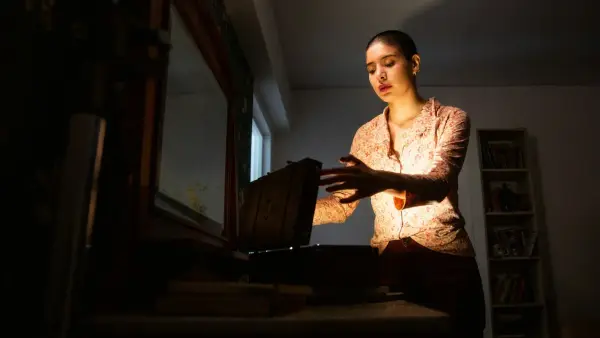
She is 63 and has finally noticed that every time one of her grandchildren falls and cries, her body is already moving before she has decided to move - not walking but lunging, not responding but intercepting - and she has begun to understand that the speed with which she crosses a room to reach a crying child has nothing to do with how much she loves them and everything to do with a girl who fell once in a kitchen and lay on the floor for what felt like a very long time before anyone came, and the woman on her knees at sixty-three is not protecting a grandchild but answering a call that went unanswered fifty-six years ago
The Lunge
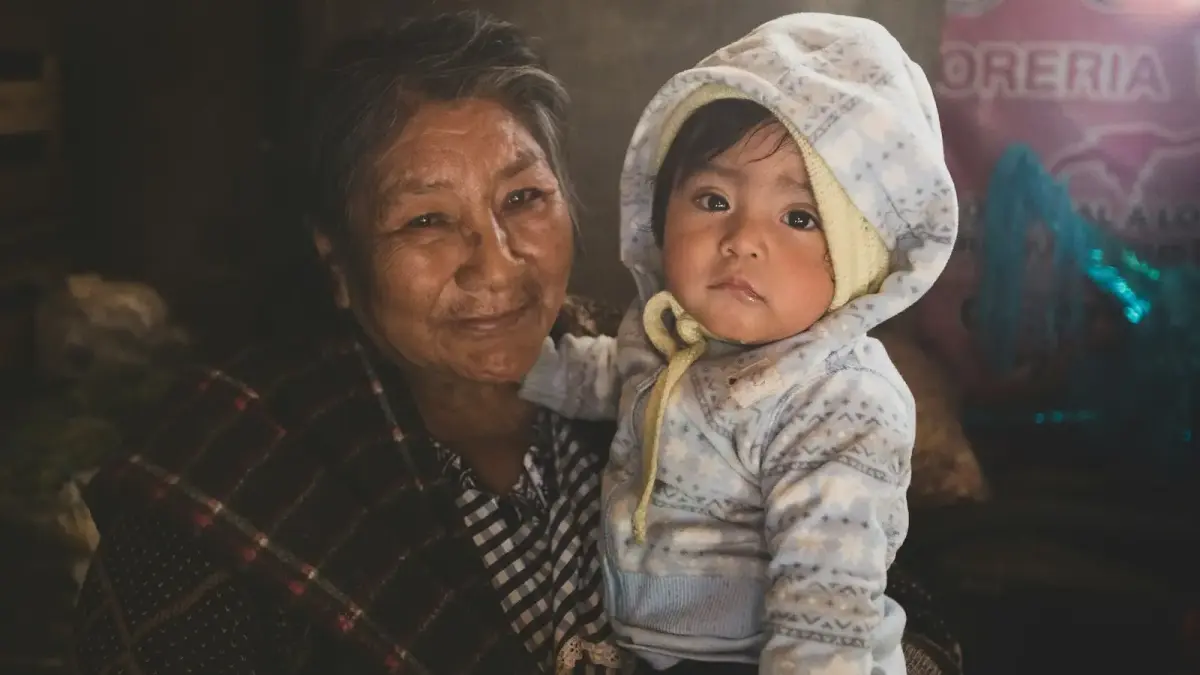
I watched a woman I know - sixty-three, retired teacher, grandmother of four - launch herself across a living room last Thanksgiving.
Her youngest grandchild, barely two, had tripped over a wooden block and gone down hard on the carpet. The cry hadn’t even fully left the child’s mouth before this woman was already there. Not walking. Not hurrying. Moving the way you move when you hear glass break near a baby. The way your body moves when it has decided something your mind hasn’t caught up to yet.
Her daughter laughed gently from the kitchen doorway. “Mom, she’s fine. It’s carpet.”
And she was fine. The toddler was already reaching for another block before her grandmother’s knees hit the floor. But the grandmother stayed there for a moment, hands hovering, breath short, eyes scanning the child’s face with an intensity that didn’t match a tumble on a soft rug.
I recognized that intensity. I’ve felt it in my own body.
And I’ve spent the last year trying to understand where it comes from.
The Body That Remembers Before You Do
There’s a concept in trauma research called procedural memory - the kind of memory stored not in thoughts or images but in the muscles, the reflexes, the automatic responses your body performs without consulting you first.
You know this memory. It’s the flinch when someone raises their voice, even playfully. The way your shoulders climb toward your ears in certain rooms. The breath you hold when a door slams.
A 2019 study published in Psychological Science found that emotionally significant experiences are encoded not just in the hippocampus - where narrative memory lives - but in the amygdala and the motor cortex. Your body literally learns what happened to you, and it rehearses its response for decades, waiting for a cue.
The grandmother lunging across the room isn’t making a decision. Her body is running a program that was written a very long time ago.
And the program says: get there fast. Get there faster than anyone got to you.
A Kitchen Floor in 1970
She told me the story later, not because I asked but because something in her had loosened. Maybe it was the way I didn’t laugh when she stayed on her knees too long.
She was seven. She’d been reaching for something on the counter - a glass, maybe, or a jar her mother had left near the edge. It fell. She fell with it. There was broken glass and a cut on her palm and the particular terror of a child who has done something wrong and is also bleeding.
She lay on the kitchen floor and cried.
Her mother was in the backyard, hanging laundry. Her father was at work. Her older brother was somewhere else in the house, probably, but he didn’t come.
She doesn’t know how long she was on that floor. It felt, she said, like a very long time. Long enough that the crying changed - from the sharp, startled cry of pain to the slower, deeper cry of someone who is beginning to understand that no one is coming.
That second cry is the one her body remembers.
Not the glass. Not the cut. The waiting.
What Attachment Theory Actually Means at Sixty-Three
John Bowlby, the British psychiatrist who first mapped the architecture of attachment, described something he called the “internal working model” - a blueprint your nervous system builds in the first few years of life based on how reliably your caregivers responded to your distress.
If someone came quickly, you learned that the world answers when you call. If someone came slowly, or unpredictably, or not at all, you learned something else. You learned that distress is something you manage alone. That crying is a risk. That the space between falling and being held can stretch into something enormous.
Here’s what’s less commonly discussed: that blueprint doesn’t expire.
A 2021 study in Frontiers in Psychology followed adults over the age of sixty and found that attachment patterns established in early childhood remained remarkably stable across the lifespan. Not just emotionally stable - physiologically stable. The participants with insecure attachment histories still showed elevated cortisol responses to separation cues. Still showed faster startle reflexes. Still showed what the researchers called “hypervigilant caregiving behaviors.”
Read that last phrase again. Hypervigilant caregiving behaviors.
That’s the lunge across the living room. That’s the grandmother on her knees on the carpet. That’s the woman whose body has spent fifty-six years rehearsing a single act: get there before the crying changes.
The Difference Between Love and Repair
Her daughter once told her, kindly but directly, that she needed to relax. That the kids were fine. That not every stumble required intervention.
And her daughter was right, technically. The children are fine. They are loved and held and answered. They fall on soft carpets in warm rooms full of people, and someone is always nearby.
But the grandmother isn’t responding to the grandchild’s fall. She is responding to her own.
This is the part that most people miss, and it’s the part I want you to sit with.
The speed with which she crosses a room to reach a crying child has almost nothing to do with the child. The child is the cue. The child’s cry activates the program. But the program was written for a seven-year-old girl on a kitchen floor in 1970 who needed someone to come and no one did.
The woman on her knees at sixty-three is not being overprotective. She is completing a circuit that was left open more than half a century ago.
She is answering a call that went unanswered.
And she is doing it with a body that never forgot the question.
The Tenderness That Looks Like Too Much
Gabor Mate has written extensively about how unresolved childhood pain doesn’t disappear - it finds expression. Sometimes it finds expression in illness, in addiction, in chronic tension. But sometimes - and this is the part that doesn’t get enough attention - it finds expression in extraordinary tenderness.
The mother who can’t let her children cry for even ten seconds isn’t weak. She may be a woman whose own cries went unanswered.
The grandfather who insists on walking his grandchild to the bus stop every single morning isn’t controlling. He may be a boy who walked alone.
The aunt who always brings too much food, who always stays too late, who always checks one more time that everyone is warm enough - she isn’t anxious. She is filling a house the way hers was never filled.
A 2017 study in the Journal of Personality and Social Psychology found that adults who scored high on “compulsive caregiving” - the drive to provide comfort even when it wasn’t requested - were significantly more likely to report early experiences of emotional neglect. The researchers described this pattern not as pathology but as what they called “reparative caregiving.”
Reparative caregiving.
The care isn’t excess. It’s repair.
What the Grandchildren Receive
Here’s what I find most remarkable about this pattern: it works.
Not the healing - that’s more complicated. But the transmission.
The grandchild who is scooped up before the cry has fully formed doesn’t learn that falling is dangerous. She learns that falling is answered. She learns that distress brings closeness, not distance. She learns that the space between pain and comfort is small, maybe just the width of a grandmother’s arms.
She will carry that blueprint.
Bowlby called this intergenerational transmission of attachment, and while the research often focuses on how insecure patterns pass from parent to child, there’s a quieter finding embedded in the data: the chain can be broken. Not by insight alone, but by action. By the physical, embodied act of being the person who comes.
The grandmother on the floor is not just answering her own unanswered call. She is rewriting a story for a child who will never know the original version.
She is making sure that this child - this particular small person with blocks scattered around her - will never learn the second cry. The slow one. The one that means no one is coming.
The Floor You’re Still On
If you recognized yourself in this story, I want to say something to you directly.
You are not hovering. You are not too much. You are not making the children soft or failing to let them develop resilience.
You are a person whose body learned something a very long time ago, and you have turned that learning into the most precise and tender kind of love.
The speed with which you move toward a crying child is not a flaw in your personality. It is the scar tissue of an old wound doing something miraculous - it is protecting someone else from the wound you received.
You may never fully heal the girl on the kitchen floor. She may always be there, somewhere in your nervous system, waiting. But every time you cross a room to reach a child who has fallen, you are telling her something she needed to hear in 1970.
I’m here. I came. You don’t have to wait anymore.
And maybe the healing isn’t in someone finally coming to that kitchen floor.
Maybe the healing is in becoming the person who always comes.