She's 63 and just realized she still keeps a small sewing kit in her purse - a needle, a spool of white thread, two buttons, and a safety pin - not because she's old-fashioned but because a girl who watched her mother repair a fallen hem and reattach a loose button at a moment's notice learned that readiness to mend is a form of love that never announces itself
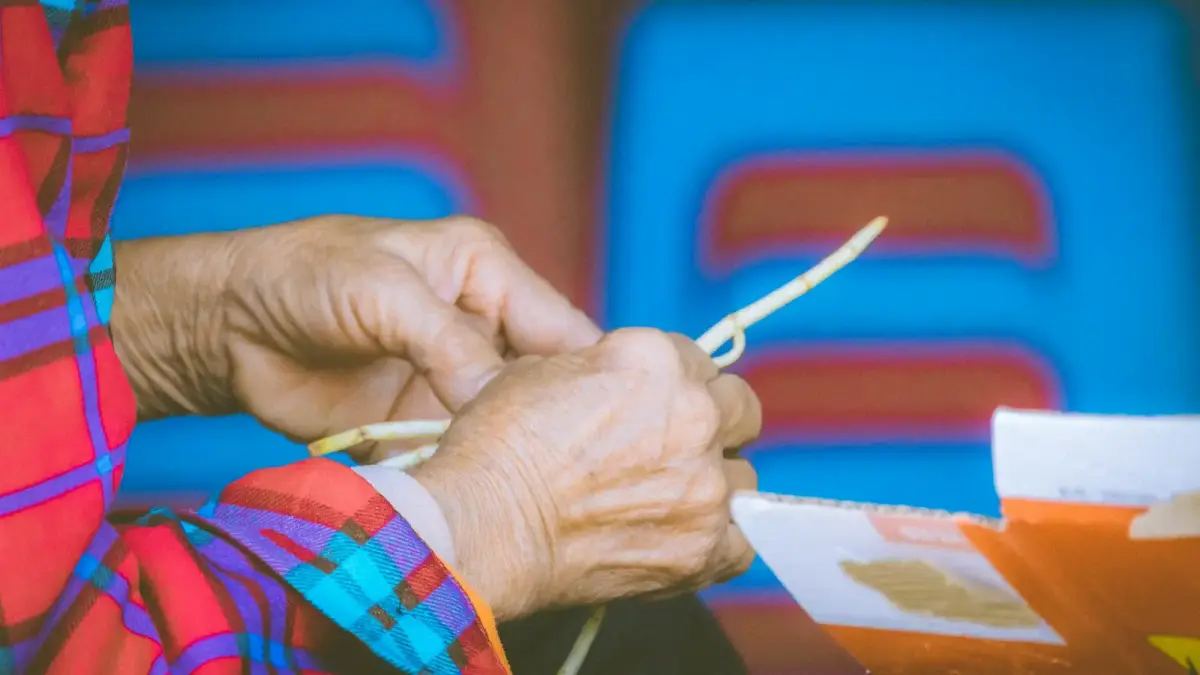
The Zippered Pocket She Never Forgets
I was sitting across from my friend Linda at a diner last month when she noticed a button hanging by a thread on the waitress’s apron. Without a word, Linda reached into her purse, unzipped a tiny interior pocket, and pulled out a needle already threaded with white cotton.
She didn’t announce it. She didn’t make a scene. She just said, “Honey, hold still for ten seconds,” and fixed the button right there between the coffee refill and the check.
The waitress looked stunned. Linda looked like she had done this a thousand times, which she has. She is sixty-three years old, and she has carried a small sewing kit in her purse since she was twenty-two. A needle. A spool of white thread. Two buttons - one white, one black. A single safety pin. All tucked into a zippered pocket she has restocked quietly, without thinking, for over forty years.
When I asked her why she still carries it, she went quiet for a moment. Then she said something that has stayed with me ever since.
“Because my mother always did.”
A Lesson That Was Never a Lesson
Linda’s mother, Dorothy, was not a seamstress. She didn’t quilt or embroider or make clothes from patterns. She was a secretary at a dental office who raised three kids in a split-level ranch in Ohio and drove a beige station wagon she kept immaculate.
But Dorothy carried a sewing kit everywhere.
Linda remembers being eight years old in a restaurant bathroom, watching her mother kneel on the tile floor and stitch a fallen hem back into place on her own skirt. No mirror. No fuss. Just quick, steady fingers and the kind of calm that made it seem like the world had been designed to occasionally come undone, and women like Dorothy had been designed to set it right.
She remembers standing in the back of their church watching her mother lean over to a man she barely knew and say, “Your coat button is about to go - may I?” And the man nodded, confused, while Dorothy reattached it in under a minute, right there in the pew, before the opening hymn.
She remembers, most of all, the night of the fourth-grade school play. Five minutes before curtain, Linda’s dress ripped along the side seam. She was crying. The other mothers were looking for safety pins. Dorothy was already sewing.
“She didn’t even look panicked,” Linda told me. “She just had everything she needed. She always had everything she needed.”
Dorothy never said, “You should carry a sewing kit.” She never turned it into a rule or a motto or a piece of advice. She just did it, every day, for decades. And Linda watched. And Linda learned. And now Linda is sixty-three, and the kit lives in the same corner of every purse she has ever owned.
The Inheritance Nobody Talks About
We talk a lot about what our mothers gave us. Their anxiety. Their perfectionism. Their fear of being too much or not enough. Therapy is full of these conversations, and they matter.
But there is another inheritance that rarely gets examined - the physical habits, the small rituals of preparedness, the things our hands learned to do because we watched our mothers’ hands do them first.
A 2019 study published in the Journal of Research in Personality found that habitual behaviors passed between generations are often transmitted not through explicit teaching but through what researchers call “observational absorption” - the process by which children internalize routines they witness repeatedly, especially routines performed by a primary caregiver in moments of competence or care.
In other words, nobody taught you to carry tissues in your bag. Nobody taught you to check that everyone has eaten before you sit down. Nobody taught you to scan a room for what might go wrong before anyone else notices.
You learned it the way Linda learned to carry a sewing kit. You learned it by watching someone you loved do it so naturally that it looked like breathing.
The Last Generation That Learned to Mend
Here is something that sits heavy with me. The women carrying sewing kits in their purses right now - women in their sixties, seventies, eighties - are largely the last generation for whom basic mending was a standard life skill.
Their mothers taught them to sew on a button. Their home economics classes taught them to hem a skirt. They grew up in a world where you didn’t throw away a shirt because the seam split. You fixed it. You kept it. You made it last.
Their daughters might know how to thread a needle. Their granddaughters probably don’t.
This isn’t a complaint. I’m not interested in romanticizing the past or shaming anyone for not knowing how to darn a sock. The world changed. Clothes became cheaper. Time became scarcer. The economics of repair stopped making sense.
But something was lost in the shift, and it wasn’t just a skill. It was a particular kind of readiness - a willingness to be the person who can fix what breaks, quietly, without being asked. A belief that you should be prepared to mend things, not because disaster is coming, but because tenderness sometimes looks like having the right tool at the right moment.
Brene Brown has written extensively about how vulnerability and preparedness might seem like opposites, but they are deeply intertwined. The people who are most ready to help are often the ones who understand fragility most intimately - because they have been fragile themselves, and they remember what it felt like when someone stepped in without making them feel small.
Dorothy stepping in with a needle and thread was never about the thread. It was about dignity. It was about saying, without words: I noticed. I was ready. You don’t have to be embarrassed.
Why She Restocks the Kit
I asked Linda if she has ever thought about stopping. About just not replacing the thread when it runs out, not tucking a fresh needle into the pocket of a new purse.
She laughed like I had asked her if she’d considered not breathing.
“It takes ten seconds,” she said. “And maybe once a year, somebody needs it. Maybe less than that. But the one time they do need it, I’m the person who has it. That matters to me.”
She paused.
“I think it mattered to my mom, too. Not because she wanted to be useful. Because she wanted to be the kind of person who could hold things together. Even small things. Especially small things.”
A 2022 study in Frontiers in Psychology explored what researchers termed “maintenance behaviors” - the small, often invisible acts of upkeep that hold households, relationships, and social systems together. The study found that these behaviors are disproportionately performed by women, rarely acknowledged, and deeply tied to the performer’s sense of identity and purpose.
The sewing kit is a maintenance behavior. It is a tiny, invisible act of preparation for a moment of repair that may never come. And the woman who carries it is not anxious or old-fashioned or stuck in the past. She is honoring a contract she made with the world a long time ago: I will be ready. I will be the one who can fix it.
The Sacred Object in the Zippered Pocket
I started paying attention after my conversation with Linda. I asked women in their sixties and seventies whether they carry a sewing kit. The answer was almost always yes.
Not a fancy one. Not a craft store purchase. A needle. Some thread. A button or two. A safety pin. The basics. The bare minimum required to hold something together long enough for it to stop being a crisis.
And when I asked where they learned to do this, the answer was almost always the same word.
Mom.
Not a class. Not a book. Not a YouTube tutorial. Mom. Her hands. Her purse. Her calm face in the bathroom mirror as she stitched something back together before anyone noticed it had come apart.
These women are carrying a relic. A small, sacred object that connects them to a person who may no longer be alive, to a version of femininity that the world has mostly moved past, to a moment in childhood when they understood something they couldn’t yet name.
The sewing kit is not about sewing. It never was.
It is about the kind of love that prepares quietly. That doesn’t wait to be asked. That shows up with exactly what is needed and asks for nothing in return - not credit, not thanks, not even acknowledgment.
What the Hands Remember
There is a concept in developmental psychology called “embodied memory” - the idea that certain knowledge lives not in the mind but in the body. Your hands remember how to ride a bike decades after your last ride. Your fingers remember a phone number you haven’t dialed in twenty years.
Dr. Daniel Goleman has written about how emotional intelligence is often stored in the body this way - in the gestures we make, the postures we take, the small physical habits that reveal what we value most deeply.
Linda’s hands know how to thread a needle in low light. They know how to knot the end of a thread with one quick twist. They know how to push a needle through fabric at exactly the right angle. These are things Dorothy’s hands knew, too.
The sixty-three-year-old woman with a sewing kit in her purse is not performing nostalgia. She is not clinging to a bygone era. She is carrying forward a form of intelligence that was never given a name - the intelligence of repair, of readiness, of invisible care.
Her mother’s hands taught her hands. And every time she restocks that tiny zippered pocket - slides in a fresh needle, winds new thread around the old spool, drops in a button she saved from a shirt she finally gave away - she is having a conversation with a woman who may be gone but whose love is still threaded through everything she carries.
The Thread That Doesn’t Break
If you are a woman who carries a sewing kit in your purse, or tissues, or bandaids, or a granola bar in case someone gets hungry, or a pen that works because you know most people’s pens don’t - you are not being fussy. You are not being old-fashioned. You are not overthinking.
You are the daughter of a woman who believed that readiness is a form of love. And you are right.
The world is full of things that come undone. Hems fall. Buttons loosen. Seams split at the worst possible moment. And most of the time, nobody notices until it’s too late, and nobody is prepared to fix it.
But you are. You have been prepared your whole life. Not because you were taught to be anxious, but because you were shown - by hands that are still guiding yours - that the people who carry the small tools of repair are the people who hold the world together.
Linda will restock her sewing kit again next month. She will not think about it. Her hands will do it the way they have always done it, the way her mother’s hands did it before her.
And somewhere, a button will come loose. A hem will fall. A seam will give way.
And she will be ready. The way she was raised to be. The way love taught her to be.