She is 64 and just realized she has never once sat down to a family dinner without first standing behind her chair to make sure everyone else has what they need - the water refilled, the bread basket within reach, the salt moved closer to the person who always asks for it - because a girl who watched her mother serve every plate before touching her own food learned that a woman earns her seat at the table only after every other seat has been taken care of, and the sixty-four-year-old who is always the last to sit and the first to stand is not generous but still waiting for permission to be a guest at her own meal
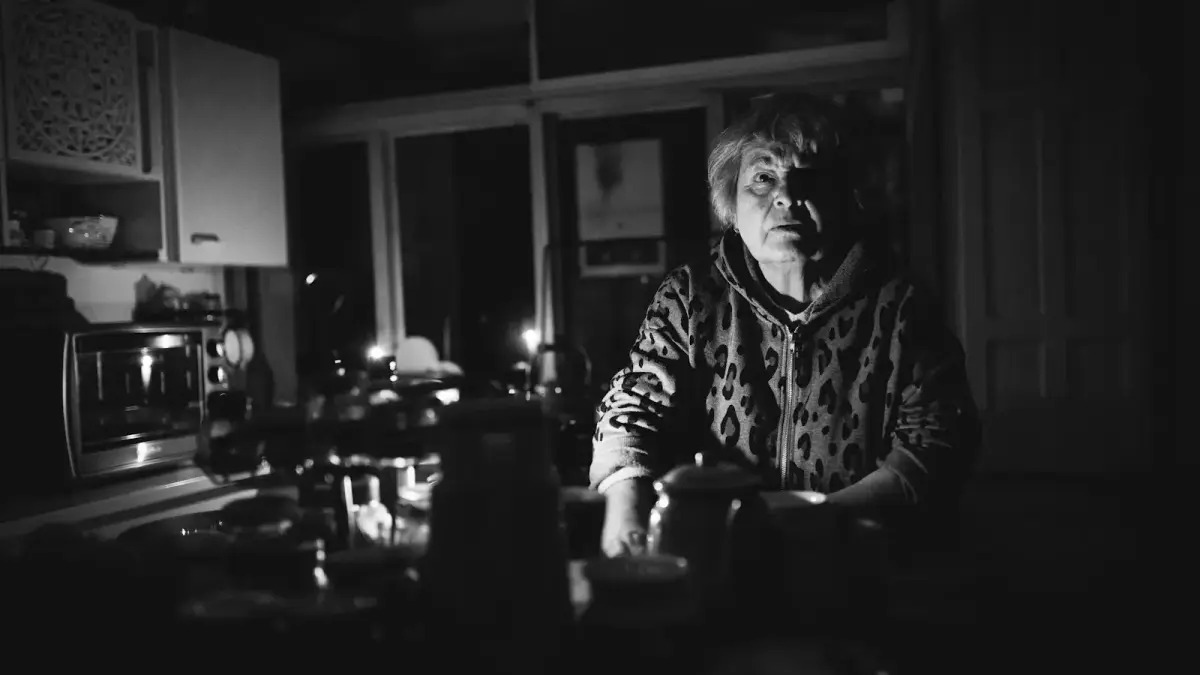
Last Thanksgiving, I watched my sister-in-law Linda stand behind her chair for eleven minutes before she sat down. I know it was eleven minutes because I timed it. Not on purpose. I just happened to glance at the clock when she pulled her chair out, and then I glanced again when she finally lowered herself into it, and by then the gravy had gone lukewarm and the rolls were half eaten.
In those eleven minutes, she refilled three water glasses. She got up to grab the cranberry sauce nobody had asked for. She moved the salt closer to her husband, who always reaches for it. She cut her grandson’s turkey into smaller pieces. She noticed the butter was too hard and quietly microwaved it for ten seconds.
I watched all of this from my own chair - which I had also not yet sat in. Because I was doing the exact same thing on my side of the table.
I am sixty-four years old, and I have never once simply sat down to a family meal.
The Choreography Nobody Taught Us
There is a kind of movement that women of a certain generation perform around a dinner table, and it looks so much like generosity that nobody - including the women themselves - ever thinks to call it what it actually is.
It is a hovering. A scanning. A constant low-grade surveillance of the table’s needs that begins before the first plate is served and does not end until the last dish is washed and put away.
You know the movements if you grew up watching them. The way she circles the table one more time before sitting. The way her eyes sweep across every place setting, checking for what is missing. The way she gets up mid-bite to fetch something nobody requested, because she already knows someone will need it in thirty seconds.
A 2019 study published in the Journal of Family Psychology found that women in heterosexual partnerships perform significantly more “invisible labor” - the anticipating, planning, and monitoring of household needs that never appears on any to-do list. The researchers called it “cognitive household labor,” and they found it was so deeply embedded in family dynamics that most participants could not even articulate what they were doing. It was just what happened. It was just how dinner worked.
But this choreography did not come from nowhere. Someone danced it first, and someone small was watching.
The Girl Behind Her Mother’s Chair
My mother was a beautiful cook. Not fancy - she never made anything that required a special trip to the store. But she made meals that held a family together through three decades of tight budgets and long work weeks, and she served every single one of them the same way.
She filled everyone else’s plate first. She poured everyone else’s drink first. She sat down last, always last, and she stood up first, always first, and in between she ate quickly and quietly as though she were borrowing time from a meal that did not quite belong to her.
I never once saw my mother serve herself first. Not once in forty years.
I did not think this was unusual. I thought this was what dinner looked like. The way a child who grows up in a house where everyone whispers thinks that whispering is just how people talk.
Dr. Gabor Mate has written extensively about how children do not learn values from what they are told but from what they observe. The lessons that shape us most deeply are the ones nobody sits us down to teach. They are the ones we absorb through the skin. My mother never told me that a woman’s place at the table had to be earned. She never said the words. She just showed me, a thousand dinners in a row, that a woman stands until everyone else is comfortable.
And I learned it the way you learn your native language - without effort, without awareness, without any memory of the moment it took root.
What Standing Really Looks Like at Sixty-Four
Here is what this pattern looks like in an adult woman who has been performing it for half a century.
You arrive early to set the table. Not because anyone asked you to, but because the table being unset when guests arrive feels physically uncomfortable, almost painful, like an itch behind your ribs.
You position everything with a kind of anxious precision. The water glasses filled to the right level. The napkins folded the way your mother folded them. The bread basket placed where the most hands can reach it.
When people sit down, you do not sit. You circle. You bring out the last dish, then remember the serving spoon, then realize you forgot the extra napkins. There is always one more thing. There is always one more reason to stay on your feet.
When you finally sit, you do not relax. You eat with one eye on the table, monitoring. Who needs more water. Whose plate is getting low. Whether the children are struggling with their food. You are not eating a meal. You are managing an event.
A 2021 study in Frontiers in Psychology found that women who grew up in households with traditional gender roles were significantly more likely to report difficulty relaxing during family gatherings, even when they consciously believed in egalitarian values. The researchers noted that these patterns were remarkably resistant to change - the body remembered the choreography even when the mind had moved on.
And the hardest part, the part that only becomes visible at sixty-four, is that you have done this for so long that you genuinely cannot tell the difference between wanting to serve and not knowing how to stop.
The Inheritance We Did Not Choose
My daughter is thirty-eight. She is smart, successful, and deeply feminist in every conscious way. And last Christmas, I watched her stand behind her chair for seven minutes before she sat down.
She refilled her husband’s wine. She adjusted her son’s booster seat. She went back to the kitchen for the salad tongs I had forgotten. She scanned the table twice, looking for gaps.
I wanted to say something. I wanted to tell her to sit down. But the words caught in my throat because I was also standing. I was standing and holding a serving spoon I had already used, just holding it, because putting it down and sitting would mean admitting that the table was ready and I was allowed to stop.
This is what generational inheritance looks like. It does not arrive in a speech or a lesson. It arrives in the body. It is the muscle memory of watching your mother hover, and her mother hover before her, until standing behind your chair becomes as automatic as breathing.
Adam Grant has written about how our deepest behavioral patterns are often the ones we are least aware of - the habits so embedded in our identity that we mistake them for personality rather than learning. “She’s so thoughtful,” people say. “She’s such a good hostess.” And the woman smiles, because she has been told her whole life that this particular cage is a compliment.
The Realization That Comes Too Late and Right on Time
Here is what I understood at sixty-four, standing behind my chair on a random Tuesday night, holding a pitcher of water I had already used to fill every glass on the table.
The standing was love. Every single time I circled that table, I was loving my family the only way I knew how. I was loving them the way my mother loved us - through service, through anticipation, through the quiet erasure of her own hunger so that no one else would ever feel it.
But the standing was also a cage. Because love should not require you to be the last person to eat. Love should not mean your food is always cold by the time you taste it. Love should not feel like an audition for a seat at your own table.
A 2020 study in the Journal of Personality and Social Psychology found that women who prioritize others’ needs before their own often score high in both empathy and self-silencing - the tendency to suppress personal needs to maintain relationships. The researchers found that these women frequently described themselves as “giving” and “selfless,” but also reported higher levels of resentment, exhaustion, and a persistent feeling of being unseen.
Both things are true. The generosity was real. The cost was also real. And the sixty-four-year-old woman who is just now seeing the pattern is not broken and not wrong. She is simply awake.
Sitting Down Without Permission
I have started a small practice. It is almost embarrassingly simple, and it is one of the hardest things I have ever done.
When dinner is ready, I sit down first.
Not after checking every glass. Not after one more trip to the kitchen. Not after scanning the table for the thing that someone might need in five minutes. I just sit. I put my napkin in my lap. I serve myself.
The first time I did it, my hands shook. I am not exaggerating. My body had so deeply learned the choreography of standing that sitting felt like breaking a rule I could not name.
My husband did not notice. My children did not notice. Nobody at that table registered that anything had changed, which tells you everything about who the standing was really for.
It was for me. It was always for me. It was the only way I knew how to feel like I had earned my place.
If you are the woman who stands - the one who hovers, the one who scans, the one whose food is always lukewarm by the time she takes her first bite - I want you to know something.
You have already earned your seat. You earned it by showing up. You earned it by being alive and present and part of this family.
Your mother earned hers too. She just never knew it.
Sit down. The table is ready. It has been ready for a long time.