She is 65 and still keeps a real cotton handkerchief in her purse - not a tissue but a pressed, folded square her grandmother would recognize - because a girl whose grandmother always had one never learned to think of crying as something disposable, and the woman who reaches into her bag at a funeral or a wedding or a Tuesday afternoon when the light hits the kitchen just right is not sentimental but faithful to a generation that believed tears deserved something you washed and kept
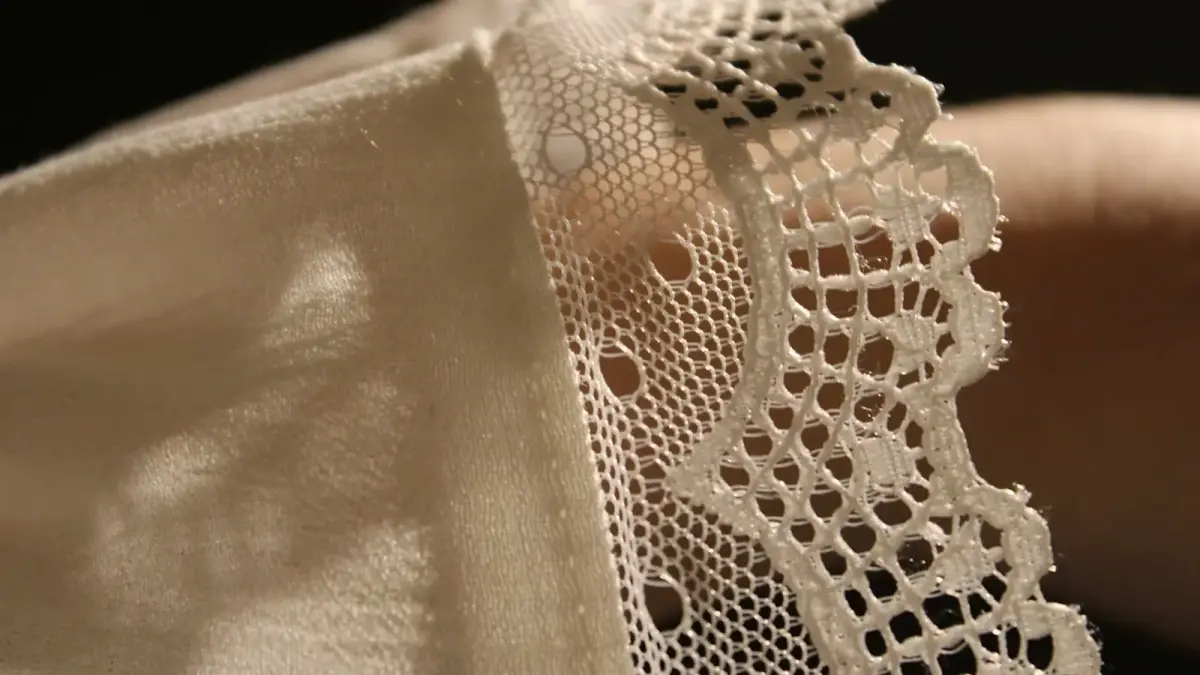
My grandmother kept one in every purse she owned. Not stuffed in. Folded. A perfect square of white cotton with a thin blue border, pressed flat with an iron she heated on the stove before she got the electric one, and placed in the front pocket of whatever handbag she was carrying that day.
She did not call it a handkerchief. She called it “my hankie.” And she reached for it the way other people reach for their keys - without thinking, without looking, with the calm certainty of someone who has been carrying the same thing in the same place for sixty years.
I am 65, and I still carry one. Not the same one. I have a rotation of about eight, all cotton, most of them plain, two with small embroidered flowers in the corner that I bought at an antique shop ten years ago because they looked like something she would have chosen.
People notice. They always notice. At my friend Karen’s retirement party last spring, I pulled it out to blot my eyes during the toast and her daughter looked at me like I had produced a rotary phone from my bag.
“Is that a real handkerchief?” she asked.
I said yes. She asked why. And I could not explain it in a way that fit inside that question.
The object that held more than tears
My grandmother used her handkerchief for everything. She pressed it against a grandchild’s scraped knee. She wrapped a loose button in it until she could sew it back on. She folded it into a triangle and tied it under her chin when the wind came up.
But its primary purpose - the thing she kept it for - was crying.
Not her own. Other people’s.
She was the person at every funeral who did not cry until everyone else was finished. She stood next to whoever needed standing next to and when their face crumpled she reached into her purse and handed them a clean, folded square of cotton and said nothing. She did not say “it’s okay.” She did not say “let it out.” She handed them the handkerchief and she stood there.
A 2018 study published in the Journal of Personality and Social Psychology found that the physical objects people carry with them serve as what researchers called “symbolic anchors” - tangible representations of emotional identities and relational bonds. Participants who carried objects connected to close relationships reported feeling more emotionally grounded, even when the relationship itself had ended.
My grandmother died in 2003. I found eleven handkerchiefs in her bureau, all washed, all ironed, all folded into identical squares. I took every one of them.
The arithmetic of a tissue
Here is what a tissue says: this moment will pass. Use this. Throw it away. The feeling and the object that held it go into the same wastebasket.
Here is what a handkerchief says: this moment matters enough to be carried. The cloth will absorb it. You will take it home. You will wash it. You will iron it. You will fold it back into its square and put it in your purse for the next time someone - including you - needs something to hold.
I know this sounds like I am romanticizing laundry. I am not. I am describing a relationship to emotion that my grandmother’s generation understood and that mine is watching disappear.
A tissue is efficient. A handkerchief is devoted.
My mother used tissues. She kept a travel pack of Kleenex in every room and every bag and every coat pocket, and when you cried she handed you one and said “blow.” The crying was the problem. The tissue was the solution. The solution went in the trash and you went back to whatever you were doing before the feeling interrupted.
My grandmother never treated a feeling like an interruption. She treated it like a guest who had arrived without calling first and who deserved to be seated and attended to for as long as it needed to stay.
You wash it and it comes back
A 2021 paper in Frontiers in Psychology examined what the researchers called “emotional processing through ritual objects” and found that people who engaged in regular, tangible rituals connected to their emotional lives - lighting a specific candle during grief, wearing a particular ring during stressful periods, writing in a physical journal - showed more integrated emotional processing than those who relied on purely cognitive strategies.
The ritual is the point. Not the object. Not the cotton. Not the embroidery.
The ritual of washing a handkerchief is the ritual of acknowledging that you cried and that the crying was real and that the evidence of it deserves care. You run it under warm water. You watch the mascara or the tears or the snot dissolve out of the cotton. You wring it gently. You lay it flat or hang it on the line if you are my grandmother. You wait for it to dry. You iron it if you are the kind of person who irons. You fold it back into its square.
And then you put it away for next time.
Because there will be a next time. That is what the handkerchief knows that the tissue does not. There will always be a next time. And the next time deserves a clean square of cotton, not a crumpled ball of paper from the bottom of your coat pocket.
The grief I did not expect
I thought I would be sad about my grandmother’s death. I was. I thought I would be sad about getting older. I am. But the grief I did not expect - the one that crept up on me sometime in my late fifties - is the grief of watching an entire vocabulary of care disappear.
Nobody writes thank-you notes anymore. Nobody drops off a casserole without being asked. Nobody sits with you in your kitchen after the funeral and washes the dishes while you stare at the wall. Nobody carries a handkerchief.
These were not customs. They were a language. And the language said: I am here. I noticed. I brought something with me that I prepared before I came because I knew before I arrived that you would need it.
The handkerchief was never about the crying. It was about the preparation. My grandmother ironed that cloth on a Tuesday. She folded it on a Tuesday. She placed it in her purse on a Tuesday. And on a Thursday, when her neighbor’s husband died, she was ready.
Readiness. That is what has disappeared. Not politeness. Not formality. Readiness to show up for someone else’s pain with something already in your hands.
I am not holding a line
People sometimes tell me I am “holding the line” or “keeping traditions alive” or “preserving something important.” I do not feel that way. I am not making a statement. I am not resisting modernity. I am not performing my grandmother’s generation for an audience.
I carry a handkerchief because I do not know how not to.
Robert Emmons, the psychologist who has spent decades studying gratitude, has written about how the rituals that surround emotional expression shape the depth of the emotion itself. The act of preparing to feel - of setting aside time, space, and physical resources for an emotion before it arrives - changes the quality of the experience. It is the difference between being caught in the rain and carrying an umbrella. Both get you through the storm. But one of them says: I knew the storm was coming, and I thought about you before it hit.
My granddaughter is twelve. She has never seen a handkerchief outside of my purse. Last Christmas I gave her one - white cotton, her initials embroidered in the corner by a woman I found online who still does that kind of work.
She held it carefully. She turned it over. She ran her thumb across the stitching.
“What do I do with it?” she asked.
“You carry it,” I said. “Just in case.”
She put it in the pocket of her jacket and I watched her zip the pocket closed, the way you close a door on something you are not sure you understand yet but know enough to protect.
That is enough. That is all my grandmother ever asked of me - not that I understand the handkerchief but that I carry it. Not that I explain why tears deserve cotton instead of paper but that I keep the cotton close enough to reach.
The woman who still carries a handkerchief is not stuck in the past. She is standing in the present with something her grandmother placed in her hands before she was old enough to need it, and every time she reaches for it - at a wedding, at a funeral, on a Tuesday afternoon when the light hits the kitchen just right - she is not crying into a piece of cloth.
She is holding the hand of a woman who is no longer here, and the cloth is warm because it has been waiting in her purse all day, folded and pressed and ready, the way love always should be.