There are people who will never walk through a grocery store without doing the math in their head, adding as they go, rounding up, bracing for the total, and it has nothing to do with what is in their bank account now but everything to do with what was missing when they were ten
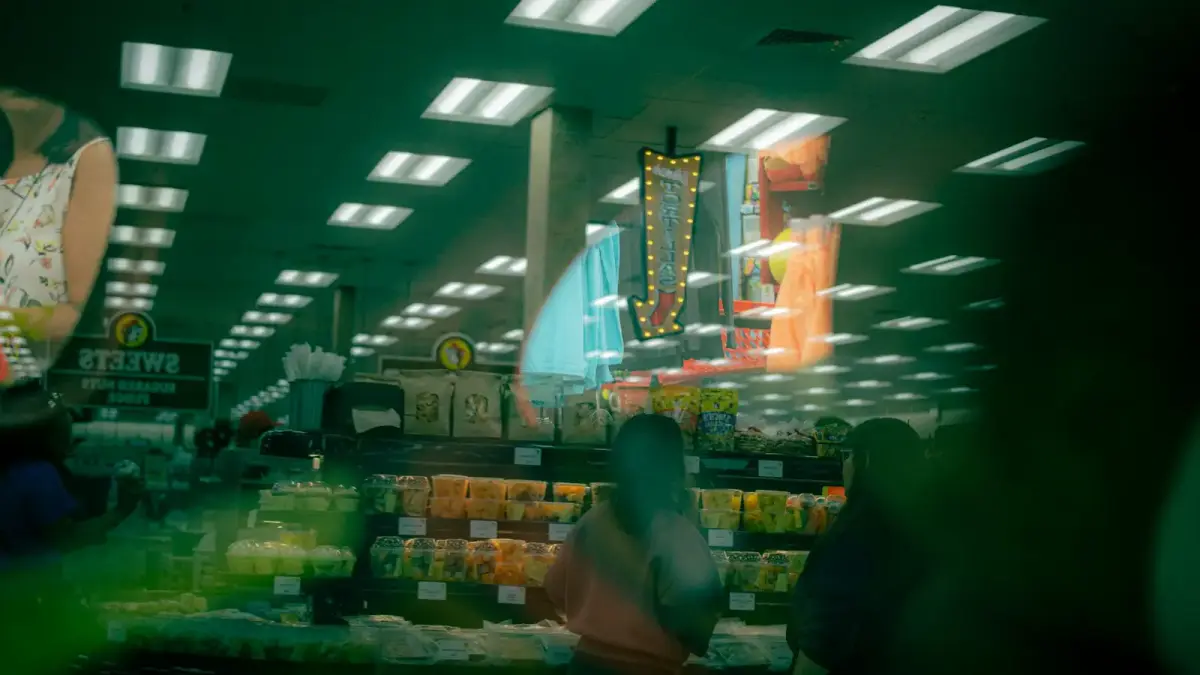
I was in the cereal aisle last Tuesday when I caught myself doing it again. Not deciding what I wanted - I knew what I wanted. I was calculating. Rounding the price of the oatmeal up to the nearest dollar, adding it to the running total I’d been maintaining since I picked up a carton of eggs near the entrance. Eggs, three forty-nine, round to four. Bread, two seventy-nine, round to three. Oatmeal, four twenty-nine, round to five. Twelve dollars and counting. I had barely started.
I make a good salary. I have a savings account that would have made my mother weep. There was no reason to be standing there with a calculator running underneath my thoughts, auditing my own grocery cart like someone was going to check my work.
But the calculator doesn’t care about my paycheck. The calculator was installed decades ago, in a kitchen where the math always mattered, and nobody ever gave me the password to turn it off.
If you know what I’m talking about - if you can feel the exact spot in your body where the adding happens - then you already know this isn’t about money. It’s about what money used to mean when you were too young to earn it and too old to not understand that it was running out.
The running total is not a choice
You don’t decide to do the math. That’s the part that’s hard to explain to people who didn’t grow up this way. They think it’s a habit, like clipping coupons or checking for sales. Something quaint. Something optional.
It isn’t optional. It’s closer to breathing. The numbers start the moment you walk through the automatic doors, and they don’t stop until you’re loading bags into your car and the receipt is crumpled in your pocket and you can finally exhale because the total didn’t exceed the number your body had decided was the boundary of safety.
A 2021 study published in the Journal of Consumer Psychology found that adults who grew up in households with persistent financial insecurity showed automatic price-monitoring behavior during shopping tasks - even when given unlimited budgets in controlled experiments. The researchers described it as “vigilance that has become involuntary.” The participants weren’t choosing to track prices. Their attention did it without permission, the same way your eyes track sudden movement in your peripheral vision.
That’s the right word for it. Vigilance. Not thriftiness. Not responsibility. Vigilance. The same kind your body uses when it hears a loud sound at night - scanning for threat, scanning for the edges of what you can afford to lose.
You learned this in a grocery store when you were small. You learned it watching someone put things back on the shelf. You learned it in the moment between the cashier announcing the total and your parent reaching for a wallet, that held-breath moment where the whole world went quiet and you didn’t know if the card would work.
Your body took notes. Your body has never stopped taking notes.
The grocery store is where class shows its teeth
There are certain places where the distance between how you grew up and how you live now collapses entirely. The grocery store is the most reliable one.
You can live in a nice house. You can drive a good car. You can wear clothes that don’t announce anything about where you came from. But the grocery store strips all of that away, because the grocery store is where your earliest lessons about enough and not enough were delivered with brutal specificity.
You learned the difference between name brand and store brand before you learned long division. You knew which items were non-negotiable and which ones could be substituted. You knew that the big jar of peanut butter was actually cheaper per ounce than the small one, and you knew it because someone taught you to flip the jar over and look at the unit price tag on the shelf - that tiny, hard-to-read number that most people walk right past.
Sociologist Annette Lareau wrote about how class shapes the most intimate textures of family life - not just what families can afford, but how they move through the world, how they make decisions, how they talk to their children. The grocery store is one of those textured spaces. It’s where you absorbed an entire education in scarcity without anyone sitting you down and explaining it.
And now, decades later, you walk through those same fluorescent aisles with a cart that could be full of anything, and your hand still reaches for the bottom shelf. Still checks the unit price. Still does the quiet arithmetic that nobody asked you to do.
You round up because rounding down was dangerous
Here’s a detail that only people who lived this will understand. You don’t estimate low. You always round up.
The oatmeal is four twenty-nine, and in your head it becomes five. The chicken is seven eighty-two, and it becomes eight. Every item gets rounded to the next dollar because you learned, probably before you were twelve, that being surprised by a higher total was worse than being surprised by a lower one.
Rounding up is a form of self-protection. It’s padding the estimate so the real number will always be less alarming than the one you prepared for. It’s emotional insurance against the moment at the register when the number on the screen lands and your nervous system has to decide, in a fraction of a second, whether you’re safe.
Dr. Daniel Kahneman’s work on loss aversion - the finding that losses feel roughly twice as painful as equivalent gains feel pleasurable - takes on a different dimension when you grew up without margin. For you, loss aversion isn’t theoretical. It was Tuesday night at the dinner table. It was the month the car broke down and you ate rice for two weeks. You didn’t read about loss aversion in a psychology textbook. You lived inside it, and your body encoded the lesson so deeply that it still runs the algorithm every time you pick up a carton of milk.
Rounding up is not pessimism. It’s the math of someone who learned that the world doesn’t give you warnings before it takes something away.
The moment at the register
This is the part nobody talks about. The checkout line.
You’ve done all the math. You’ve kept the running total humming in the back of your mind the whole time you shopped, adjusting it each time you added something to the cart, occasionally pausing to reconsider an item and subtract it from the number. You know, within a few dollars, what the total will be.
And still - still - when the cashier scans the last item and the number appears on that little screen, there is a moment. A fraction of a second where your chest tightens and your breath catches and something old and deep inside you braces for the possibility that you miscounted. That you went over. That the card will decline. That someone behind you in line will see.
A 2018 study in Frontiers in Psychology examined what the researchers called “financial threat reactivity” - the physiological stress response that people with histories of economic hardship show during monetary transactions. They found elevated cortisol and heart rate during checkout scenarios, even among participants whose current incomes placed them solidly in the middle class. The body remembered what the bank account had forgotten.
You hold your breath. The number appears. It’s fine. It’s always fine now. You tap your card, you take your bags, you walk to your car.
And somewhere between the parking lot and home, the tension drains out of your shoulders like water leaving a bathtub - slowly, almost imperceptibly, until you realize you’d been carrying it the entire time.
The people who see you
Here’s what’s strange about this: you probably don’t talk about it. Not because you’re ashamed, exactly, but because it feels like something that shouldn’t still be happening. You’ve built a life. You’ve done the work. You should be past this by now.
But there are moments - in a checkout line, in a parking lot, in the middle of unloading groceries into a kitchen that is warm and full and nothing like the kitchen you grew up in - when you catch someone else doing it. Another person whose lips are moving just slightly, adding as they go. Another person whose hand hovers over a more expensive item before choosing the one below it. Another person who checks the total on the screen with the particular alertness of someone who once had very good reasons to check.
You recognize each other without speaking. It’s in the hands, in the slight pause, in the way you both reach for the store brand even though the name brand is right there and you can afford it and some part of you knows that. You recognize each other the way people who speak the same first language recognize each other in a foreign country - not by what they say, but by the shape of their silence.
Psychologist Brene Brown has written about how shame around money and class is one of the least discussed forms of shame in American life. We’ll talk about almost anything before we’ll talk about what it felt like to not have enough. And so this thing - this running total, this quiet arithmetic, this body that still braces at the register - stays private. It lives in the space between who you are now and who your nervous system still believes you might become again if you stop paying attention.
The emergency ended, but nobody told your hands
The thing I want you to know - the thing I want to say to you in the cereal aisle or the checkout line or the parking lot where you’re sitting with your receipt, doing the math one more time just to be sure - is that this is not a flaw.
This is what survival looks like when it’s been refined over decades. This is your body doing exactly what it was trained to do in a household where the margins were razor thin and the consequences of miscalculating were real. Your nervous system is not malfunctioning. It’s functioning precisely the way it was built to function, in response to conditions that were genuinely threatening.
The conditions changed. You changed them. You did the extraordinary, improbable work of building a life where the math doesn’t have to matter anymore.
But your hands still do it. Your mind still rounds up. And that is not weakness or damage or something to fix. That is the body’s deepest form of loyalty - to the child who needed to count, who needed to know, who needed to be ready.
You were ready then. You are more than ready now.
And if the math still runs while you’re standing in the produce section, reaching for the apples, checking the price per pound - let it run. It’s not holding you back. It’s the quietest, most persistent proof that you made it out. That the kid who counted everything is standing here now, in a grocery store, with enough.
That is no small thing. That is, in fact, everything.